














Geotechnical engineering specialist CAN has begun essential stabilisation works at the iconic White Cliffs of Dover.
The 20-week project involves removal of around 400 tonnes of loose chalk and vegetation across an area measuring 225m long and 40m high.
CAN geotechnical project manager Andy Pope said the team is combining light and heavy scaling to prepare the cliff face for further safety measures designed to prevent loose chalk falling from the cliff.
The light scaling work will be carried out using small hand tools, supported by heavy scaling using excavators with bucket attachments.
CAN, which has previously worked on Brighton’s chalk cliffs, will also remove material including an old catch fence, cranked palisade fencing, a steel hoarding and large concrete blocks.
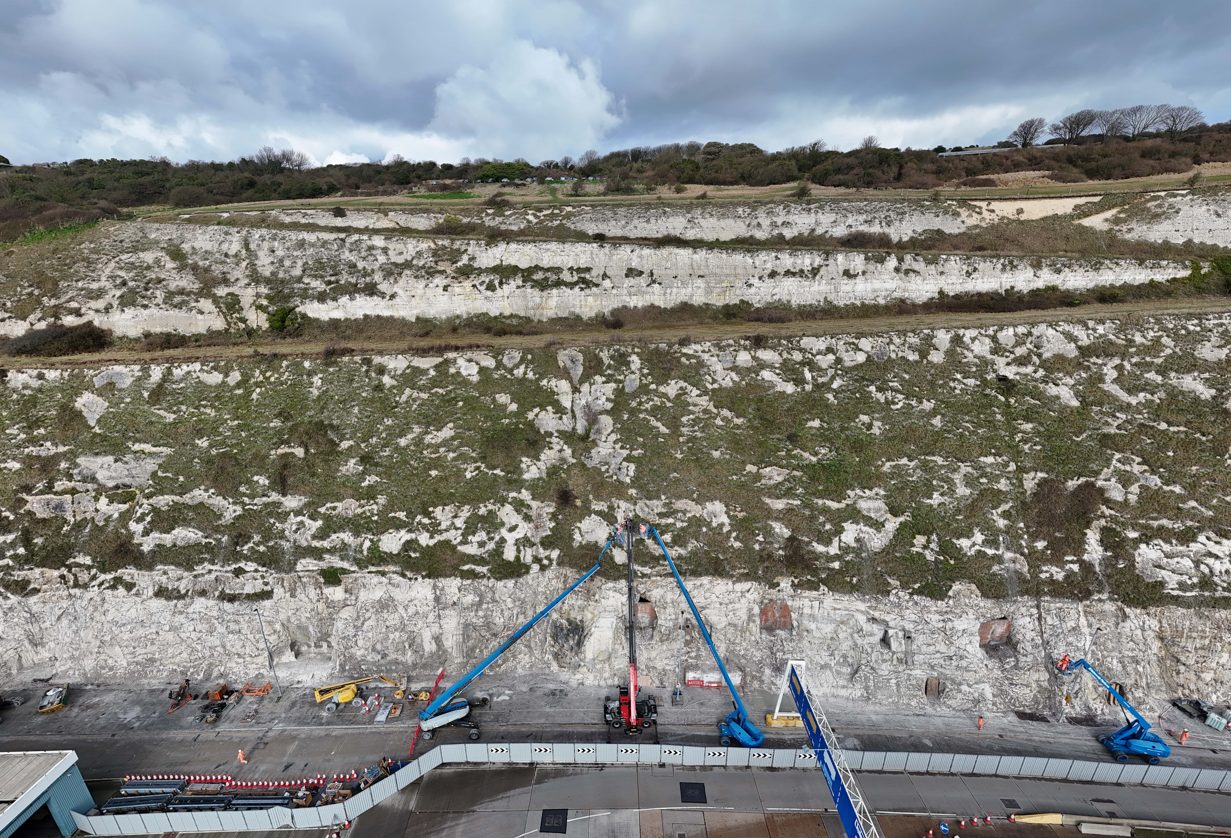
Pope added: “Once we have removed these materials and scaled the cliff face to remove loose chalk, we will install a 225m long, 5m high rock fall barrier or catch fence, which is part of the rock fall barrier systems designed to collect and retain any future loose chalk.”
Rope access and mobile elevated platforms
Although CAN will use rope access for some of the Dover Cliffs work, mobile elevated platforms and excavators will be the main methods of access. These will lift technicians to heights of 40m, allowing them to evaluate and remove loose chalk.
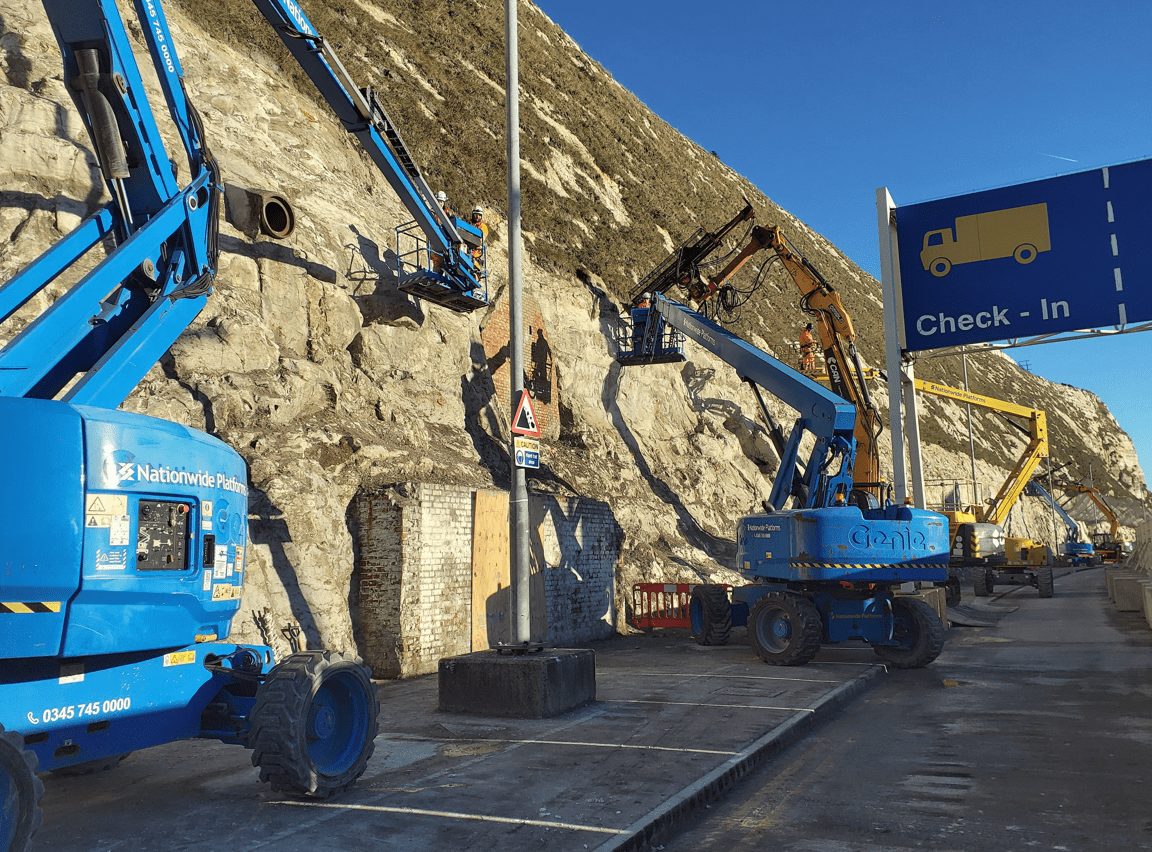
“The mobile platforms and excavators are more suitable in this instance, as the cliff crest is a Site of Special Scientific Interest,” explained Pope.
“This equipment is safe and efficient, ensuring minimal disruption to this sensitive environment. The team will also use a large rotating telehandler with modifications designed by CAN to make this suitable to drill into the cliff face to secure the high-level catch fence and upslope supporting anchors.”
The works are the second phase in a four-year undertaking at the port, with CAN taking on the role of principal contractor for the chalk face stabilisation works.
CAN said the project has been carefully planned to factor in port operations and the impact on wildlife, including nesting birds.


