Construction Management is the highest circulation construction-based publication serving the UK built environment.
News
Video | Bricklaying robot builds three-bedroom house
https://youtu.be/n7554RFlVa0
An automatic bricklaying machine developed in Yorkshire is constructing the first home in the UK to be built by a robot.
Pocklington-based Construction Automation started work on
the three-bedroom home in Everingham in the East Riding of Yorkshire this week.
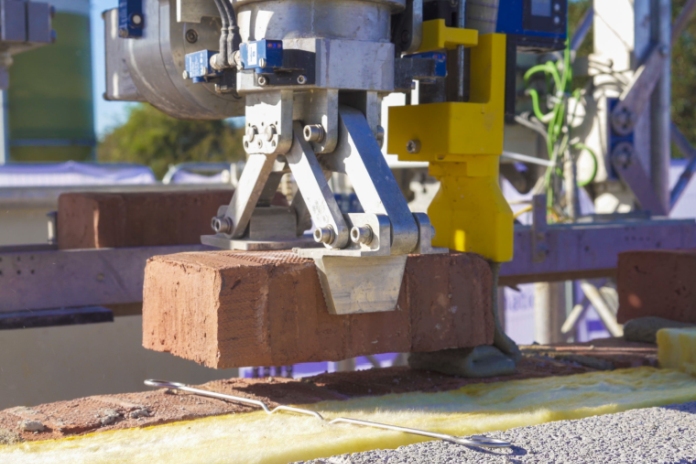
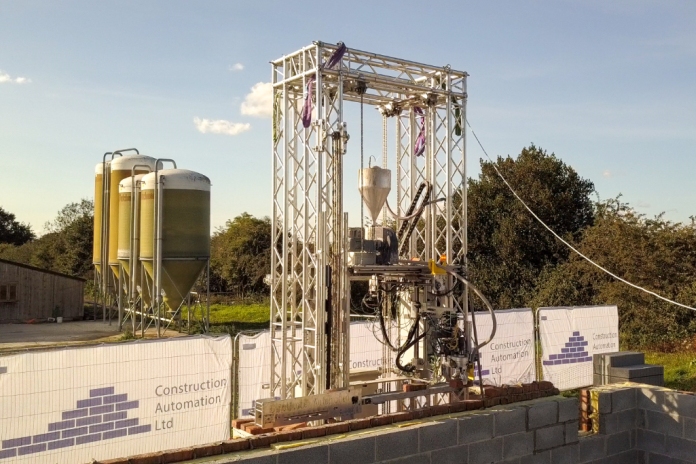
Construction Automation’s Automatic Brick Laying Robot
(ABLR), which has been four years in the development, will lay all the bricks,
blocks, and mortar. Its manufacturer claims it is also the first machine of its
type ever created that can build around corners – meaning it can construct an
entire house without stopping.
This is not a paywall. Registration allows us to enhance your experience across Construction Management and ensure we deliver you quality editorial content.
Registering also means you can manage your own CPDs, comments, newsletter sign-ups and privacy settings.
The robot means that only two people are required to work on
each house that it builds – a labourer to load bricks and mortar into the
machine and a skilled person to install tie bars, damp courses and lintels and
to do the pointing.
The robot’s control system sends out alerts when these
important jobs need doing, and then takes a photograph of the completed task to
form a complete digital record of the key quality criteria.
The ABLR sits on a nine-metre high vertical lift frame, which
also removes the need for scaffolding and for people to work at height.
Construction Automation was formed in May 2016 by
entrepreneurs David Longbottom and Stuart Parkes.
Longbottom said said: “The house will contain around 10,000
bricks and will take the ABLR about two weeks to build.
“It is the first house in the UK to be built by a robot, and
possibly the first in the world.
“The ABLR comprises of the robot and a sophisticated
software control system that reads digitised versions of architect’s plans.
“This instructs the robot exactly where to lay the blocks,
bricks and mortar.
“It is controlled from a tablet and all the data about a
specific build can be accessed remotely, making it very easy to assess progress
on site at any time.”
Parkes said the advantages of the ABLR include increased
productivity, better quality houses, and improved health and safety on site.
He said: “Although bricks are meant to be a standard size
there is quite a lot of variation in them.
“So, we use sensors to measure each individual brick and
then to line it up, so it is precisely central on the wall. The sensors also
align the edge of each brick to produce a perfect finish.
“That way, the ABLR builds quickly and to a consistently
high standard.”
“With the in-built vertical lift, the machine can build
easily to the height of a standard two-storey house, so it is much safer than
building in the traditional way.”
Construction Automation has already secured patent in the
USA on the technology, and a European and UK patent is expected to follow
shortly.
Once the ABLR had completed this house and a number of other
test properties, the company will be ready to go into full production.
“Our goal is to automate housebuilding as far as we can,” Longbottom
said.
“By doing this, we can increase productivity for the
industry, improve health and safety, and guarantee quality.”
The January/February 2026 issue of Construction Management magazine is now available to read in digital format.
Powered Access
CM, in partnership with IPAF, has launched a new survey to explore the industry’s views and experiences with powered access machines on construction projects.
This is not a first step towards a paywall. We need readers to register with us to help sustain creation of quality editorial content on Construction Management. Registering also means you can manage your own CPDs, comments, newsletter sign-ups and privacy settings. Thank you.