Top contractors urge adoption of zero emission construction plant
Neil Gerrard
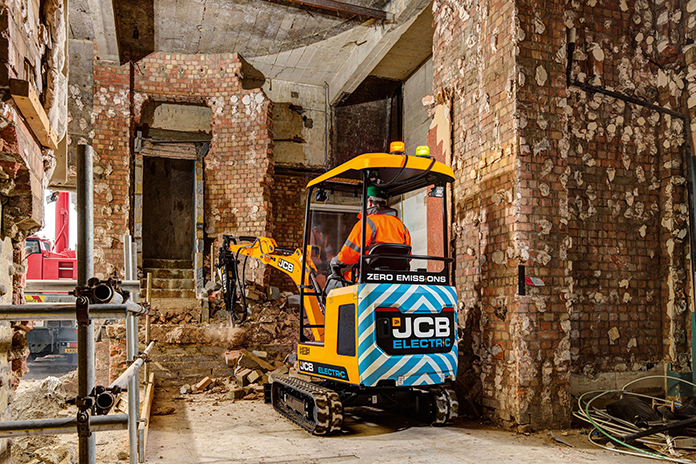
JCB last year started full production of its electric 19C-1E mini excavator
Organisations including Willmott Dixon, Colas and the Chartered Institute of Building (CIOB) have called for a “clean recovery” from covid-19, harnessing more electric, zero-emission construction equipment.
They are among a group of companies to add their support to
a new report, entitled An Electric Decade in Construction, published by
Hyperdrive Innovation, a UK-based designer and manufacturer of lithium-ion
battery technology.
The study found that the covid-19 pandemic has injected a “renewed
sense of urgency” into existing challenges the industry has faced in recent
years, including tightening air pollution legislation, meeting carbon emissions
targets and an increasing demand for infrastructure.
This is not a paywall. Registration allows us to enhance your experience across Construction Management and ensure we deliver you quality editorial content.
Registering also means you can manage your own CPDs, comments, newsletter sign-ups and privacy settings.
The report also found that the next ten years in construction
will be centred around four key themes:
Speed: Delays caused by covid-19 mean that projects will need to increase productivity to meet deadlines and avoid unwanted additional costs.
Safety: The pandemic has shone a spotlight onto the dangers of air pollution, which the report claimed would accelerate the industry’s move away from diesel engines and generators and towards cleaner, quieter electrified machinery.
Sustainability: Stricter engine and emissions legislation to meet climate targets is driving the industry away from its reliance on fossil fuels.
Simplicity: The industry expects an uptick in demand for a ‘modern methods’ approach to construction, using prefabricated, standardised building components developed off-site, to simplify and clean up construction processes.
Caroline Gumble, chief executive of the CIOB, who also offered her reviews for the report, said: “Covid-19 has given us the opportunity to put sustainability and innovation at the heart of strategies going forward. It has really increased the urgency to improve.”
Jaimie Johnston, director and head of global systems at
Bryden Wood said: “The deployment of quieter construction machinery opens up
the prospect of extending the hours that certain equipment is permitted. The
potential productivity increases this would lead too could be very important.”
And Michael Cross, head of partnerships and innovation at
Willmott Dixon added that electric equipment could also offer potential cost
benefits to construction. He said: “Cost is always an important factor. Broadly
speaking, powering a construction site via electricity costs around 25% less
than using a diesel generator, and for big projects that require a lot of time
on site, this can make a big difference.”
Mike Pitts, deputy challenge director Transforming Construction at Innovate UK said that construction, traditionally reluctant to make use of the latest innovations, was gradually starting to embrace technology. He said: “Recovery from covid-19, could accelerate the adoption of technology to help speed up construction processes.”
Other companies and organisations to lend their views to the
report were:
The January/February 2026 issue of Construction Management magazine is now available to read in digital format.
Powered Access
CM, in partnership with IPAF, has launched a new survey to explore the industry’s views and experiences with powered access machines on construction projects.
This is not a first step towards a paywall. We need readers to register with us to help sustain creation of quality editorial content on Construction Management. Registering also means you can manage your own CPDs, comments, newsletter sign-ups and privacy settings. Thank you.