Construction Management is the highest circulation construction-based publication serving the UK built environment.
News
Skanska JV to replace cement with calcined clay in HS2 trial
Cristina Lago Deputy Editor
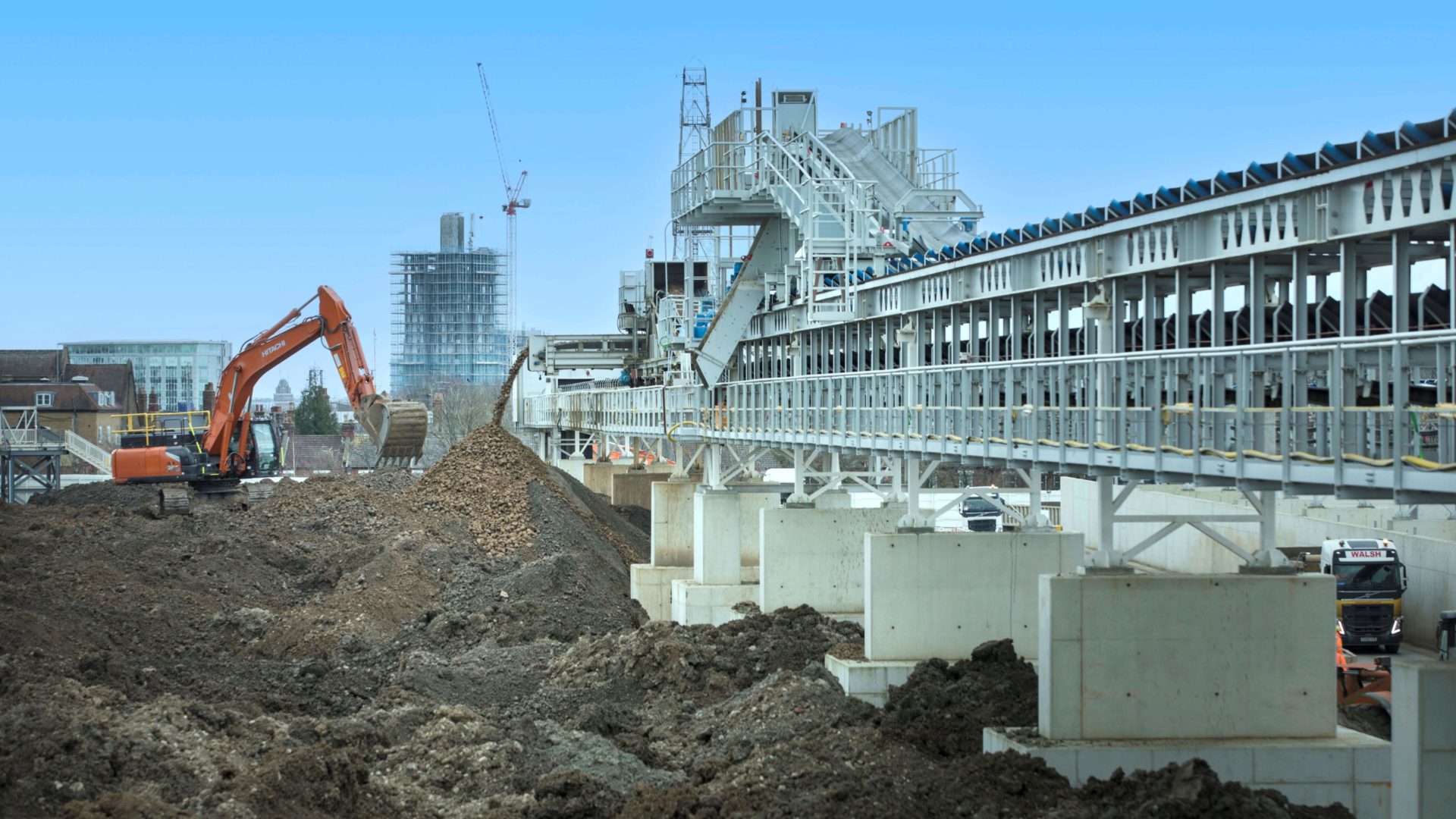
Skanska Costain Strabag JV will be exploring the use of calcined clay on HS2 tunnels in London (Image: SCS JV)
Skanska Costain Strabag joint venture has secured government funding to trial calcined clay as a low-carbon alternative to cement on HS2 London tunnels.
The contractor will use the Innovate UK funding to continue developing a replacement for carbon-intensive Portland Cement with repurposed London Clay.
Data from a preliminary trial funded by HS2 showed that calcined London Clay excavated from tunnels and other construction activities could be a viable alternative to cement in concrete.
This is not a paywall. Registration allows us to enhance your experience across Construction Management and ensure we deliver you quality editorial content.
Registering also means you can manage your own CPDs, comments, newsletter sign-ups and privacy settings.
Although results from the initial tests suggest that carbon reduction could be considerably reduced and tens of millions of pounds saved on a project similar in size to HS2, more research is needed.
SCS JV is working on this HS2 trial with technical lead Arup, concrete supplier Tarmac, the University of Leeds, Sika UK, Expedition Engineering and the Mineral Product Association.
Apostolos Tsoumelekas, SCS JV materials engineering manager who has been heavily involved in developing the product, said: “This innovation was first sparked by a discussion with an expert in Arup who had been researching the applications of calcined clays in concrete. Working together with our customer and the supply chain we have been able to help turn this idea into reality.
“The clay that is excavated from the HS2 tunnels is essentially a waste product. We have developed a process which calcines the clay and grinds it to a powder, transforming it into a useful resource which can then be added to concrete replacing Portland cement. The results have been impressive and hopefully if it’s scaled up it could really help speed up the adoption of low-carbon concrete for commercial use.”
The initiative is part of Innovate UK’s £3.2m investment in seven projects to advance the decarbonisation of the UK’s concrete industry.
The January/February 2026 issue of Construction Management magazine is now available to read in digital format.
Powered Access
CM, in partnership with IPAF, has launched a new survey to explore the industry’s views and experiences with powered access machines on construction projects.
This is not a first step towards a paywall. We need readers to register with us to help sustain creation of quality editorial content on Construction Management. Registering also means you can manage your own CPDs, comments, newsletter sign-ups and privacy settings. Thank you.