Construction Management is the highest circulation construction-based publication serving the UK built environment.
News
Photos | Restoration of world’s first iron-framed building complete
Neil Gerrard Associate editor
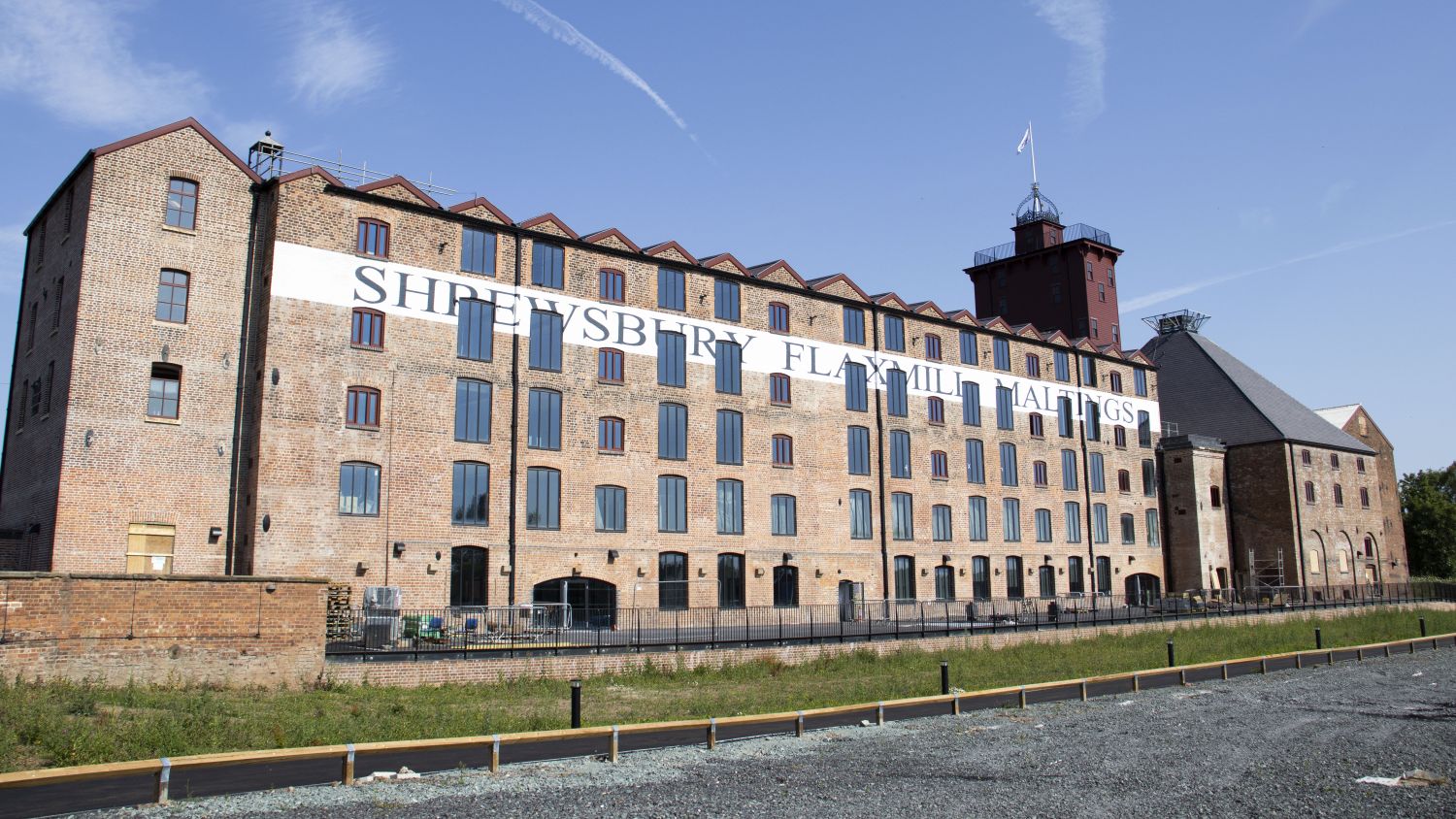
Shrewsbury Flaxmill Maltings with external scaffolding removed (All images courtesy of Historic England)
An eight-year process to restore the oldest iron-framed building in the world, known as the ‘grandparent of skyscrapers’, has finally reached its end.
The Shrewsbury Flaxmill Maltings will open to the public from 10 September after the £28m refurbishment led by Historic England, in partnership with Shrewsbury Council and the Friends of Flaxmill Maltings.
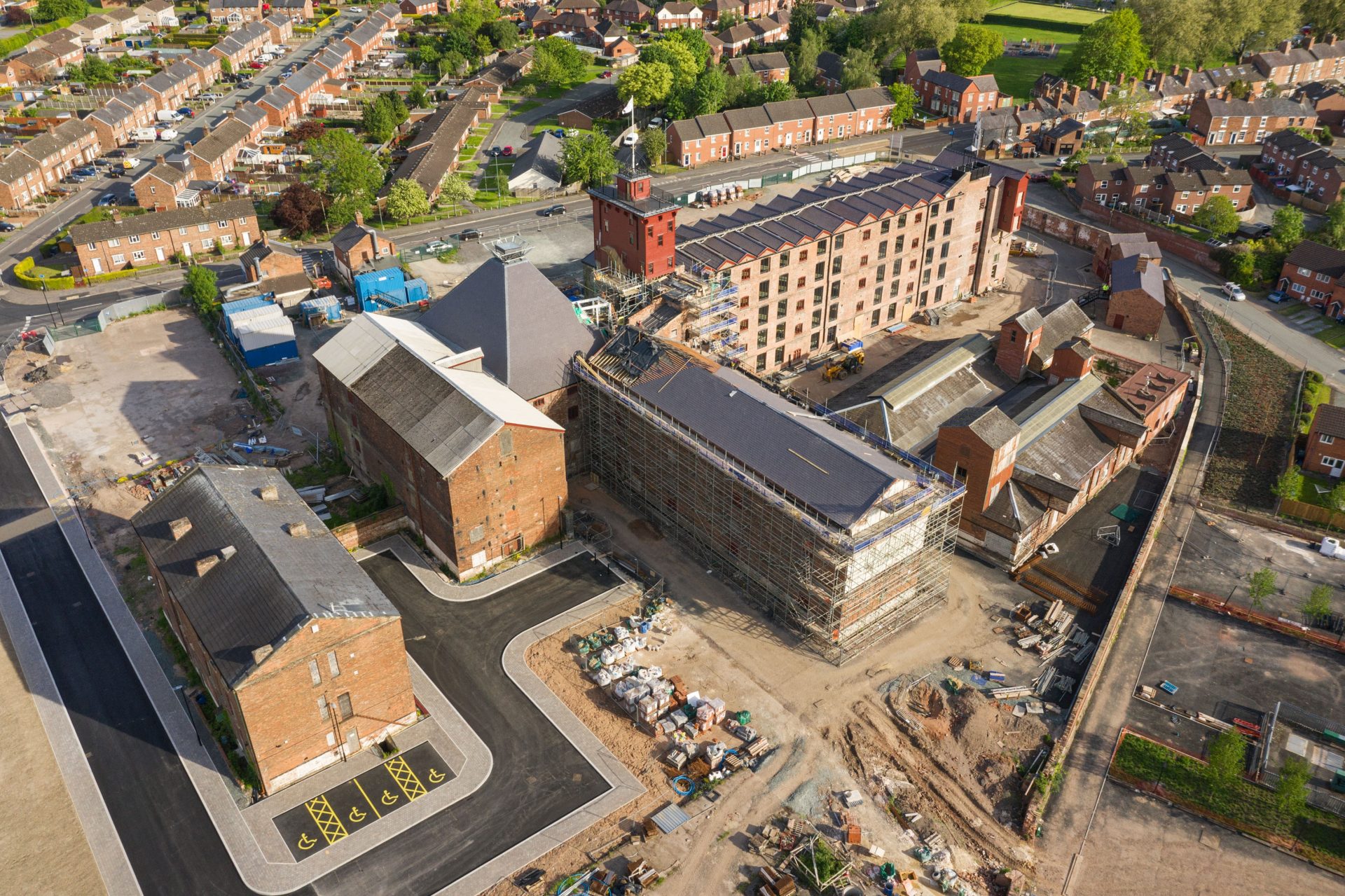
The site covers a total of eight listed buildings. The main mill, built between 1796 and 1797 is the world’s oldest iron-framed building. The complex has been closed for the last 35 years. But now four of the listed buildings – the smithy, stables, main mill and kiln – are fully restored.
This is not a paywall. Registration allows us to enhance your experience across Construction Management and ensure we deliver you quality editorial content.
Registering also means you can manage your own CPDs, comments, newsletter sign-ups and privacy settings.
The world’s oldest iron-framed building, the Grade I listed main mill at Shrewsbury Flaxmill Maltings
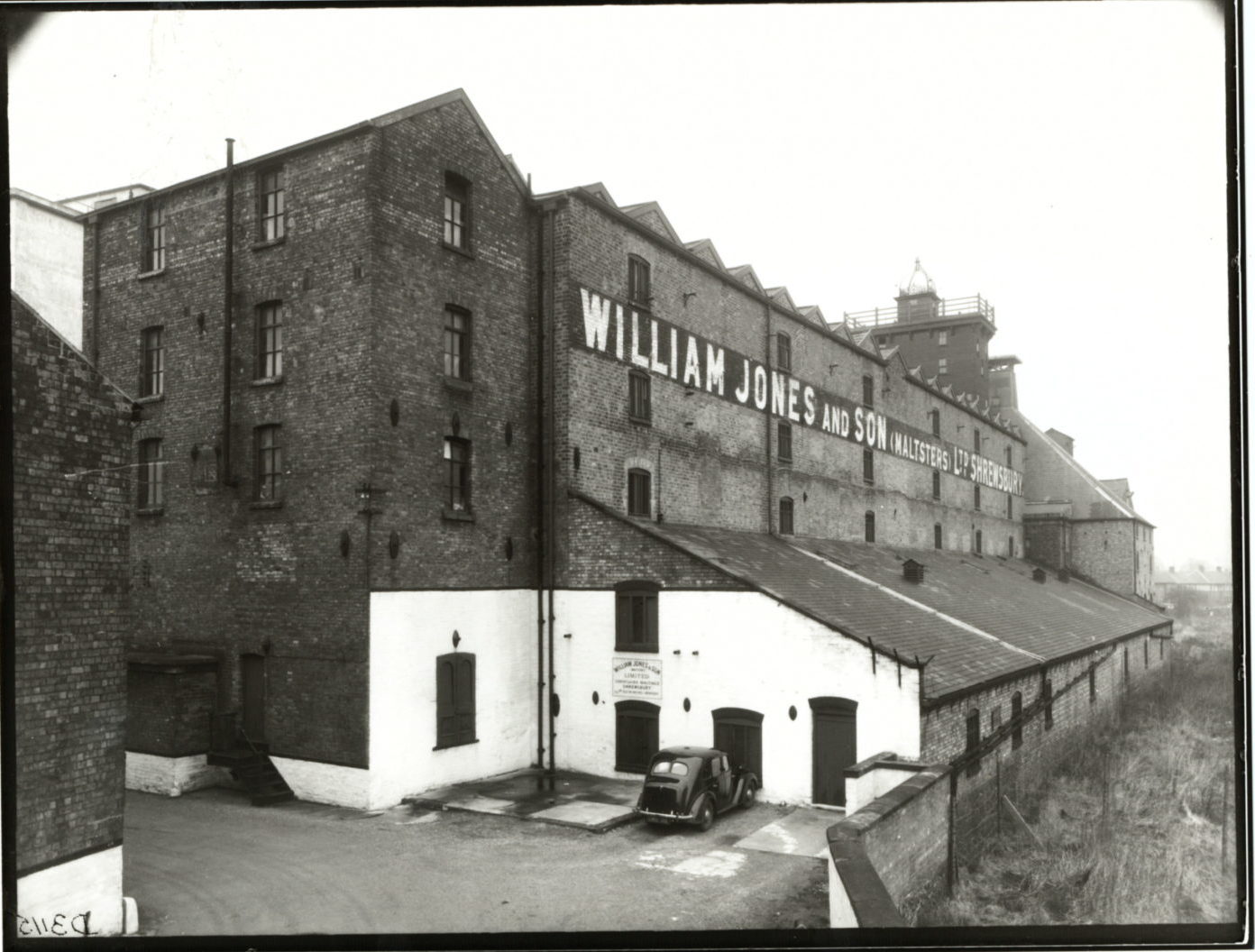
The main mill was the first to have an internal frame of cast iron columns, beams and tie-rods. Architect Charles Bage designed it to have the necessary structural strength for multiple storeys. After starting life as a flax mill, it was repurposed into a modern maltings, which operated from 1897 until 1987, converting grain into malt for brewing, whisky making and vinegar production. The site was also a temporary barracks during the Second World War.
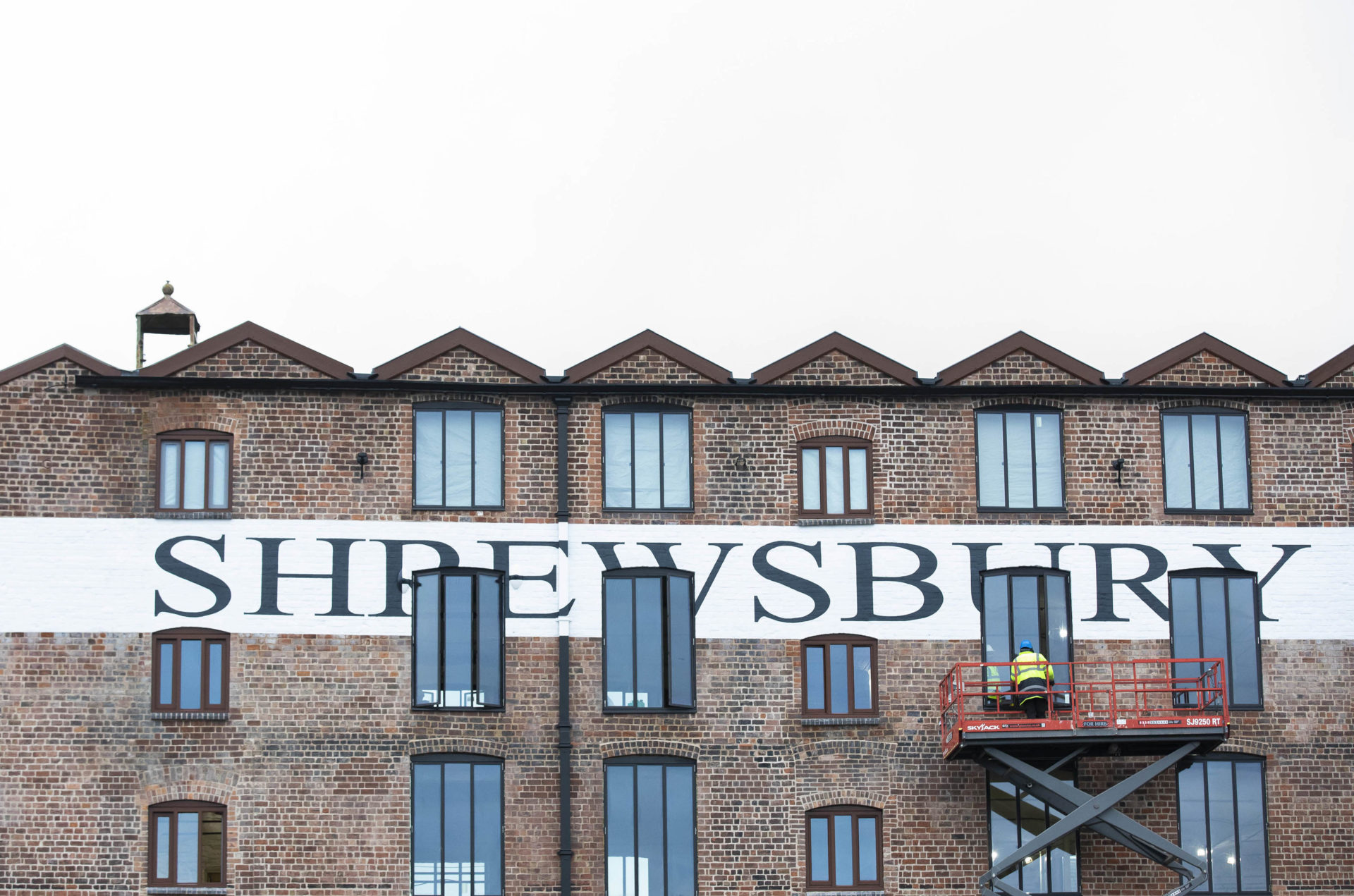
The sunflower on the Shrewsbury Flaxmill Maltings coronet
Roof restoration
Croft Building & Conservation, based in Cannock, Staffordshire, restored the roof on the main mill. Around 15,000 new Welsh slates from Penrhyn Quarry, the only remaining source of original North Wales slate, were used on the project.
The roof has an unusual design – a saw-tooth profile with 17 valley gutters between the slate roof slopes. When contractors stripped the roof covering they found that the original cast iron valley gutters of 1797 still survived. Each section was 4m long and required four men to lift.
To repair the roof, five new sections of cast iron gutters to match the original were specially made at the Barr & Grosvenor Foundry in Wolverhampton.
Aerial view of Shrewsbury Flaxmill Maltings in Shropshire
Meanwhile, specialist traditional brick manufacturer Northcot Brick hand made 30,000 of the specially sized bricks needed to restore the main mill. These are approximately a third larger than standard-sized bricks as they were used for construction during a period when the number of bricks used in new buildings was taxed to raise funds for wars in the American Colonies. Using larger bricks reduced the amount of bricks required, and consequently the amount of tax.
Shrewsbury Flaxmill Maltings operated from 1897 to 1987 (Image: Friends of Flaxmill Maltings)
Gleeds was quantity surveyor on the project, while AKTII acted as structural engineers and E3 Consulting Engineers as mechanical and electrical consultants.
Remaining buildings
The four remaining buildings – the cross mill, the dye house, the apprentice house and the warehouse – still need funding before they can be restored.
Duncan Wilson, chief executive of Historic England, said: “Managing the restoration of Shrewsbury Flaxmill Maltings has been challenging and rewarding in equal measure. This is a remarkable and complex site which has involved a vast team of specialists, partners, funders and volunteers to get it back up and running.
“I am proud that Historic England has led this ambitious and challenging project to successful delivery, and I look forward to the moment we open the doors to visitors in September.”
The January/February 2026 issue of Construction Management magazine is now available to read in digital format.
Powered Access
CM, in partnership with IPAF, has launched a new survey to explore the industry’s views and experiences with powered access machines on construction projects.
This is not a first step towards a paywall. We need readers to register with us to help sustain creation of quality editorial content on Construction Management. Registering also means you can manage your own CPDs, comments, newsletter sign-ups and privacy settings. Thank you.