Construction Management is the highest circulation construction-based publication serving the UK built environment.
News
Scientists create almost carbon-neutral bricks
Cristina Lago Deputy Editor
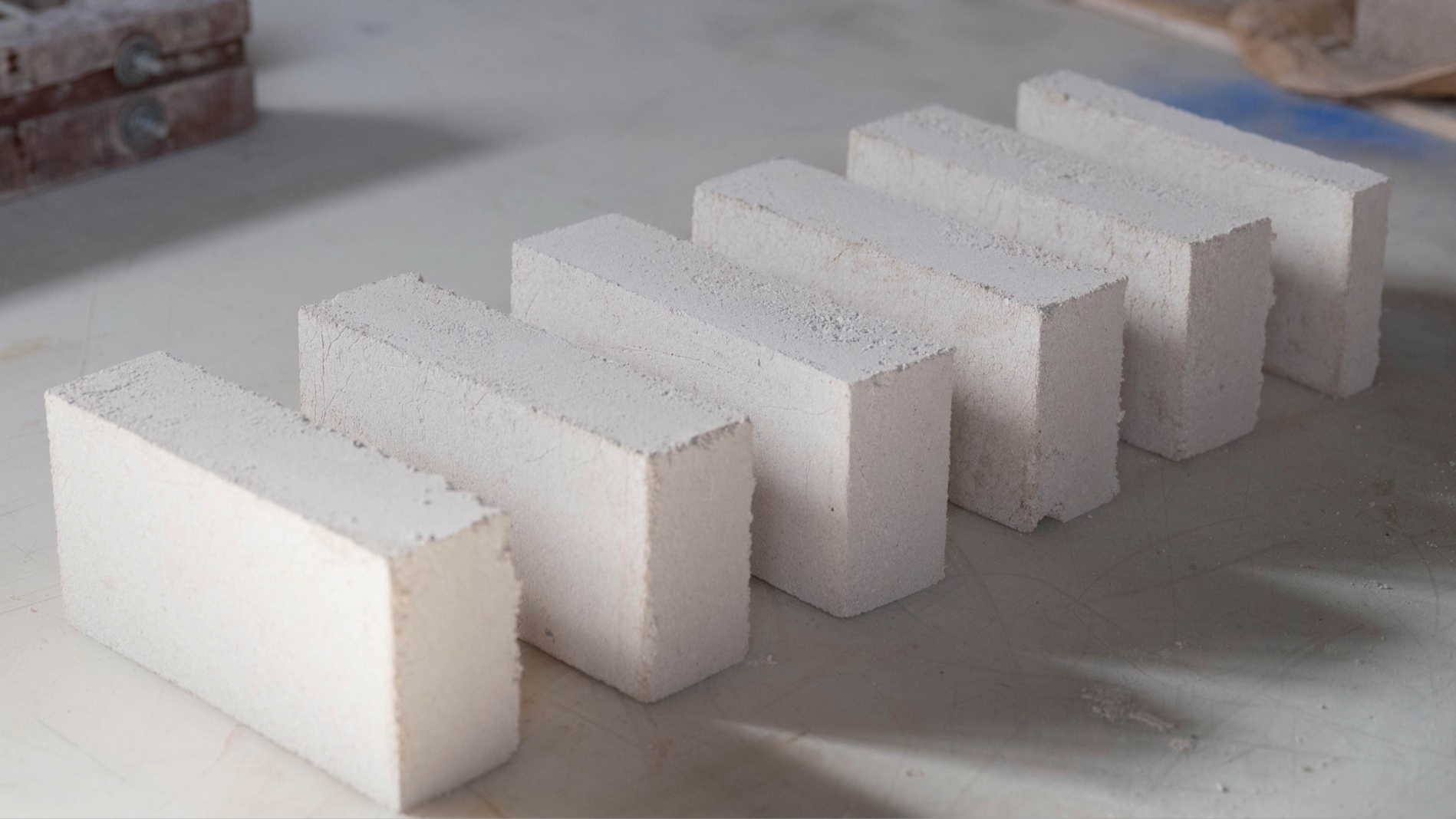
Seratech has partnered with architect Carmody Groarke to make the prototype a commercially viable product (Image: Carmody Groarke)
A company has produced its first low-carbon brick prototype following 18 months of research.
The brick uses a magnesium carbonate binder produced via Seratech’s proprietary carbon capture, mineralisation and utilisation process, which allows CO2 emissions from industry flues to be permanently stored within the built environment.
Conventional clay bricks require firing at over 1,200 deg C and have close to 1kg of embodied CO2 per brick. But Seratech’s brick only needs to be baked at 60 deg C, before being left to cure at an ambient temperature for up to two weeks to gain full strength.
This is not a paywall. Registration allows us to enhance your experience across Construction Management and ensure we deliver you quality editorial content.
Registering also means you can manage your own CPDs, comments, newsletter sign-ups and privacy settings.
The scientists at Seratech claim the brick is as close as it can be to carbon neutrality. Although there is a small amount of carbon associated with heating the bricks overnight, the process can be electrified, which is not the case for clay bricks.
A small amount of that CO2 is released through a chemical reaction while the brick is curing, but the scientists said it does not come close to clay-fired, calcium silicate, or concrete bricks in terms of emissions.
However, Seratech said that what makes this brick a viable low-carbon solution for construction is its binding agent, magnesium carbonate, which is almost 30% by weight captured CO2.
Scientists worked with structural engineer AKT II and materials specialist Local Works Studio to experiment with different aggregate and additive combinations to improve the brick’s performance and circularity.
The prototypes will be tested over the coming months to evaluate their performance against building standards.
The January/February 2026 issue of Construction Management magazine is now available to read in digital format.
Powered Access
CM, in partnership with IPAF, has launched a new survey to explore the industry’s views and experiences with powered access machines on construction projects.
This is not a first step towards a paywall. We need readers to register with us to help sustain creation of quality editorial content on Construction Management. Registering also means you can manage your own CPDs, comments, newsletter sign-ups and privacy settings. Thank you.