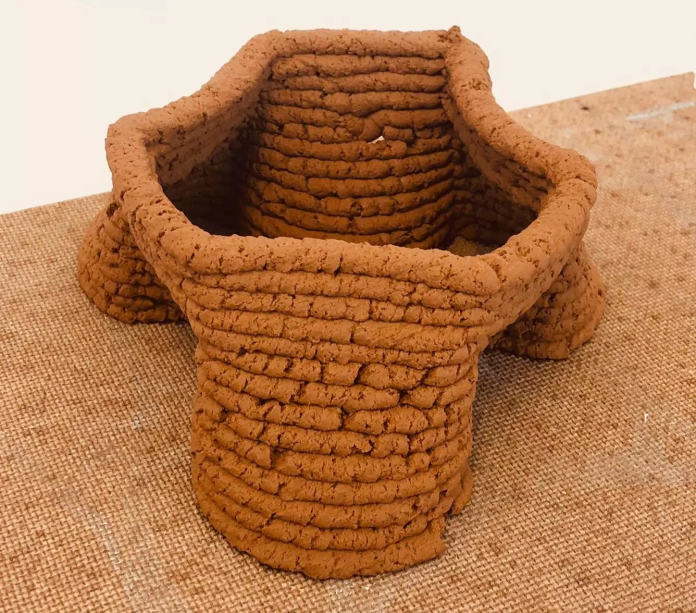
The Texas A&M University project combined the soil with a binding additive to make it cohesive and allow it to be extruded by the printer into small clay cubes, Global Construction Review reports.
It is also strengthened and made waterproof by a process
known as “zippering” – the formation of microscopic layers on the surface of
the clay that means it can bear twice as much weight as the unmodified mixture.
This is not a paywall. Registration allows us to enhance your experience across Construction Management and ensure we deliver you quality editorial content.
Registering also means you can manage your own CPDs, comments, newsletter sign-ups and privacy settings.
If used at a larger scale, the process would have a smaller
carbon footprint than concrete, and the use of local soil would avoid the need
to transport building materials to site.
As the chemistry of soils vary, the team aim to create a
“toolkit” of additives that can transform any type of soil into printable
material.
Reduced environment impact
Sarbajit Banerjee, the project’s principal investigator,
said: “The environmental impact of the construction industry is an issue of
growing concern. Some researchers have turned to additive manufacturing, or
building structures layer by layer, which is often done with a 3D printer.
“That advance has begun to transform this sector in terms of
reducing waste, but the materials used in the process need to be sustainable as
well.”
Aayushi Bajpayee, a graduate student working in Banerjee’s
lab, added: “Historically, humans used to build with locally sourced materials
such as adobe, but the move to concrete has raised many environmental issues.
“Our thought was to turn the clock back and find a way to
adapt materials from our own backyards as a potential replacement for
concrete.”
The team will work to improve the soil’s load-bearing
capabilities to allow it to work as a feasible replacement for concrete.
They also plan to explore using the technique to create
settlements on the Moon or Mars.
Image courtesy of Aayushi Bajpayee.