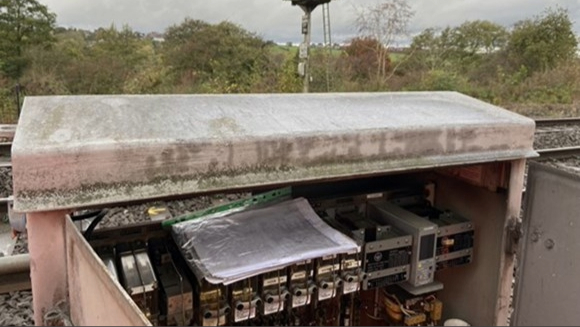
The incident happened on the morning of 26 October 2022, when a train travelling between Derby and Chesterfield unexpectedly encountered a signal displaying a red (stop) aspect.
The previous signal had displayed a green (proceed) aspect. As the train was travelling at 100mph, it was unable to stop before the red signal and passed it by about 760m.
This is not a paywall. Registration allows us to enhance your experience across Construction Management and ensure we deliver you quality editorial content.
Registering also means you can manage your own CPDs, comments, newsletter sign-ups and privacy settings.
The train’s driver called the signaller straight away to report the incident. About 17 minutes later, the following train approached the signal which was now displaying a yellow (caution) aspect.
After passing the signal, while travelling at about 20mph, the driver of the second train saw the taillights of the stationary first train ahead of it and braked to a controlled stop.
The second train stopped about 75 metres from the rear of the first, with both trains now in the same signal section. There were no significant consequences and both trains were able to continue their journeys after obtaining permission from the signaller.
Problems with the wiring
The wrong signal had been displayed due to a fault being introduced in the signalling system’s wiring and then not being detected by testing after work on the system had been undertaken.
RAIB said that testing was affected by a combination of time pressure, tester workload and possibly unfamiliarity with the configuration of the signalling equipment.
The safety watchdog noted that the potential for a collision between the two trains was reduced by the actions taken by the signallers at East Midlands Control Centre and the second train driver.
The report also included a series of recommendations addressed to Network Rail and the civil engineering contractors and recruitment agencies involved in the rail operations.
‘Echoes’ of other accidents
Chief inspector of rail incidents, Andrew Hall, said: “The incident at Wingfield has echoes of the tragic accident at Clapham Junction nearly 35 years ago. Even more worryingly, perhaps, it also has echoes of a more recent collision at Waterloo in 2017 and a derailment at Dalwhinnie in 2021.
“The railway implemented very significant changes to processes around the installation, maintenance and testing of signalling systems after the accident at Clapham. The importance of following these established processes to maintain the safety integrity of the signalling system, and the potential for unsafe events to occur when they are not followed, is once again shown by the events at Wingfield.”