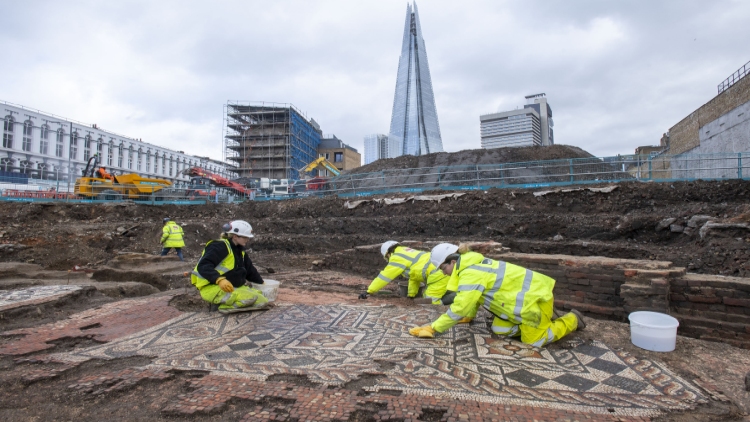
Archaeologists have uncovered the largest area of Roman mosaic found in London for more than 50 years ahead of construction of the Liberty of Southwark development.
Construction on the £210m project is due to start later this year.
Prior to the works, archaeologists from MOLA (Museum of London Archaeology) found a well-preserved mosaic that once decorated the floor of a Roman dining room.
This is not a paywall. Registration allows us to enhance your experience across Construction Management and ensure we deliver you quality editorial content.
Registering also means you can manage your own CPDs, comments, newsletter sign-ups and privacy settings.
The mosaic includes two highly-decorated panels made up of small, coloured tiles set within a red tessellated floor.
The largest mosaic panel has been dated to the late second to early third century AD, although traces of an earlier mosaic underneath the one currently visible have been identified.
The dining room might have been part of a Roman mansio – an upmarket ‘motel’ offering accommodation, stabling and dining facilities for state couriers and officials travelling to and from London.
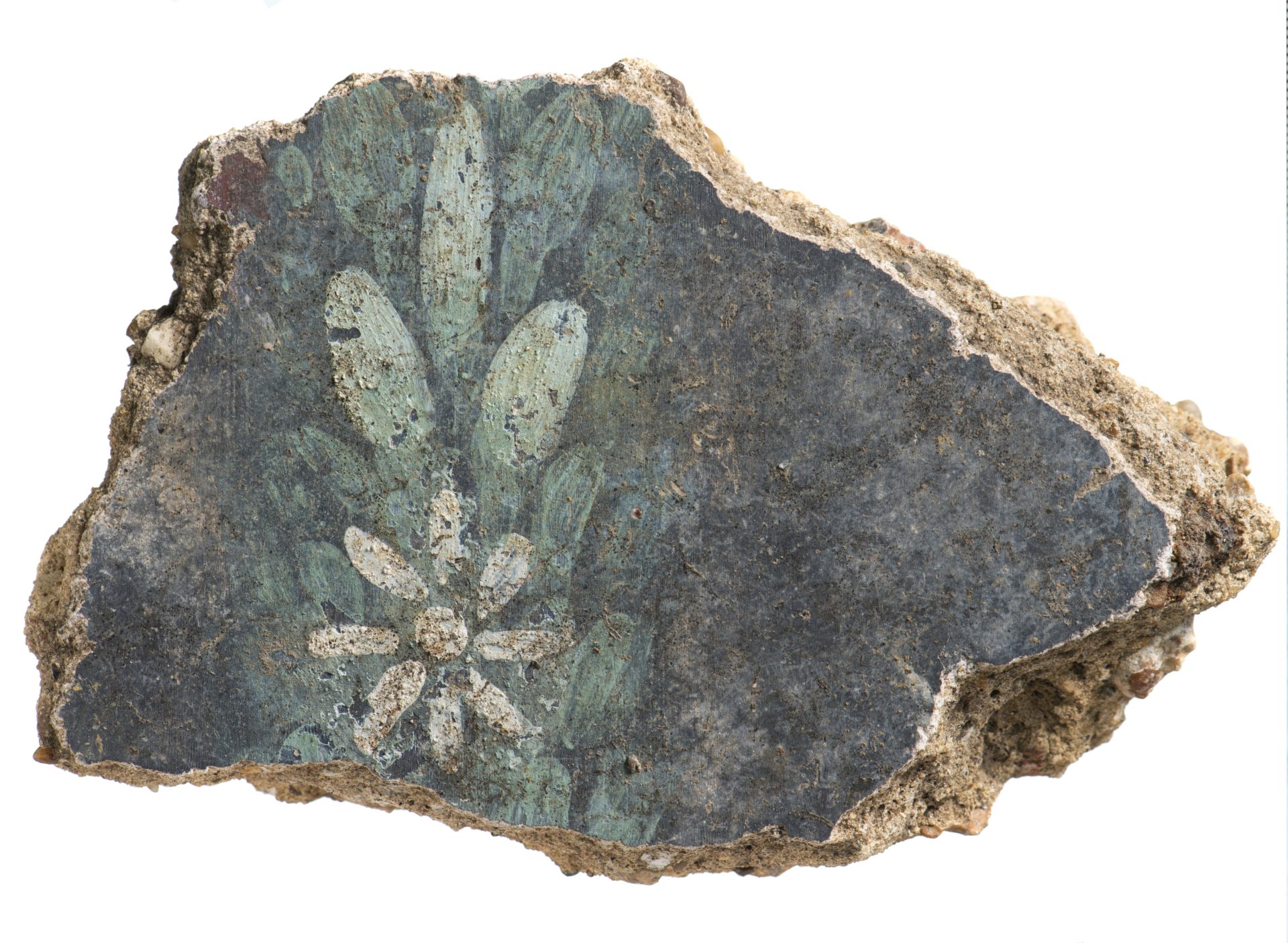
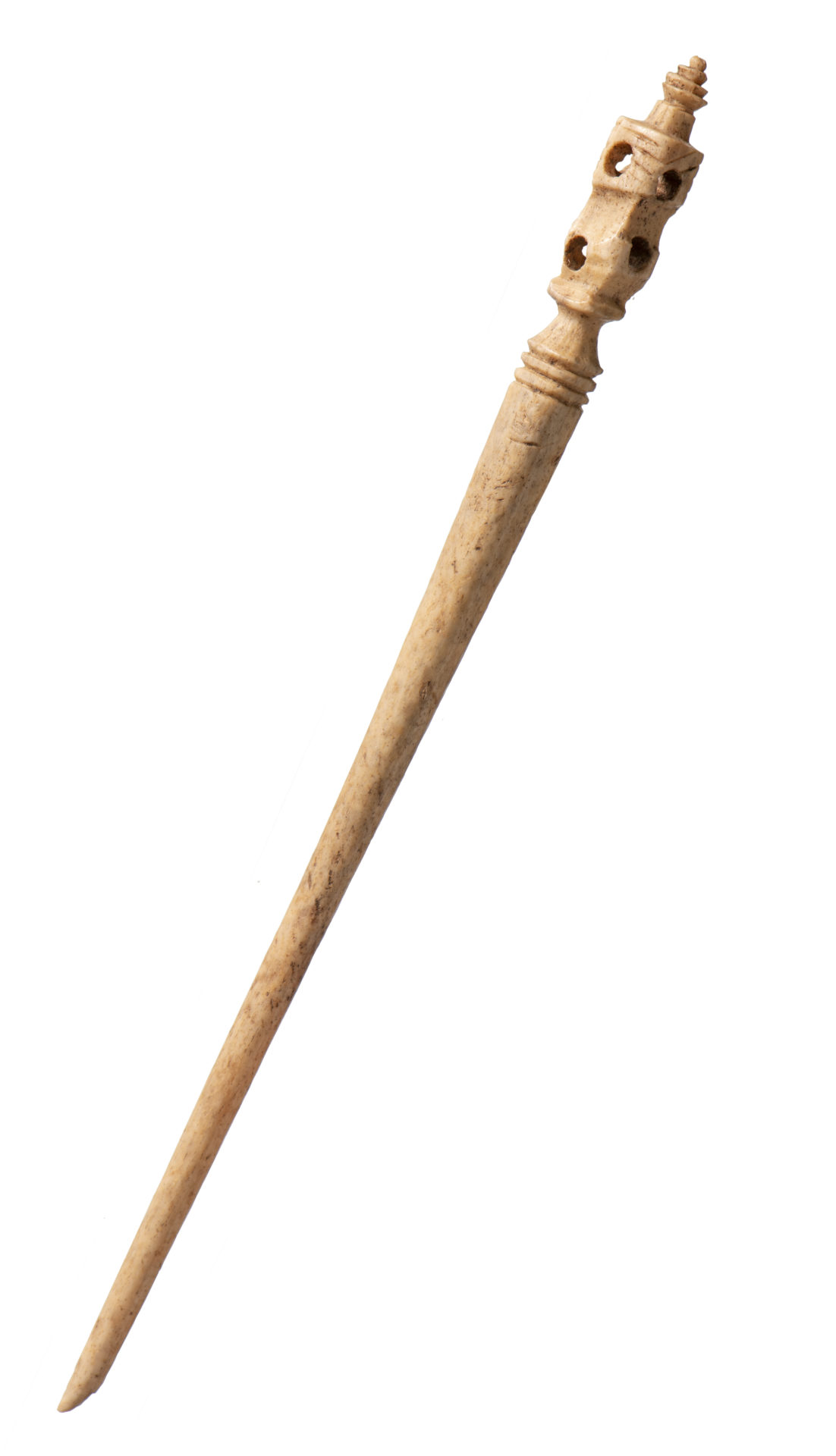
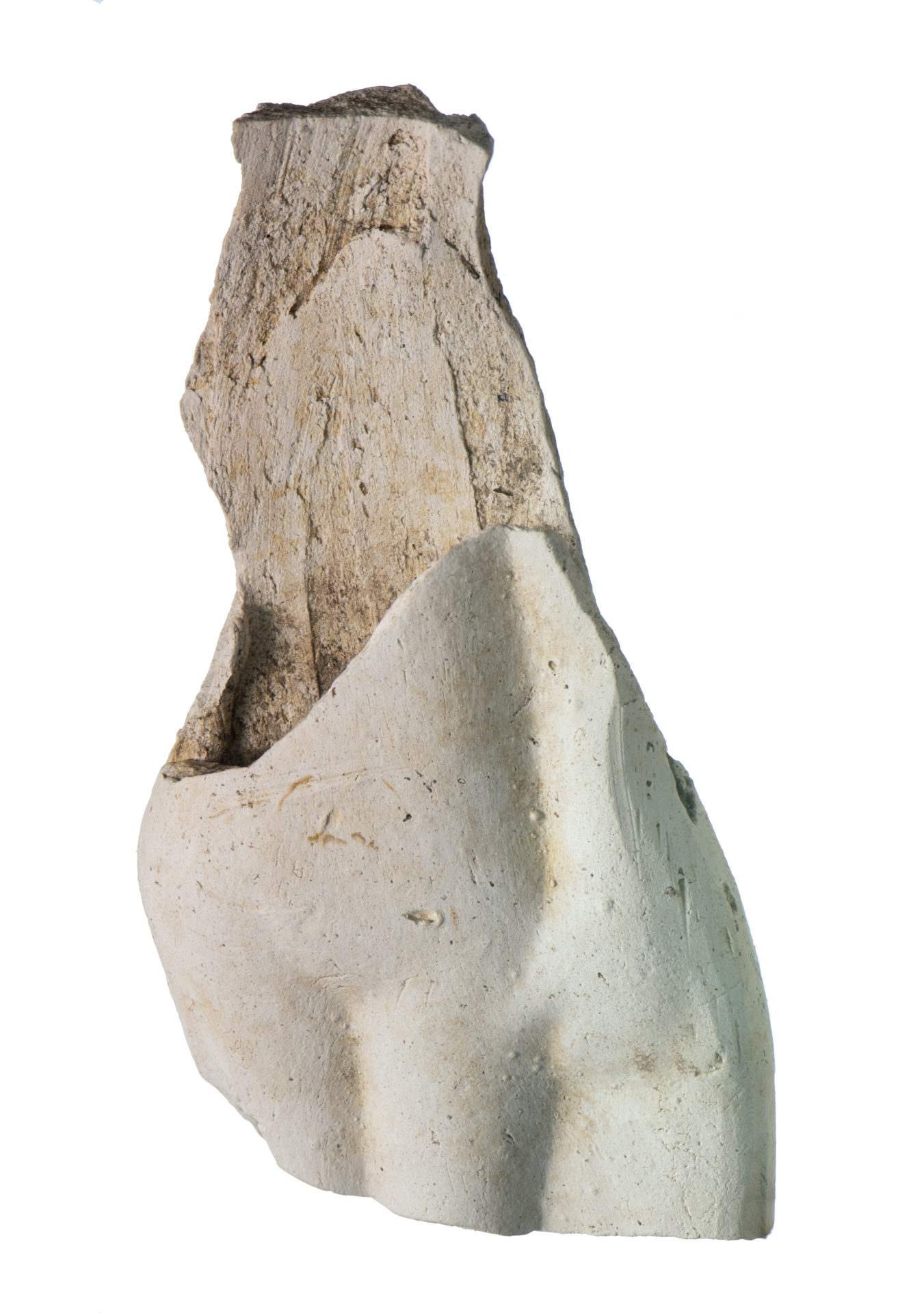
Neighbouring the mansio, archaeologists have identified another large Roman building, likely to have been the private residence of a wealthy individual or family. Traces of lavishly painted walls, terrazzo-style and mosaic floors, coins, jewellery and decorated bone hairpins have all been discovered at the site.
The Liberty of Southwark, developed by Transport for London and U+I, will sit between Southwark Street, Redcross Way and Union Street, offering workspace, 36 new homes, shops and restaurants. John F Hunt is contracted to oversee enabling works. A main contractor has yet to be appointed. Completion is targeted for 2024.
The scheme has been designed by architect Allies and Morrison. Meanwhile, MOLA has worked in partnership with contractor Keltbray and TfL to deliver a two-week ‘Get Into Archaeology’ access programme for Londoners interested in learning more about construction and the work of professional archaeologists.
The mosaics will be recorded and assessed by an expert team of conservators before being transported from the site. Future plans for the public display of the mosaics are being determined in consultation with Southwark Council.
MOLA site supervisor, Antonietta Lerz, said: “This is a once-in-a-lifetime find in London. It has been a privilege to work on such a large site where the Roman archaeology is largely undisturbed by later activity – when the first flashes of colour started to emerge through the soil everyone on site was very excited!”
The January/February 2026 issue of Construction Management magazine is now available to read in digital format.
Powered Access
CM, in partnership with IPAF, has launched a new survey to explore the industry’s views and experiences with powered access machines on construction projects.
This is not a first step towards a paywall. We need readers to register with us to help sustain creation of quality editorial content on Construction Management. Registering also means you can manage your own CPDs, comments, newsletter sign-ups and privacy settings. Thank you.