Construction Management is the highest circulation construction-based publication serving the UK built environment.
News
Photos | John Laing’s Barbican Centre build 40 years on
Neil Gerrard Associate editor
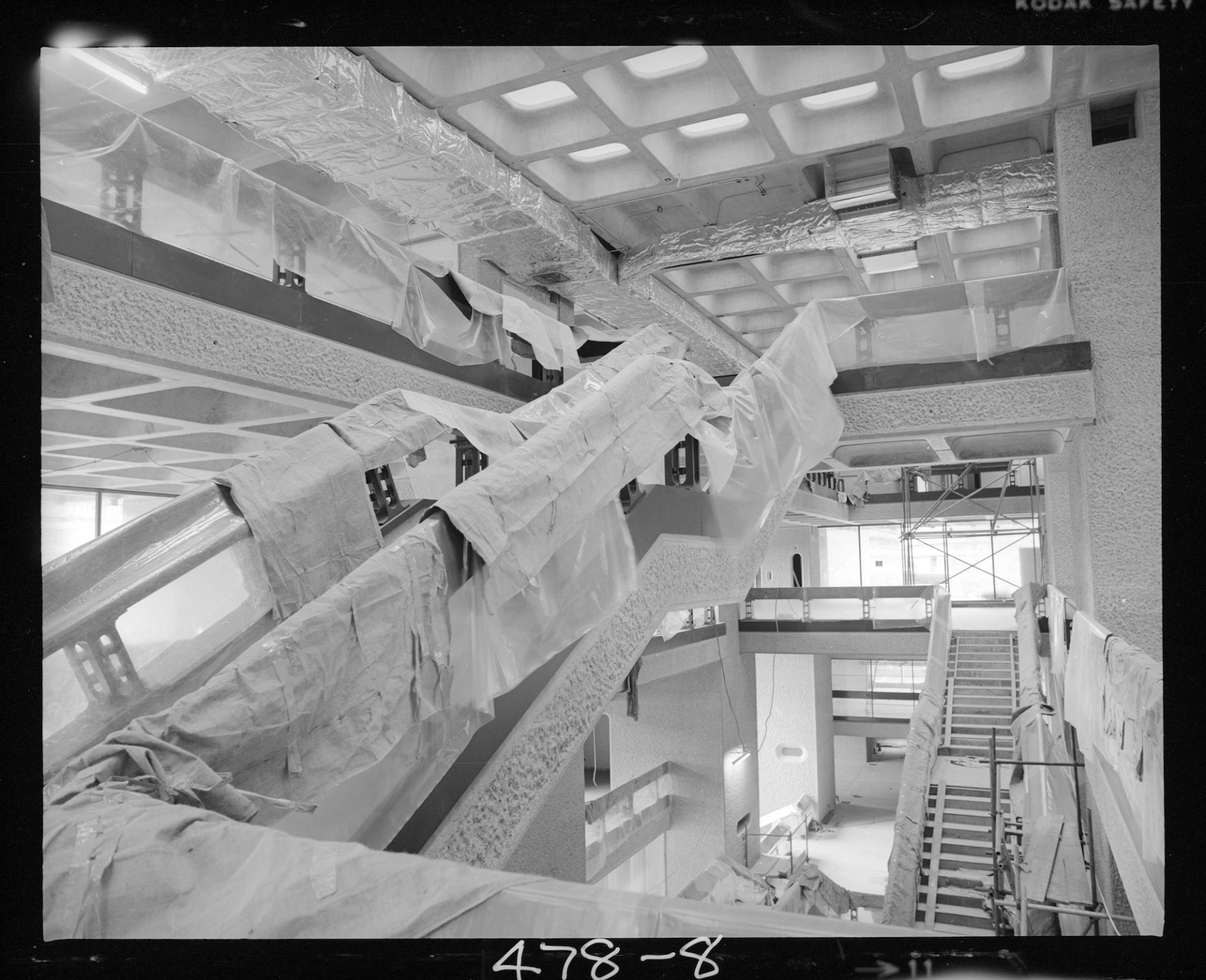
Covered staircases from the art gallery leading into the Barbican concourse, October 1980 (Image: Peter Bloomfield)
This March marks 40 years since the completion of the Barbican Centre, built by John Laing Construction.
The complex, designed by architect Chamberlin, Powell & Bon, was part of a utopian vision to transform a part of London destroyed by bombing during the Second World War.
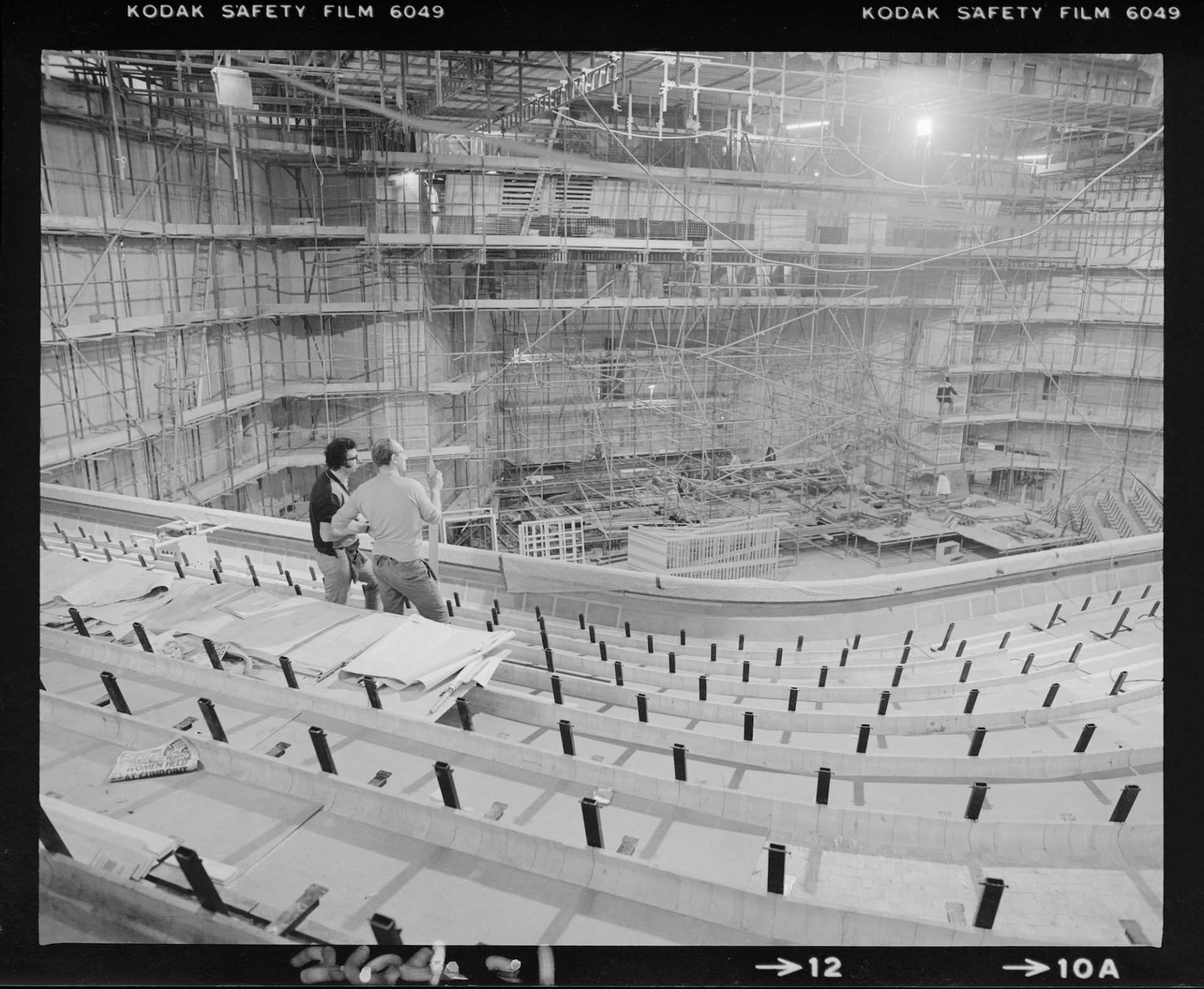
Two workmen survey the concert hall from the Stalls, November 1979 (Image: Peter Bloomfield)
The Barbican took more than 10 years to build. John Laing was awarded a contract to build the arts centre, Frobisher Crescent and the Guildhall School of Music and Drama for just under £14m, but huge cost overruns meant that the final cost was £159m, according to Barbican Living.
This is not a paywall. Registration allows us to enhance your experience across Construction Management and ensure we deliver you quality editorial content.
Registering also means you can manage your own CPDs, comments, newsletter sign-ups and privacy settings.
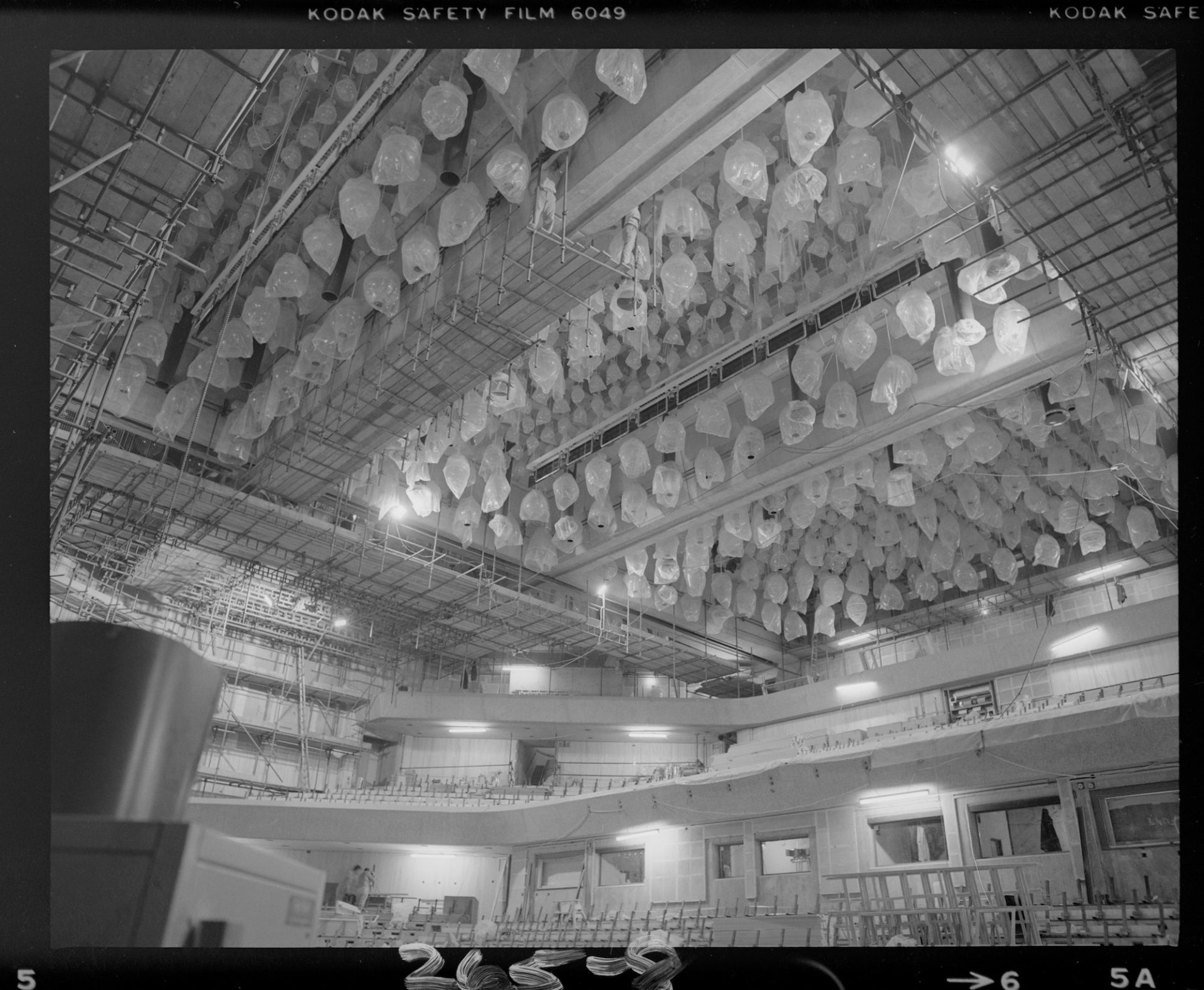
Looking up from the stage at the original acoustic features in the concert hall, November 1979 (Image: Peter Bloomfield)
The Centre, built following the construction of the wider Barbican Estate from the 1960s onwards, occupies a ward of London known as Cripplegate, which was home to fabric and leather merchants.
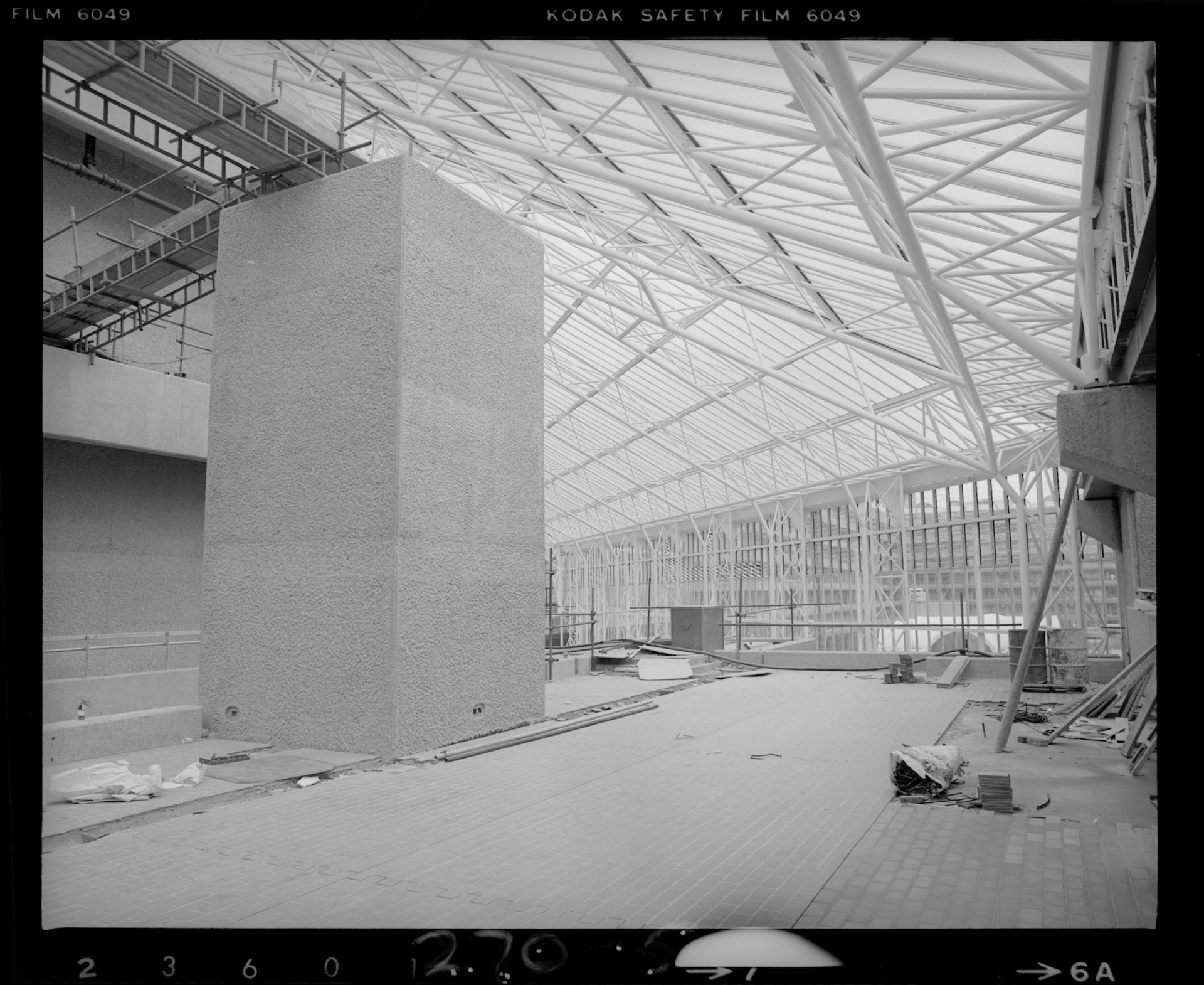
View of the glass roof of the Barbican conservatory, November 1979 (Image: Peter Bloomfield)
Much of the area was flattened in 1940 under the fire of German bombers, with only a few buildings left standing, including the damaged Church of St Giles’ Cripplegate.
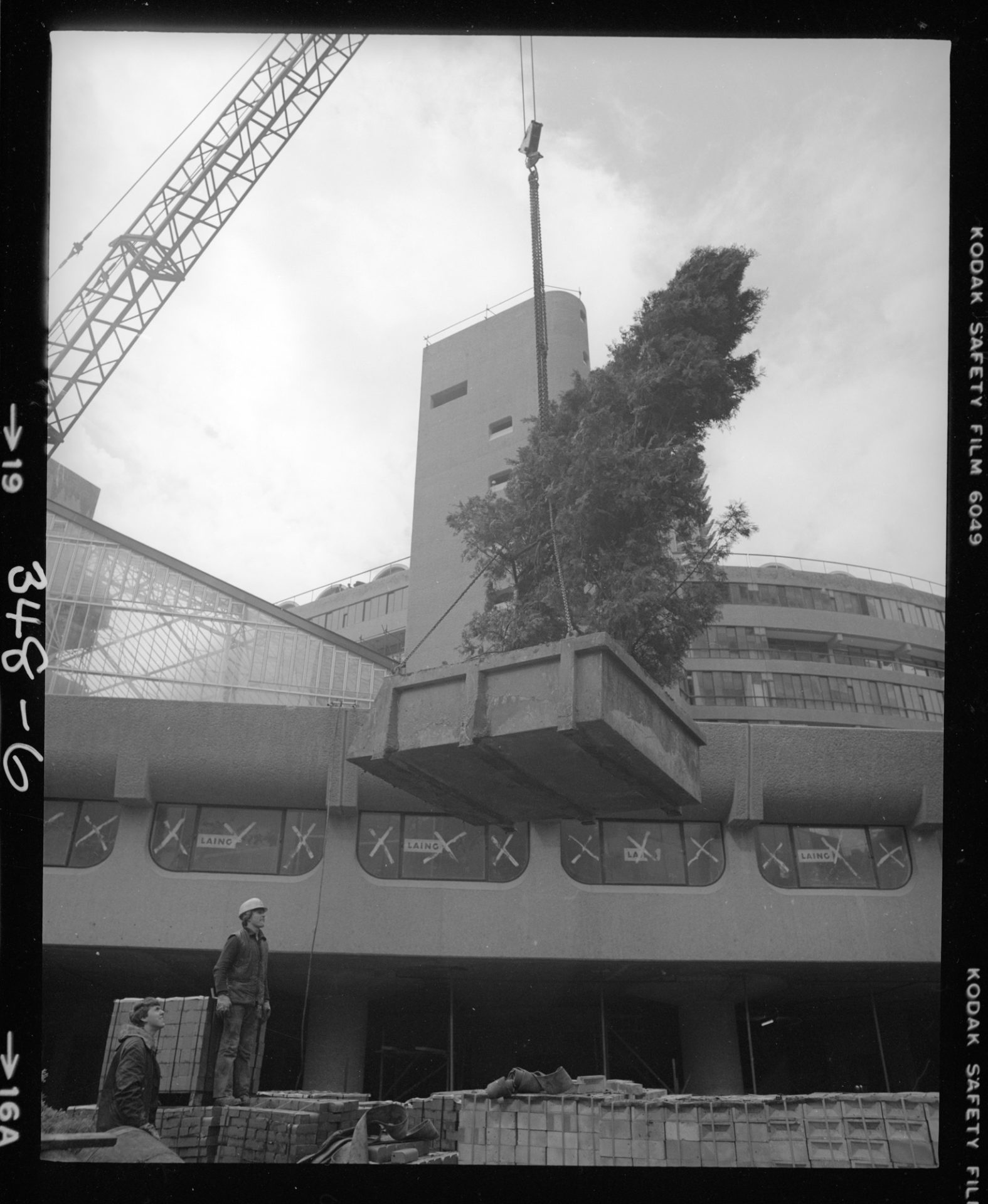
A tree is lifted by crane through the conservatory roof to be planted, March 1980 (Image: Peter Bloomfield)
While the Barbican Centre was being constructed, photographer Peter Bloomfield was commissioned by the Barbican to capture the final stages of the works.
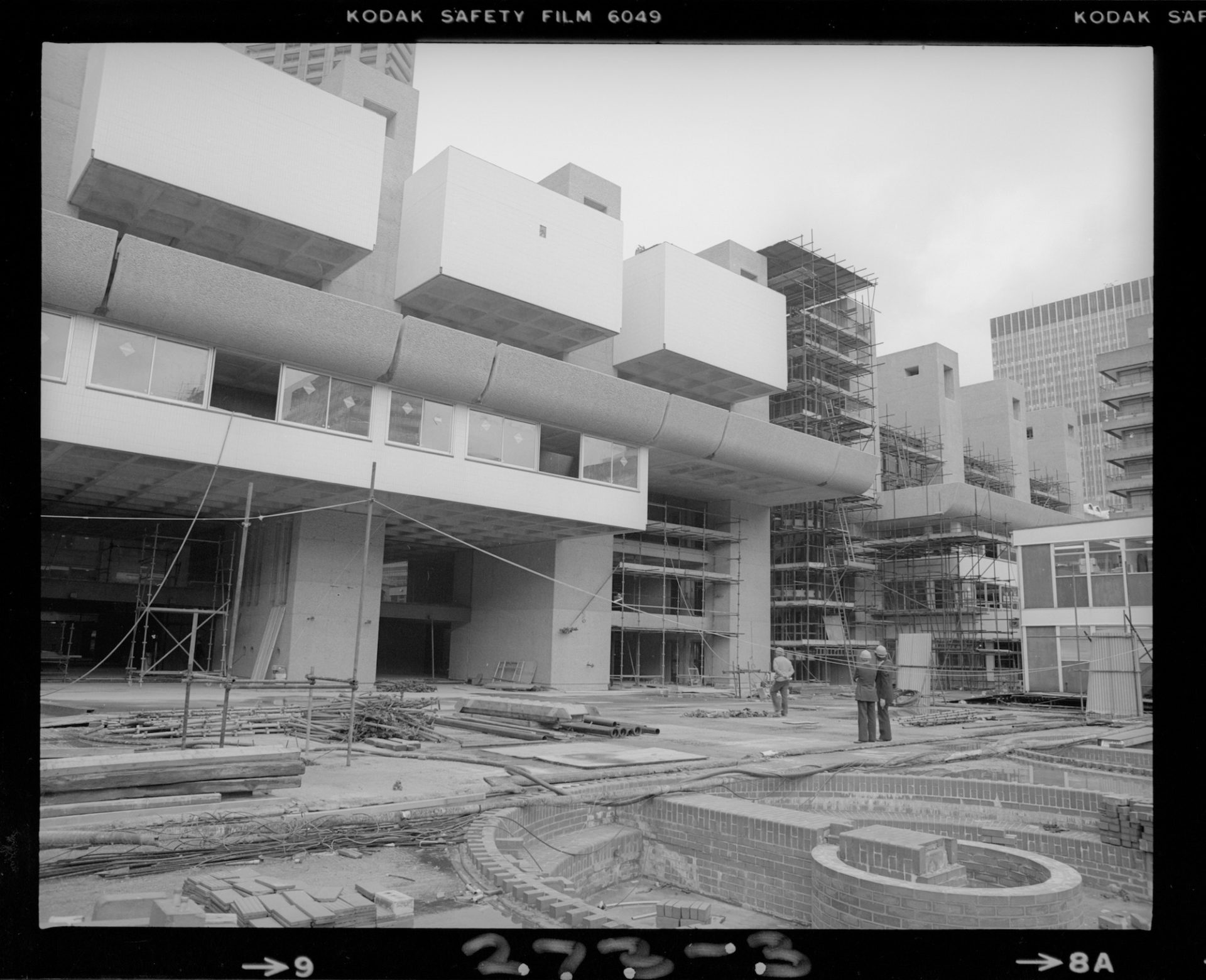
Two workmen survey the Lakeside facade, November 1979 (Image: Peter Bloomfield)
Bloomfield gifted around 1,400 negatives he produced to the Barbican in 2016, and they have been used to illustrate a book called Building the Brutal: How we built the Barbican, commemorating the centre’s construction.
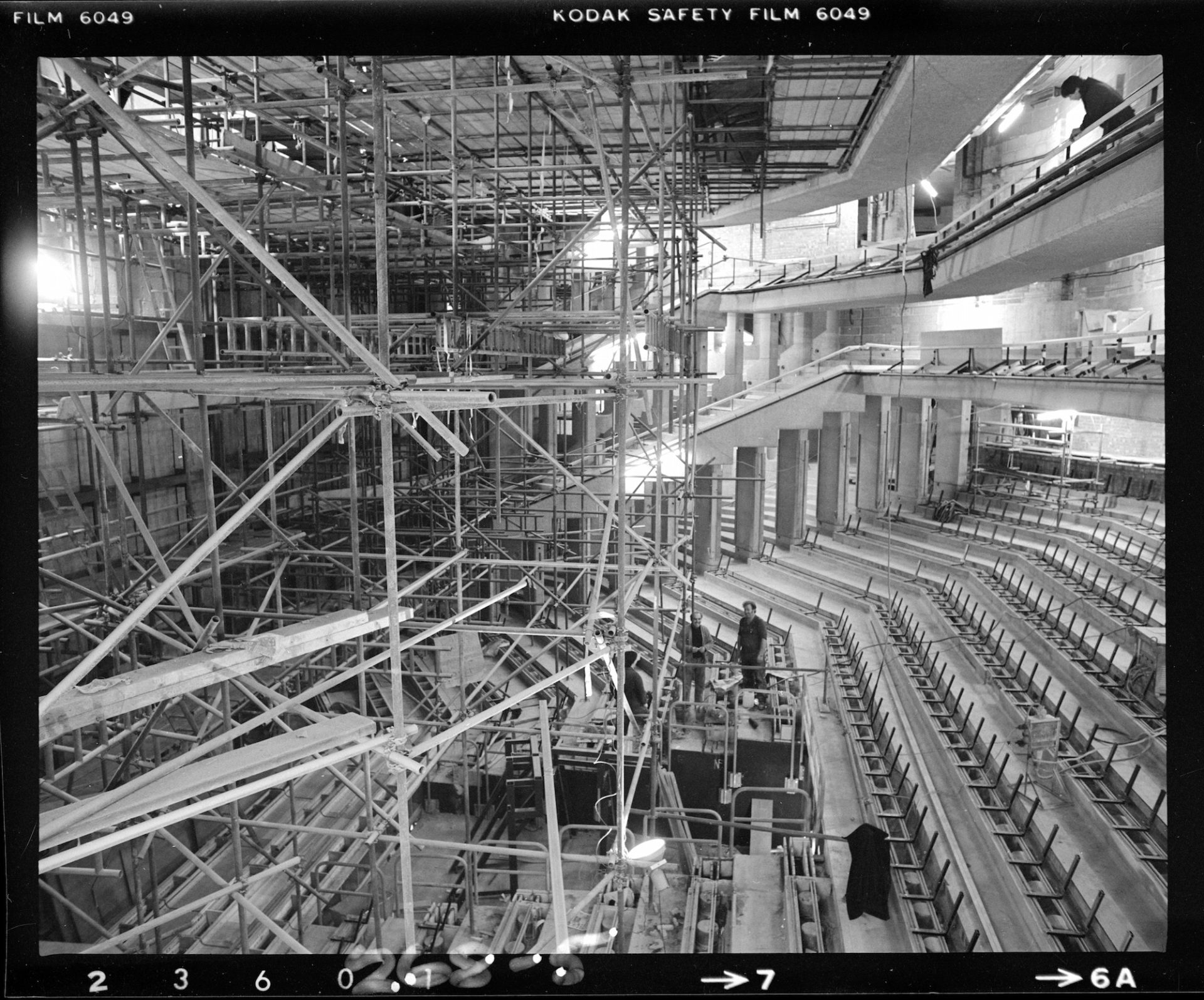
A view of a scaffolding-filled stage in the theatre, November 1979 (Image: Peter Bloomfield)
When the Barbican was opened in 1982 by the Queen, she declared it “one of the modern wonders of the world” and it has gone on to become an internationally recognised venue.
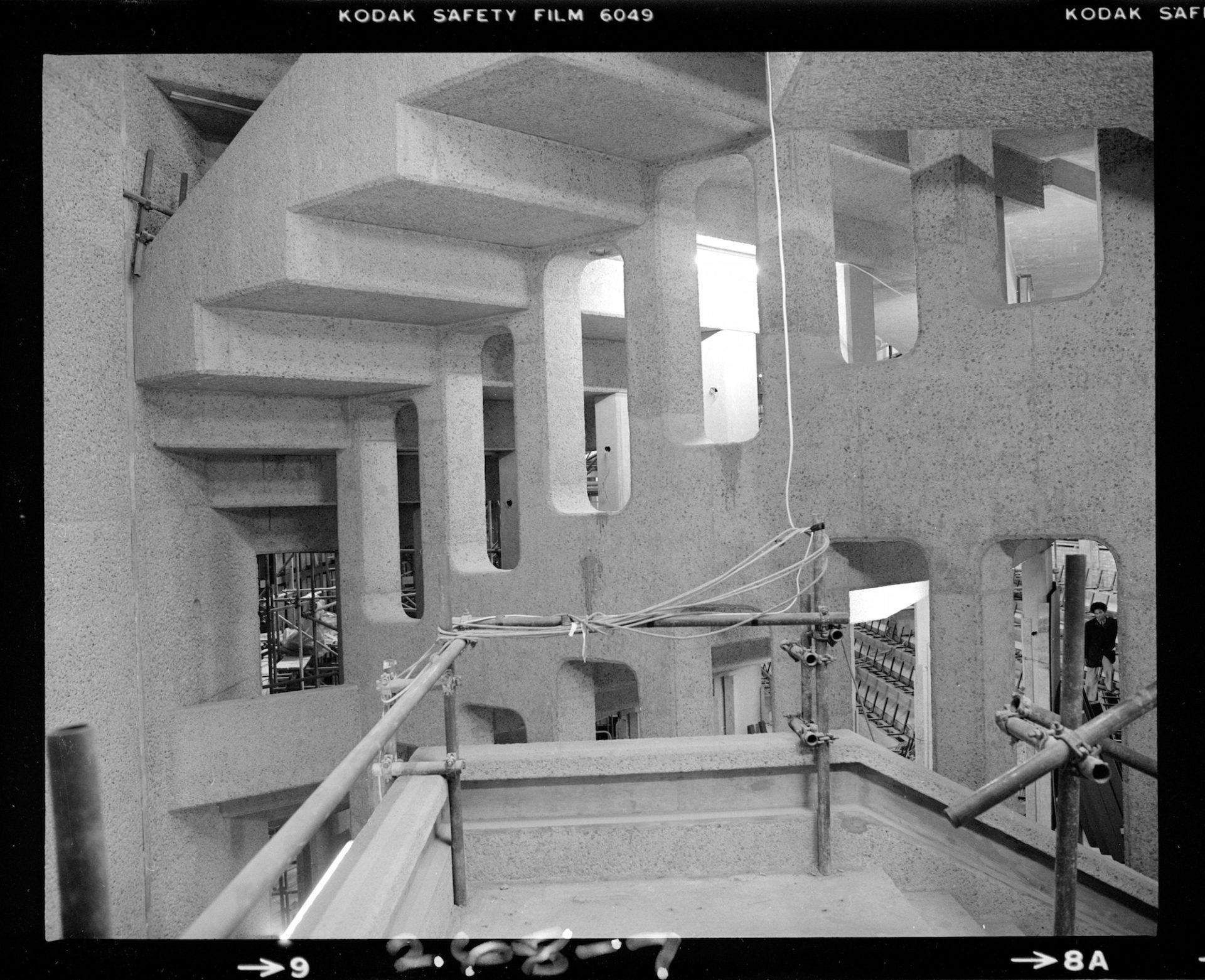
The Barbican theatre's trademark concrete surrounds during late construction, November 1979 (Image: Peter Bloomfield)
The Barbican was one of a number of major schemes built by John Laing, including the M1. The company also rebuilt the bomb-damaged Coventry Cathedral (the original cathedral was left a stable ruin and John Laing Construction built a modern cathedral at right angles to it).
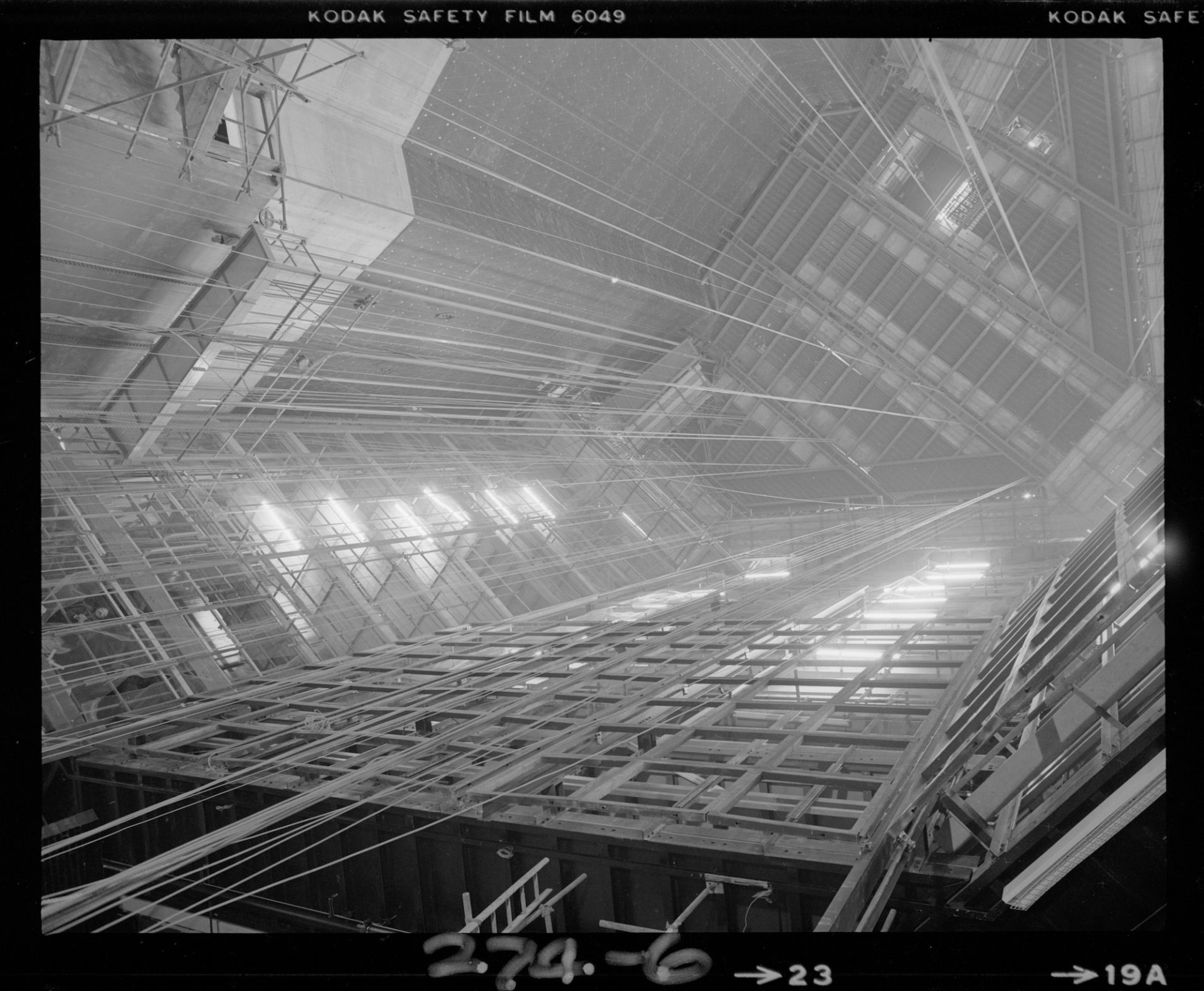
Looking up towards the top of the flytower from the theatre stage, November 1979 (Image: Peter Bloomfield)
The City of London Corporation is now working towards revamping the 40-year-old building to preserve its architectural heritage while building it up to a standard that meets the needs of 21st century artists and audiences.
In January 2022, a shortlist of five design teams for the project was announced: Adjaye Associates, Benedetti Architects, and PUP Architects; Allies and Morrison, and Asif Khan Studio; BIG – Bjarke Ingels Group, Avanti Architects, and POoR Collective; Diller Scofidio + Renfro, McCloy + Muchemwa, and Purcell; FCBStudios (Feilden Clegg Bradley), Bureau de Change, Schulze+Grassov, and Thinc.
A design team is due to be appointed in April.
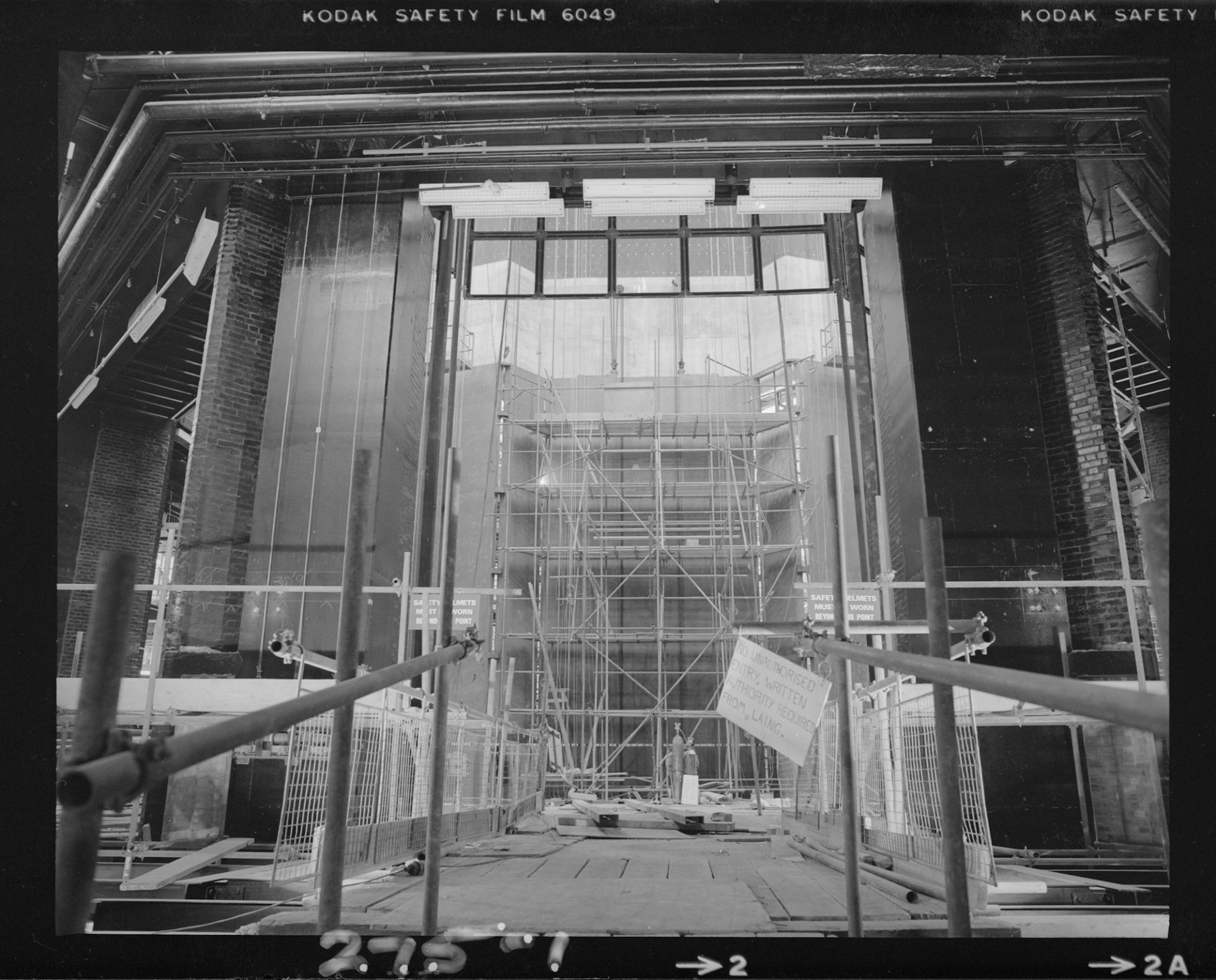
A view from backstage towards the theatre flytower, November 1979 (Image: Peter Bloomfield)
Were you involved in the construction of the Barbican? If so, CM would love to hear from you and the story of your involvement. Simply leave a comment below, or email [email protected]
The January/February 2026 issue of Construction Management magazine is now available to read in digital format.
Powered Access
CM, in partnership with IPAF, has launched a new survey to explore the industry’s views and experiences with powered access machines on construction projects.
This is not a first step towards a paywall. We need readers to register with us to help sustain creation of quality editorial content on Construction Management. Registering also means you can manage your own CPDs, comments, newsletter sign-ups and privacy settings. Thank you.