Construction Management is the highest circulation construction-based publication serving the UK built environment.
News
Novel sugarcane-waste construction blocks could save 1bn tonnes of CO2
Cristina Lago Deputy Editor
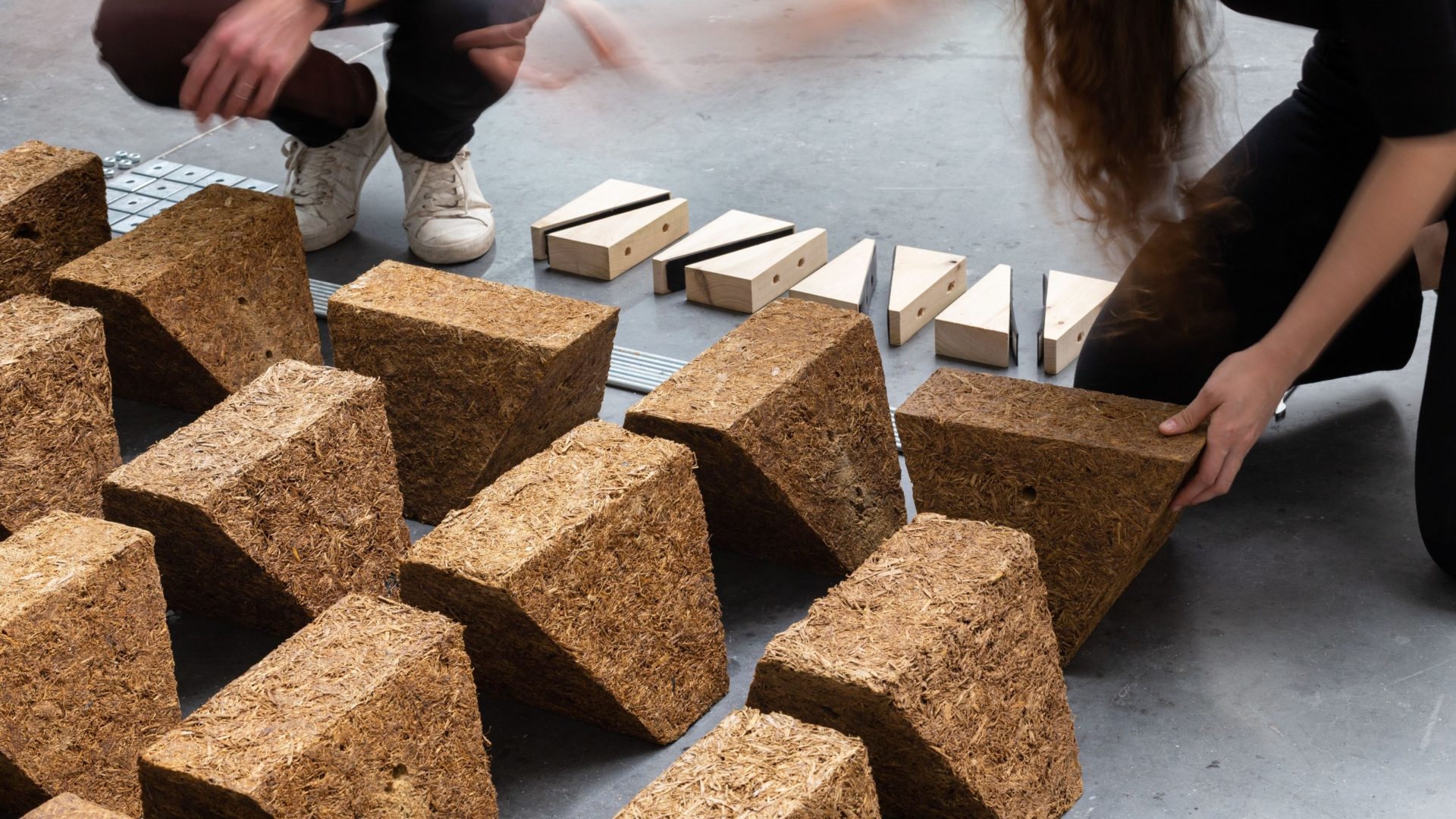
Sugarcrete is four to five times lighter than concrete block (Image: University of East London)
Researchers have developed an ultra-low carbon construction material made from sugarcane fibres that could be used instead of brick and concrete.
‘Sugarcrete’ has been developed by a team at the University of East London’s (UEL) Master of Architecture and Sustainability Research Institute (SRI) and sugar supplier Tate & Lyle. It is created by mixing sugarcane fibres left after sugar sap extraction, known as bagasse, with bespoke sand-mineral binders.
Using arable by-products, the researchers claim that Sugarcrete provides a sustainable, ultra-low-carbon construction alternative to existing high-carbon materials.
This is not a paywall. Registration allows us to enhance your experience across Construction Management and ensure we deliver you quality editorial content.
Registering also means you can manage your own CPDs, comments, newsletter sign-ups and privacy settings.
UEL’s SRI developed the product over two years. Tests showed that using Sugarcrete instead of concrete reduced curing time to one week (a process that takes up to 28-days).
Four to five times lighther than concrete
Researchers also found that Sugarcrete is four to five times lighter than concrete blocks, only uses 15% to 20% of its carbon footprint and substantially reduces costs.
Senior lecturer in architecture at UEL, Armor Gutierrez Rivas, said: “Sugarcane is the world’s largest crop by production volume – almost two billion tonnes of sugarcane are produced worldwide yearly, resulting in six hundred million tonnes of fibre bagasse as by-product.
“Using a bio-waste-based product like Sugarcrete, we could replace the traditional brick industry, offering potential saving of 1,08 billion tonnes of CO2, 3% of the global CO2 production. The built environment generates 40% of annual global CO2 emissions.
“Despite the global aim to hold global warning to 1.5 degrees Celsius, it is estimated that our global built floor areas will double by 2060. Therefore, we must develop alternatives to current construction methods.”
https://vimeo.com/819419158
Demountable, reusable and fire resistant
As part of the research programme, UEL developed a prototype floor slab made from sugarcane derived from Sugarcrete and used advanced digital modelling and robotic fabrication to test the viability of the ultra-low-arbon materials in construction.
Previous research by architectural practice Grimshaw into interlocking geometries, using the form of the building components to create self-supporting assemblies, allowed Sugarcrete to be deployed as a demountable, reusable, fire-resistant composite floor slab which can be applied, disassembled, or extended in new or existing structures.
Earlier in the year, scientists at the University of Manchester presented a ‘cosmic concrete’ that could be used to build homes on Mars and present a greener alternative to construction on Earth.
Sugarcrane has been nominated for this year’s Earthshot Prize.
The January/February 2026 issue of Construction Management magazine is now available to read in digital format.
Powered Access
CM, in partnership with IPAF, has launched a new survey to explore the industry’s views and experiences with powered access machines on construction projects.
This is not a first step towards a paywall. We need readers to register with us to help sustain creation of quality editorial content on Construction Management. Registering also means you can manage your own CPDs, comments, newsletter sign-ups and privacy settings. Thank you.