Construction Management is the highest circulation construction-based publication serving the UK built environment.
News
Network Rail saves 581t of emissions with first low-carbon track renewal
Cristina Lago Deputy Editor
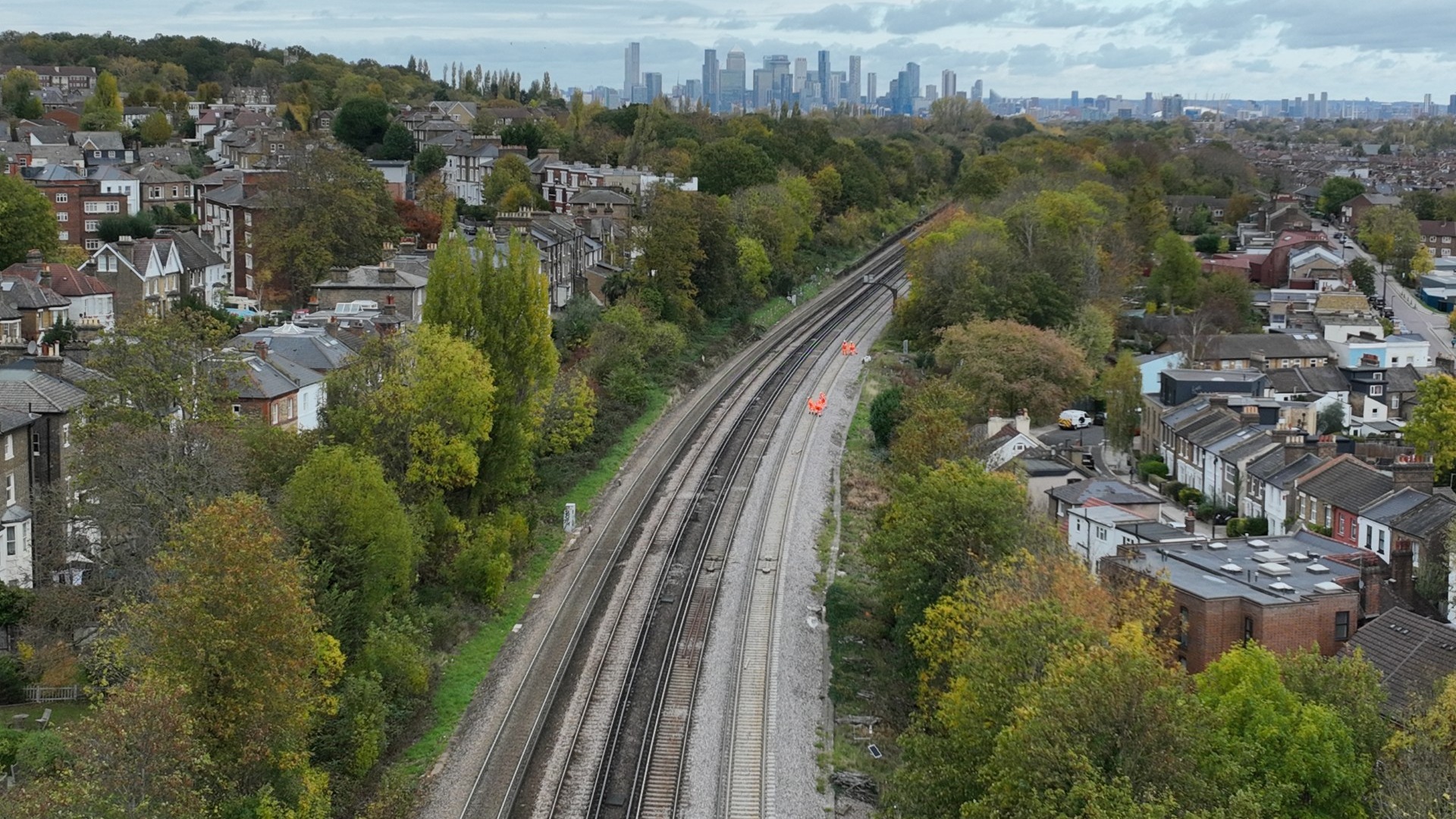
The track between Honor Oak Park and Brockley in south London
Network Rail has replaced over a kilometre of plain line track on a stretch of railway line in south London with low-carbon materials in what the operator claims is a UK first.
This project is also the first time all three primary track components – rail, sleepers and ballast – have achieved verified carbon reductions on a single renewal in the south of England, while also using HVO-fuelled trains.
The sustainable materials used include a combination of green steel rail, low-carbon concrete and recycled ballast.
This is not a paywall. Registration allows us to enhance your experience across Construction Management and ensure we deliver you quality editorial content.
Registering also means you can manage your own CPDs, comments, newsletter sign-ups and privacy settings.
Network Rail said these initiatives resulted in 63% (581 tCO2e) less carbon emissions compared with baseline materials and transport methods – equivalent to the annual emissions of around 200 UK households.
The green steel rail was produced using an electric arc furnace, achieving around 60% lower carbon intensity compared with traditional blast furnace steel.
Low-carbon concrete sleepers were designed to deliver an estimated 40% reduction in embodied carbon, while recycled blended ballast achieved up to 13% carbon savings by reducing the need for virgin aggregate.
During the project, Network Rail also used ISCC-certified HVO (hydrotreated vegetable oil) biofuel and solar-powered welfare units.
Materials account for up to 90% of the overall carbon footprint in track renewals. The key contributors are steel rails, concrete sleepers and ballast, all traditionally produced through carbon-intensive processes.
Dave Sutton, project lead at Southern Renewals Enterprise, Network Rail’s integrated delivery team in the south of England, said: “This project shows what’s possible when innovation and teamwork come together. It’s the first of many greener renewals we plan to deliver, helping us move steadily toward Network Rail’s net-zero goals.”
The January/February 2026 issue of Construction Management magazine is now available to read in digital format.
Powered Access
CM, in partnership with IPAF, has launched a new survey to explore the industry’s views and experiences with powered access machines on construction projects.
This is not a first step towards a paywall. We need readers to register with us to help sustain creation of quality editorial content on Construction Management. Registering also means you can manage your own CPDs, comments, newsletter sign-ups and privacy settings. Thank you.