












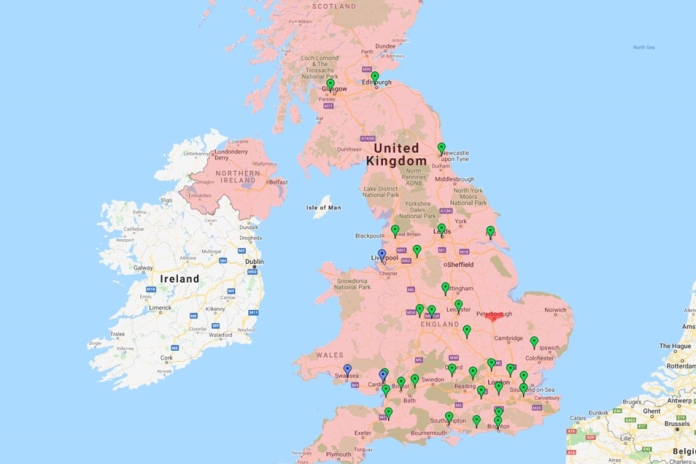
A mapping tool that provides contractors and their suppliers with a central database of local Materials Exchange Platform (MEP) projects to help cut waste by finding a home for unused materials has been launched.
The Supply Chain Sustainability School developed the map with several main contractors including BAM, Canary Wharf Contractors, Kier, John Sisk & Co and Skanska.
The MEP mapping tool gives access to a network of Materials Exchange Platforms nationally, allowing the user to compare those in their local or regional areas.
The School said the map could help save disposal costs, and potentially generating income, while giving local businesses and smaller contractors, access to quality materials at a lower cost, or even free.
Matt Nichols, of Reconomy, and chair of the School’s Waste and Resource Efficiency group said: “Awareness of the importance of a circular economy – based on the principles of designing out waste and ensuring that we efficiently use all the products and materials that we buy – is definitely gathering pace.
“The MEP map performs the crucial task of connecting those with excess materials and products to those who can make good use of them, therefore reducing the volume of waste we send to landfill.”
The MEP mapping tool filters based on location, MEP type and material information, and shows local platforms within 30km of a specified county.
Mark Turner, of the Supply Chain Sustainability School added: “While Materials Exchange Platforms are not new, they are sadly very much underused. We hope that by providing this interactive map to our 37,000 online members, and indeed the whole industry, we can more easily access the platforms that exist across the UK, to ensure less unused or over-ordered materials end up in landfill.”
In its latest published statistics on waste, DEFRA reported that the UK generated 66.2 million tonnes of non-hazardous construction and demolition waste. It is also estimated by Zero Waste Scotland that 13% of raw materials are discarded unused.
Most waste is produced onsite throug; over-ordering, ordering the wrong thing, mishandling materials, offcuts, and unnecessary packaging of materials.
Access to the MEP Map is free, through a free membership of the Supply Chain Sustainability School, which anyone can join: https://learn.supplychainschool.co.uk/local/tlactionplans/resource_intro.php?id=4291&modtype=url


