Construction Management is the highest circulation construction-based publication serving the UK built environment.
News
Luton Airport car park fire prompts mandatory sprinklers call
Will Mann Editor
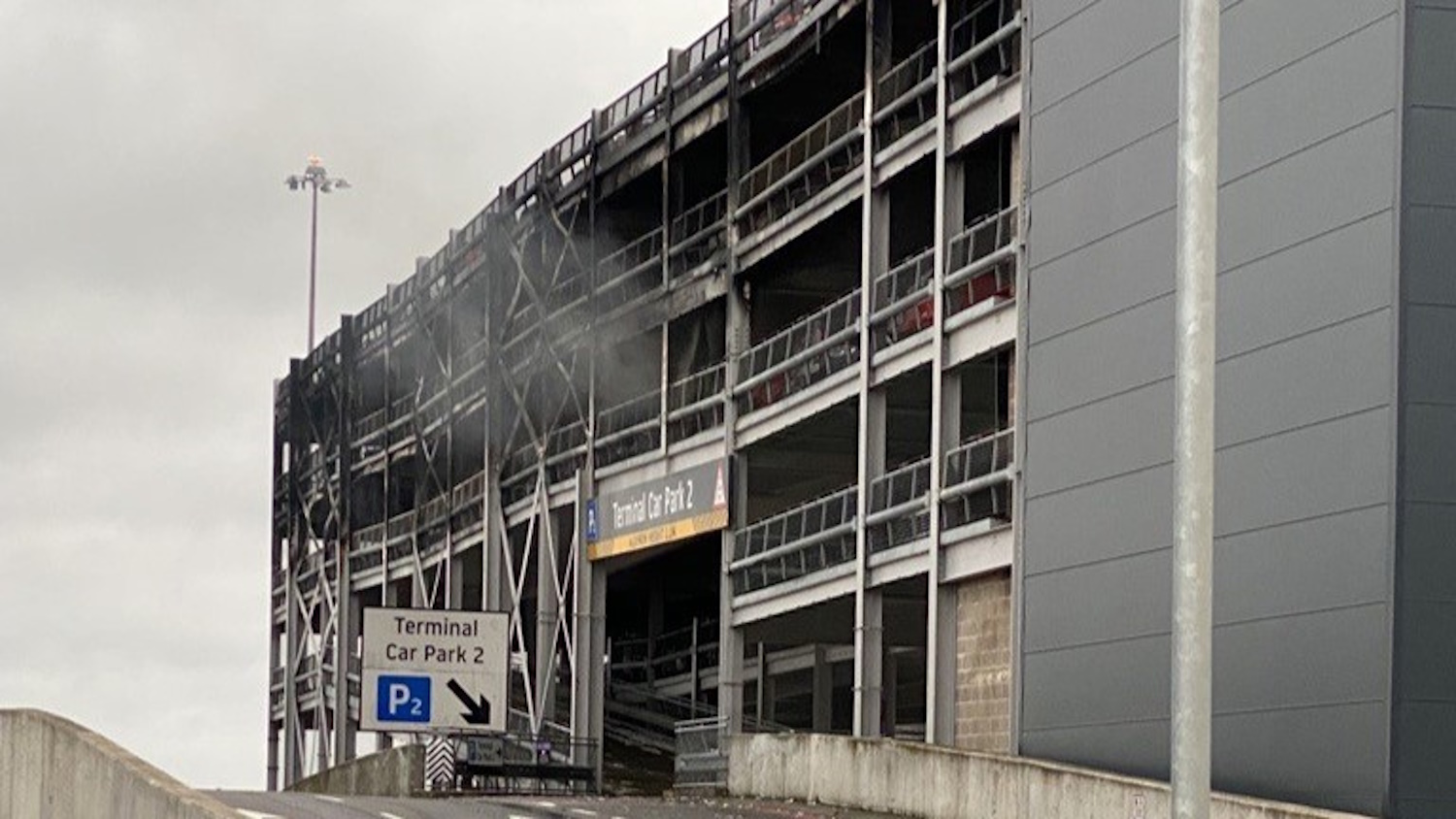
Aftermath of the Luton Airport car park fire (Image: Bedfordshire Fire and Rescue Service)
The fire which caused the partial collapse of a car park at London Luton Airport last week shows why sprinklers should be a requirement, a fire safety organisation has said.
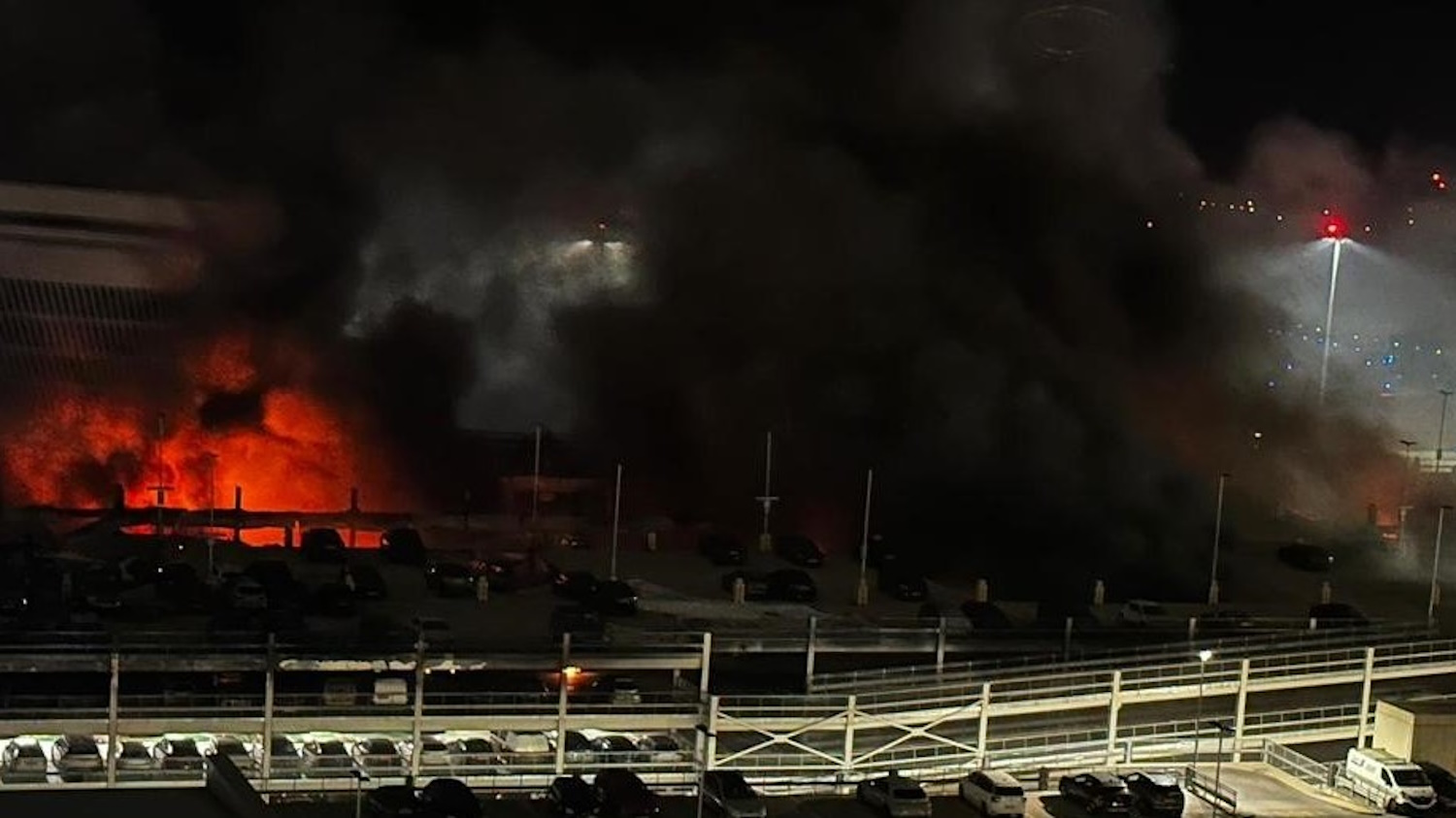
The blaze involved around 1,500 vehicles in the multi-storey car park at the airport. It was declared a major incident by Bedfordshire Fire and Rescue Service. The fire caused a partial structural collapse of the car park, which was built only four years ago and is now likely to be demolished.
No sprinklers were fitted at the car park. Ali Perry, chief executive of the British Automatic Fire Sprinkler Association, said the fire was a “regrettable reminder of why BAFSA continues to call for sprinklers to be fitted in all modern, multi-storey car parks”.
This is not a paywall. Registration allows us to enhance your experience across Construction Management and ensure we deliver you quality editorial content.
Registering also means you can manage your own CPDs, comments, newsletter sign-ups and privacy settings.
The Luton Airport car park fire (Image: Bedfordshire Fire and Rescue Service)
Sprinklers not required
Current guidance on fire precautions in the construction of car parks listed in Approved Document B of the Building Regulations for England and Wales (ADB) and Scottish Technical Standards, do not currently require that sprinklers be installed.
“It is BAFSA’s opinion that this advice does not fully take into account the greater fire load of modern vehicles,” said Perry. “This is why BASFA is again calling for automatic fire sprinkler systems to be fitted in all multi-storey car parks.
“Almost all modern cars are significantly larger, more massive and contain much greater amounts of plastic than ever before. They produce fires which are larger and propagate much faster than was previously possible.
“When electric vehicles catch fire, for example, they can produce intense horizontal flames that may ignite adjacent vehicles and create large conflagrations that can eventually result in structural failure and collapse of the building concerned, making it difficult for firefighters to control the fire.”
The January/February 2026 issue of Construction Management magazine is now available to read in digital format.
Powered Access
CM, in partnership with IPAF, has launched a new survey to explore the industry’s views and experiences with powered access machines on construction projects.
This is not a first step towards a paywall. We need readers to register with us to help sustain creation of quality editorial content on Construction Management. Registering also means you can manage your own CPDs, comments, newsletter sign-ups and privacy settings. Thank you.