Construction Management is the highest circulation construction-based publication serving the UK built environment.
News
In pictures | Aecom opens sustainable timber Serpentine Pavilion
Cristina Lago Deputy Editor
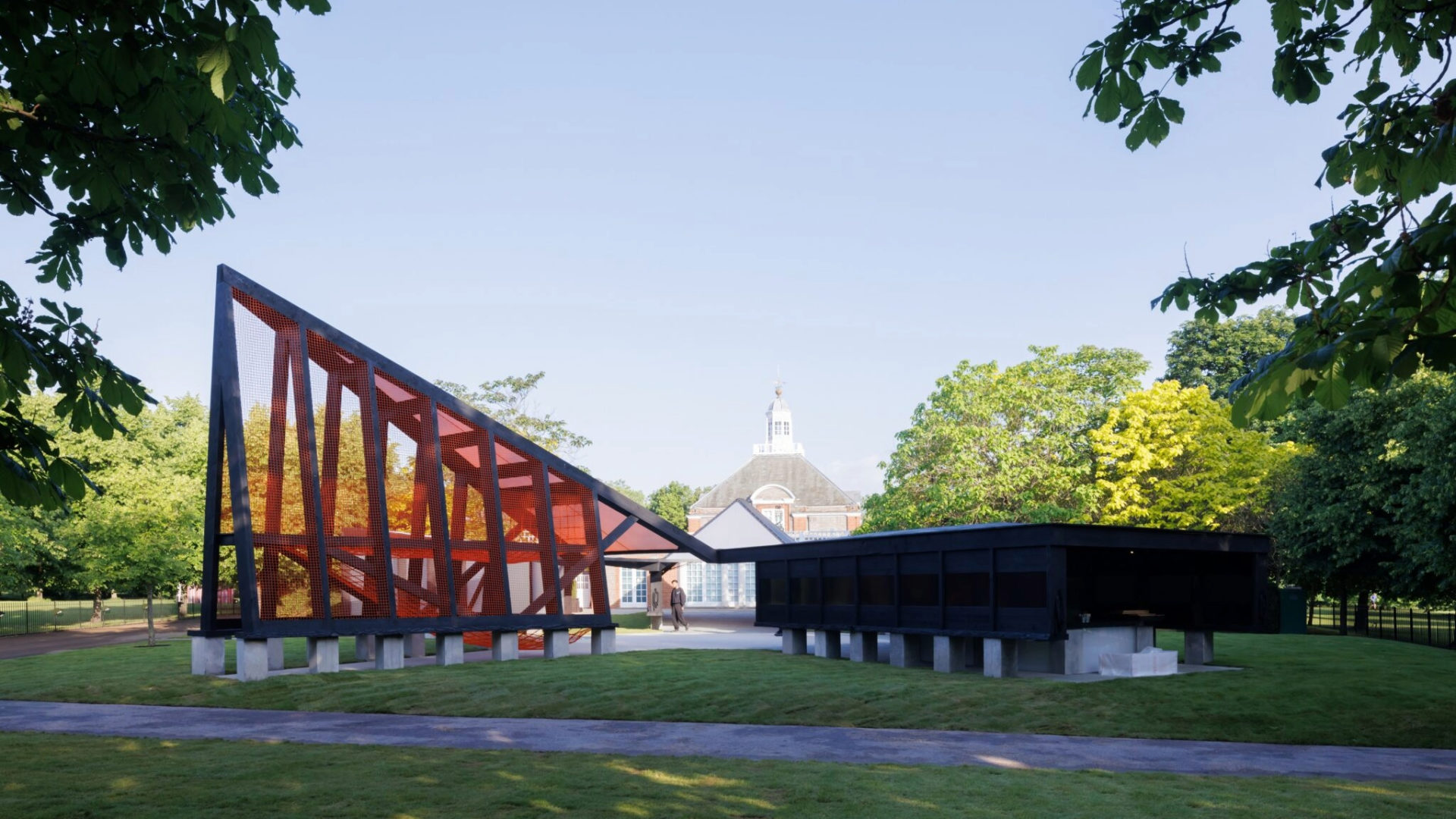
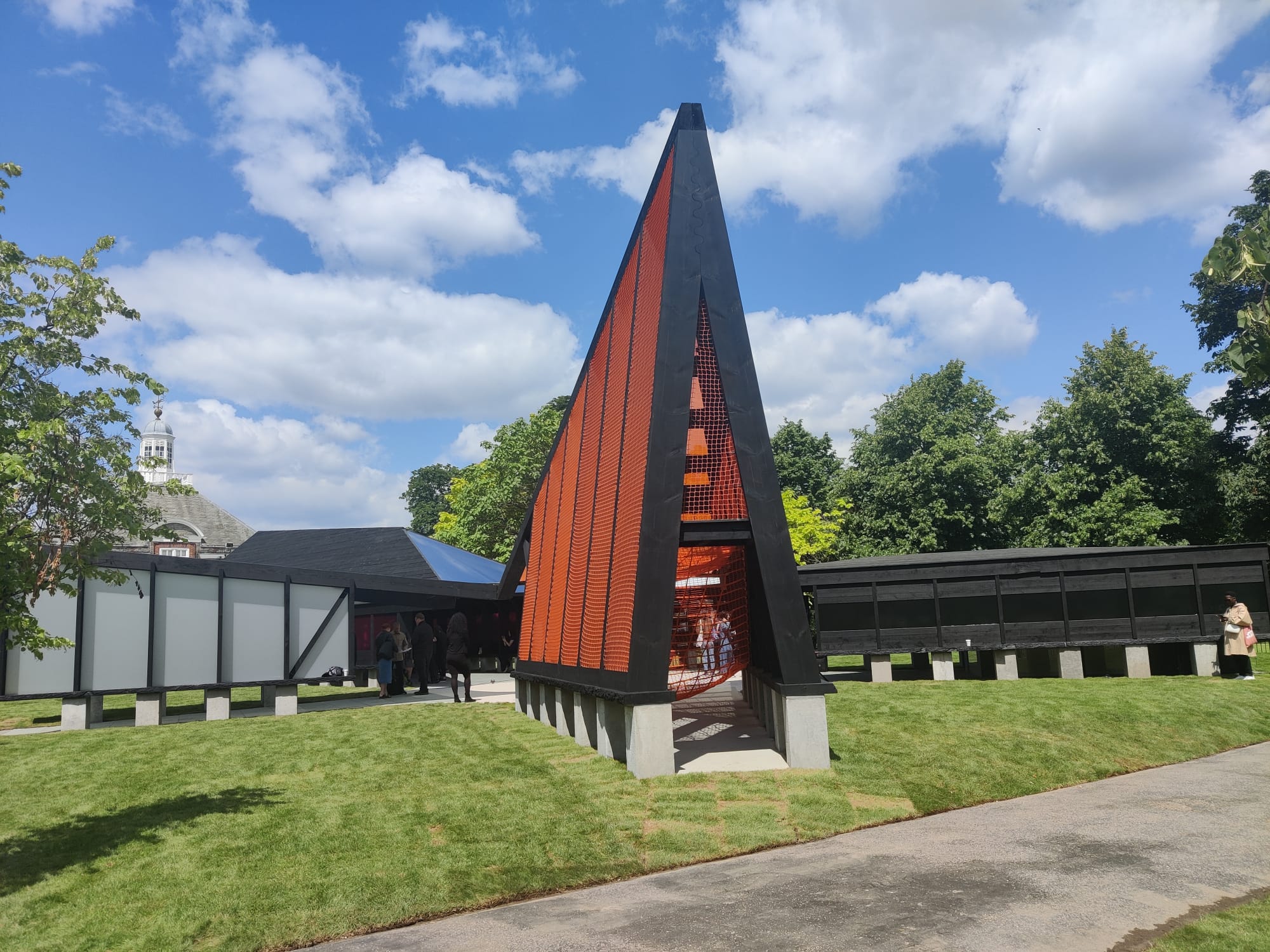
The 2024 Serpentine Pavilion, designed by Minsuk Cho and Mass Studies (Image: Iwan Baan, courtesy of the Serpentine)
Aecom has inaugurated the 23rd Serpentine Pavilion in London’s Kensington Gardens. It is the 12th where the infrastructure consulting firm has acted as technical adviser and third as project manager.
This year’s celebrated installation, entitled Archipelagic Void, has been designed by Korean architect Minsuk Cho and his firm Mass Studies.
Each of the five ’island’ structures that make up the pavilion (the Auditorium, the Gallery, the Play Tower, the Tea House, the Library and the Void) was built using predominantly sustainably sourced Douglas fir timber with a combination of modern and traditional joinery techniques. They are supported by removable foundations that adjust to the slope of the land.
This is not a paywall. Registration allows us to enhance your experience across Construction Management and ensure we deliver you quality editorial content.
Registering also means you can manage your own CPDs, comments, newsletter sign-ups and privacy settings.
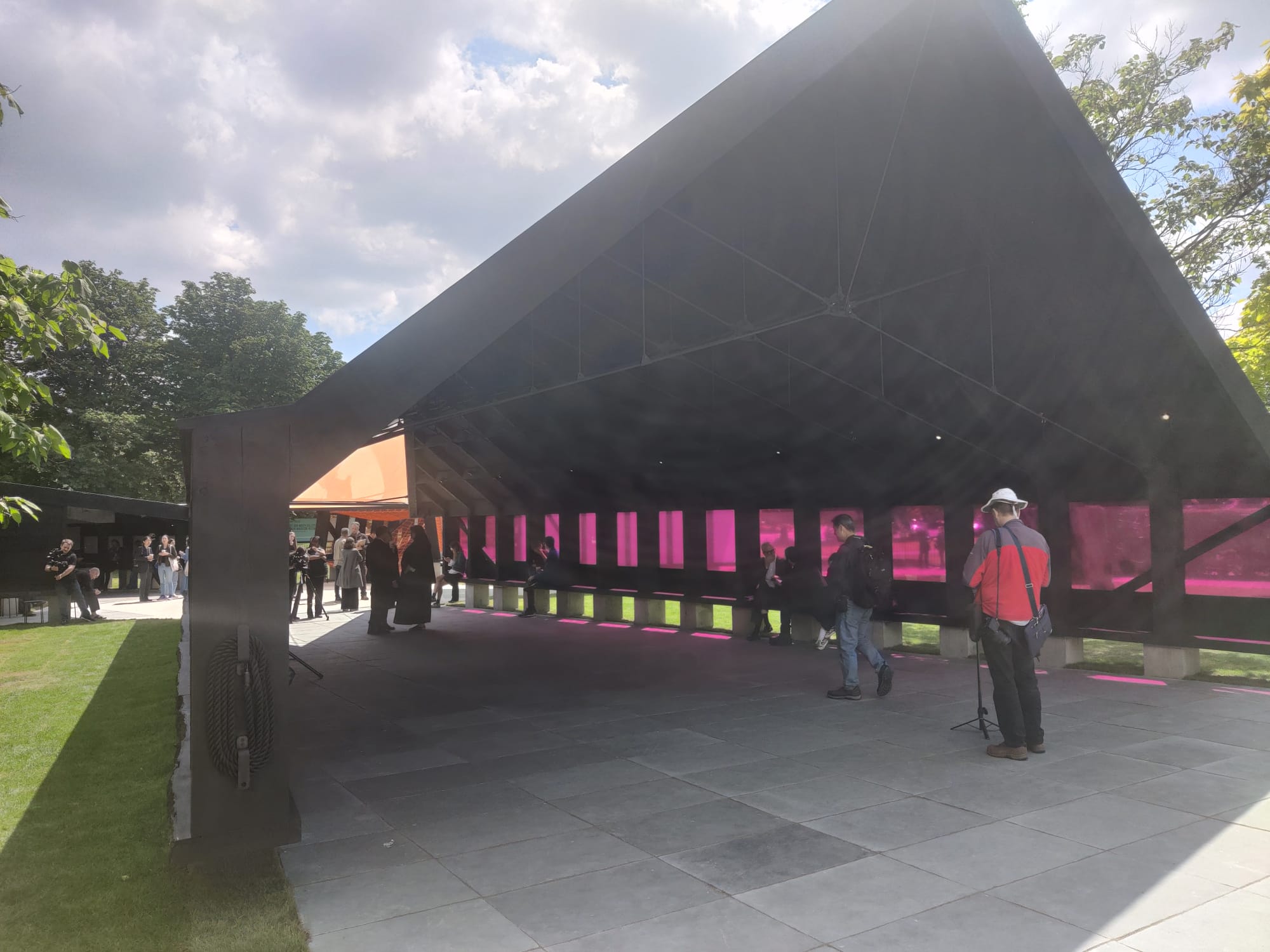
The Auditorium’s roof was made from black-stained timber boards and stretched PVC and its floor is limestone paving
The individual roofs are a combination of timber boards and lightweight prestressed PVC fabrics and supported by a slender steel ring that creates a circular opening in the middle.
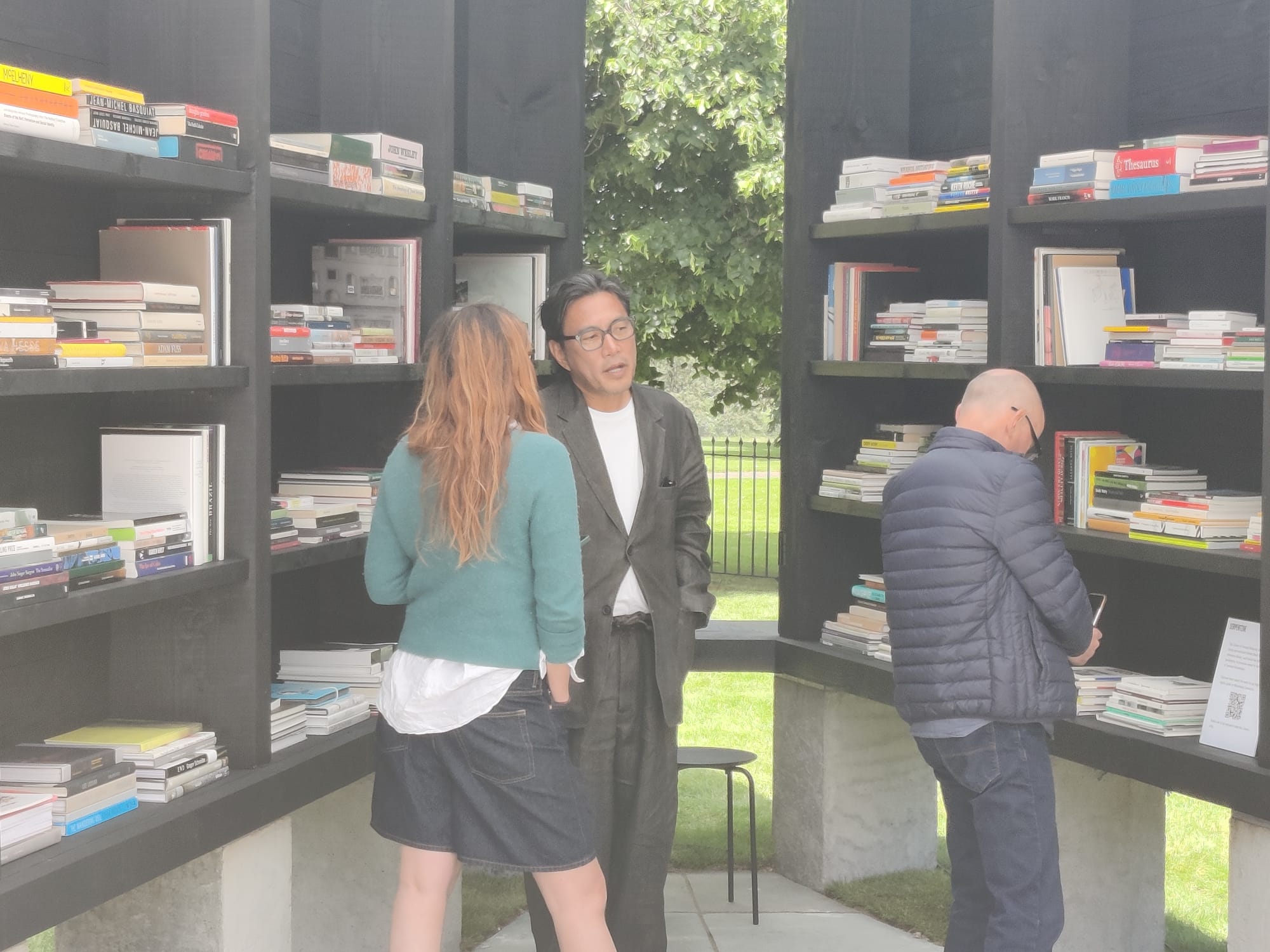
Architect Minsuk Cho (centre) in the Library, one of the five 'islands' in the pavilion.
Aecom said this helped to significantly reduce embodied carbon associated with the build. It also minimised the use of steelwork, which provides reinforcement to the heavily loaded connections and lightweight ties involved in the pre-stressed trussed roof of the auditorium.
The precast reinforced concrete foundations use a high proportion of low-carbon cement replacements and incorporate reclaimed steel pedestals cast within the plinths to resist the overturning forces.
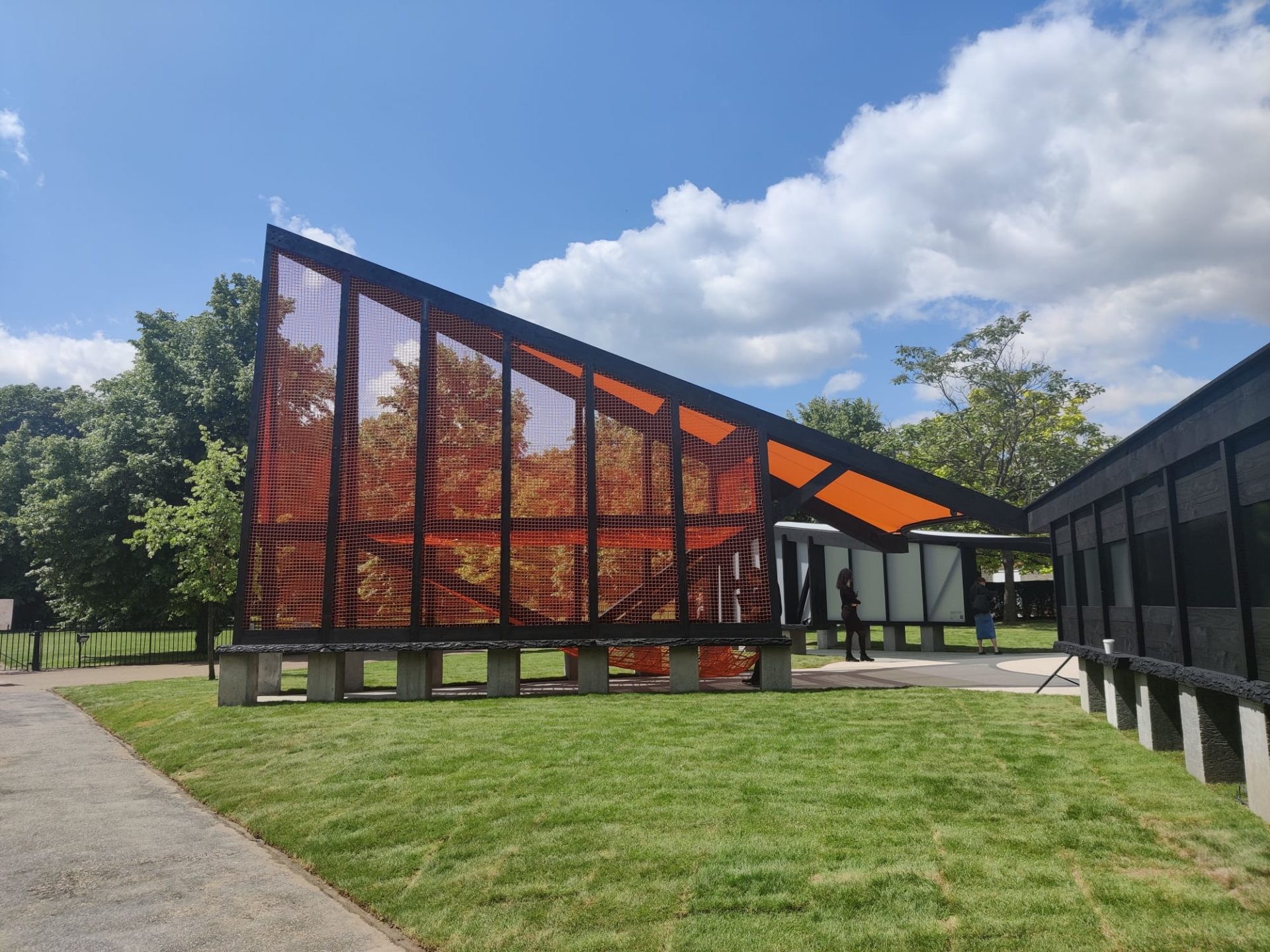
The Play Tower. Each island structure acts as a point on the lawn to link the Serpentine South Gallery and the garden’s footpaths.
Aecom director Jon Leach said: “This year’s design has been influenced by Cho’s own experience with the architectural and cultural references of South Korea, but also embraces the history of the Serpentine Pavilion in a way we’ve not seen before in our tenure as technical advisor and project manager.”
Although timber has been the Serpentine Pavilion's main building material for some years, Archipelagic Void is the first to use non-engineered timber at such scale.
He added: “Timber has been our main building material for the project for a number of years, but this is the first time we’ve embraced non-engineered timber at this scale to bring to life the architect’s vision. It has also significantly helped reduce embodied carbon associated with the build and means that the temporary structure can be reused in a new location and maintain its legacy.”
The January/February 2026 issue of Construction Management magazine is now available to read in digital format.
Powered Access
CM, in partnership with IPAF, has launched a new survey to explore the industry’s views and experiences with powered access machines on construction projects.
This is not a first step towards a paywall. We need readers to register with us to help sustain creation of quality editorial content on Construction Management. Registering also means you can manage your own CPDs, comments, newsletter sign-ups and privacy settings. Thank you.