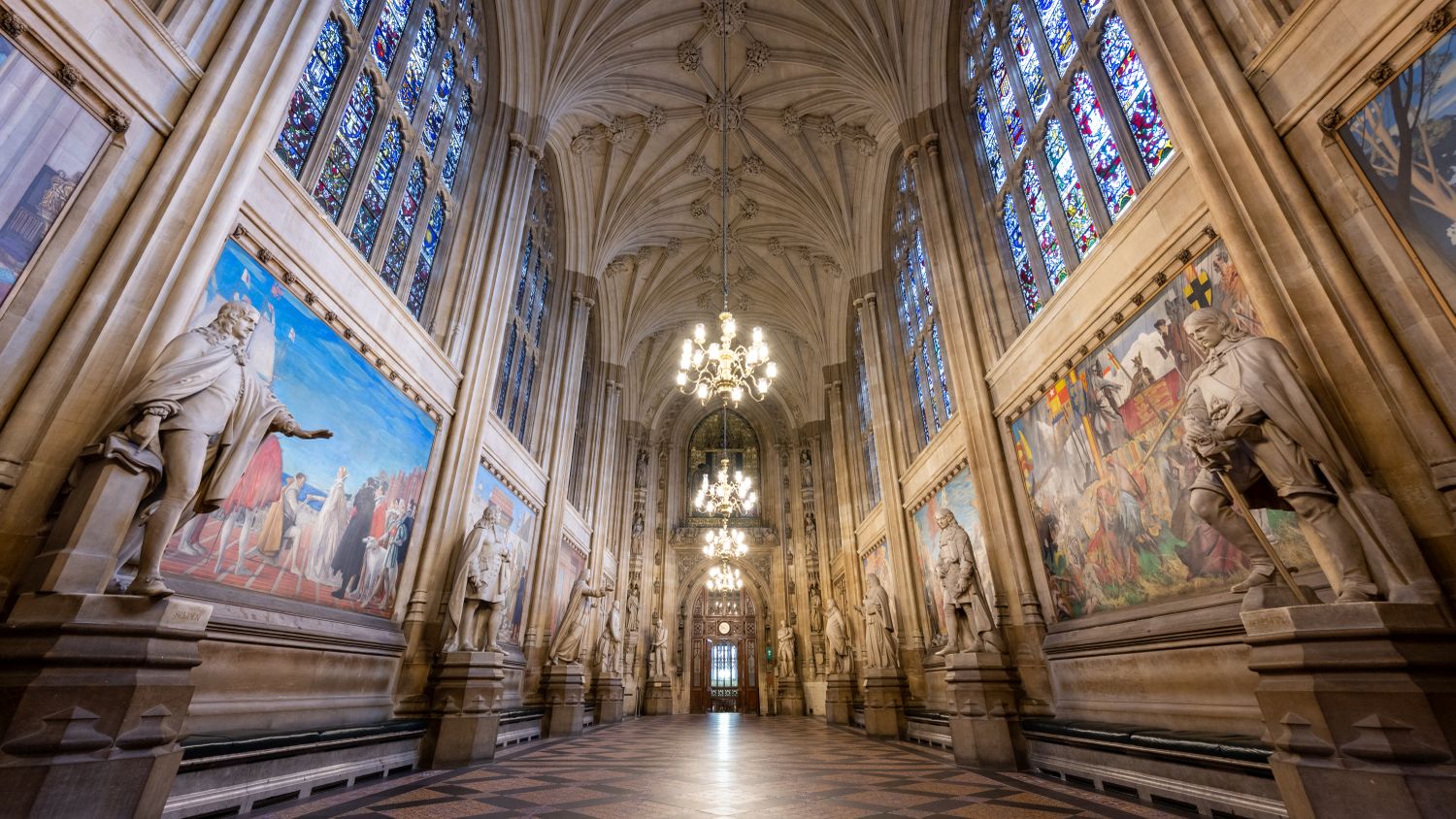
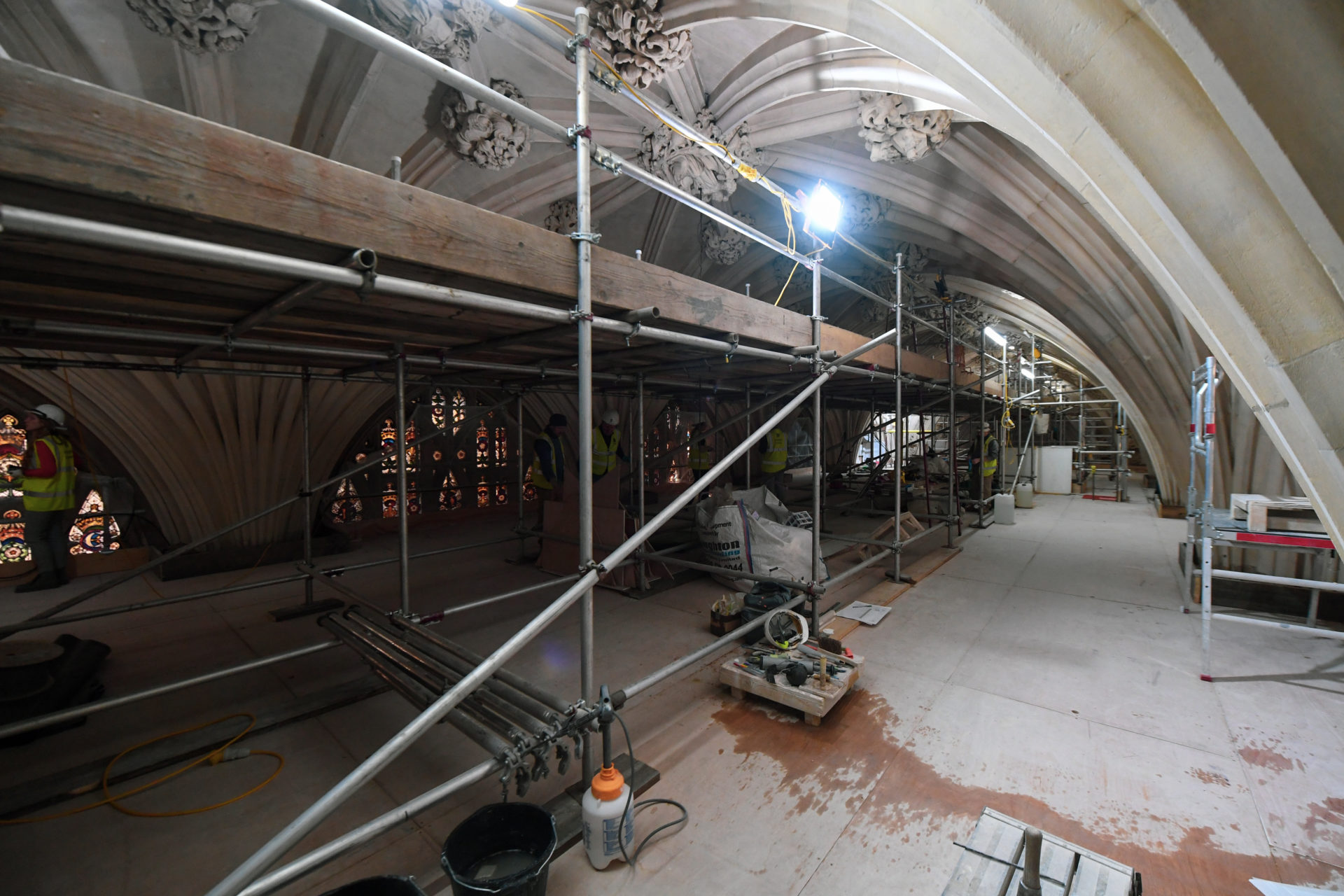
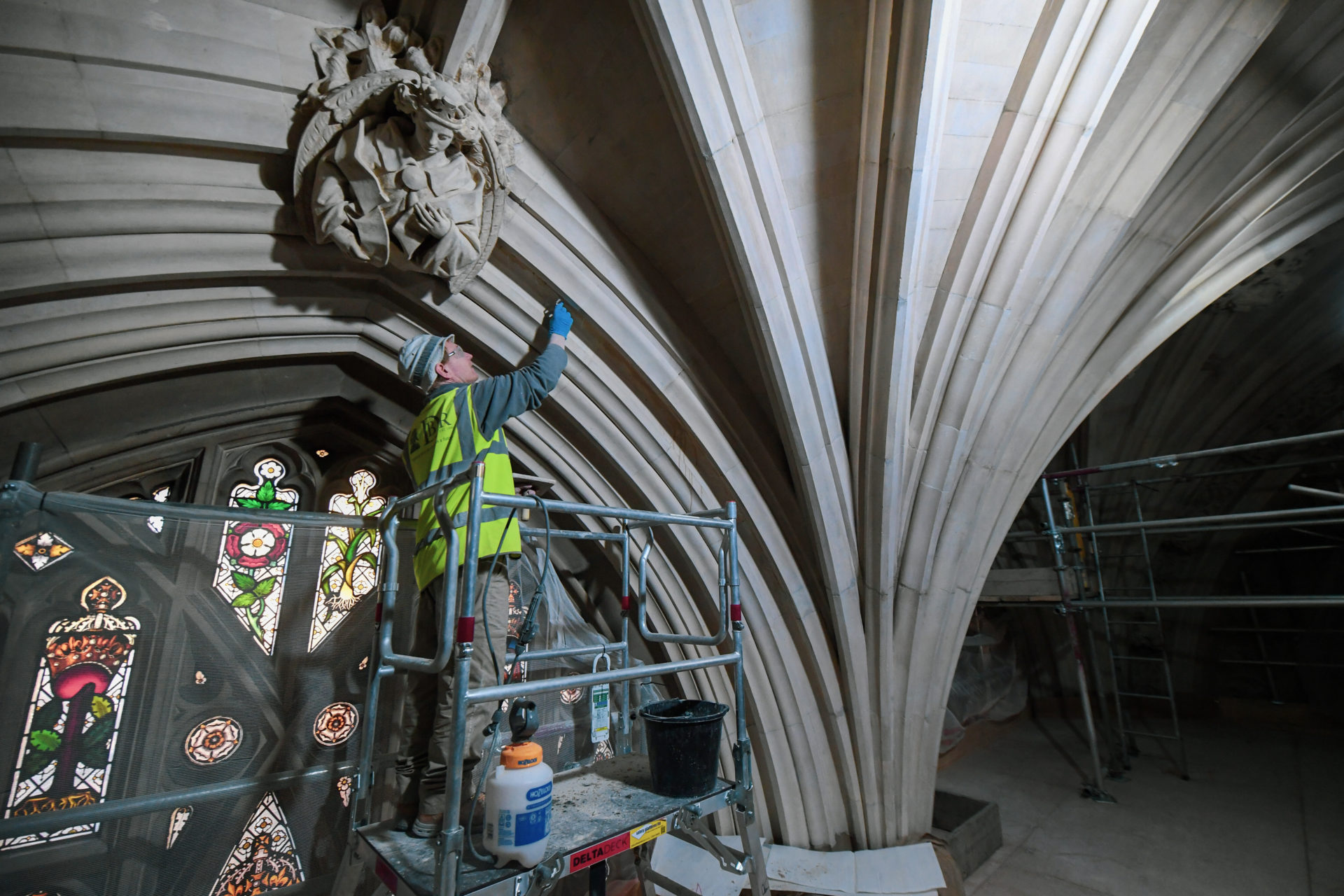
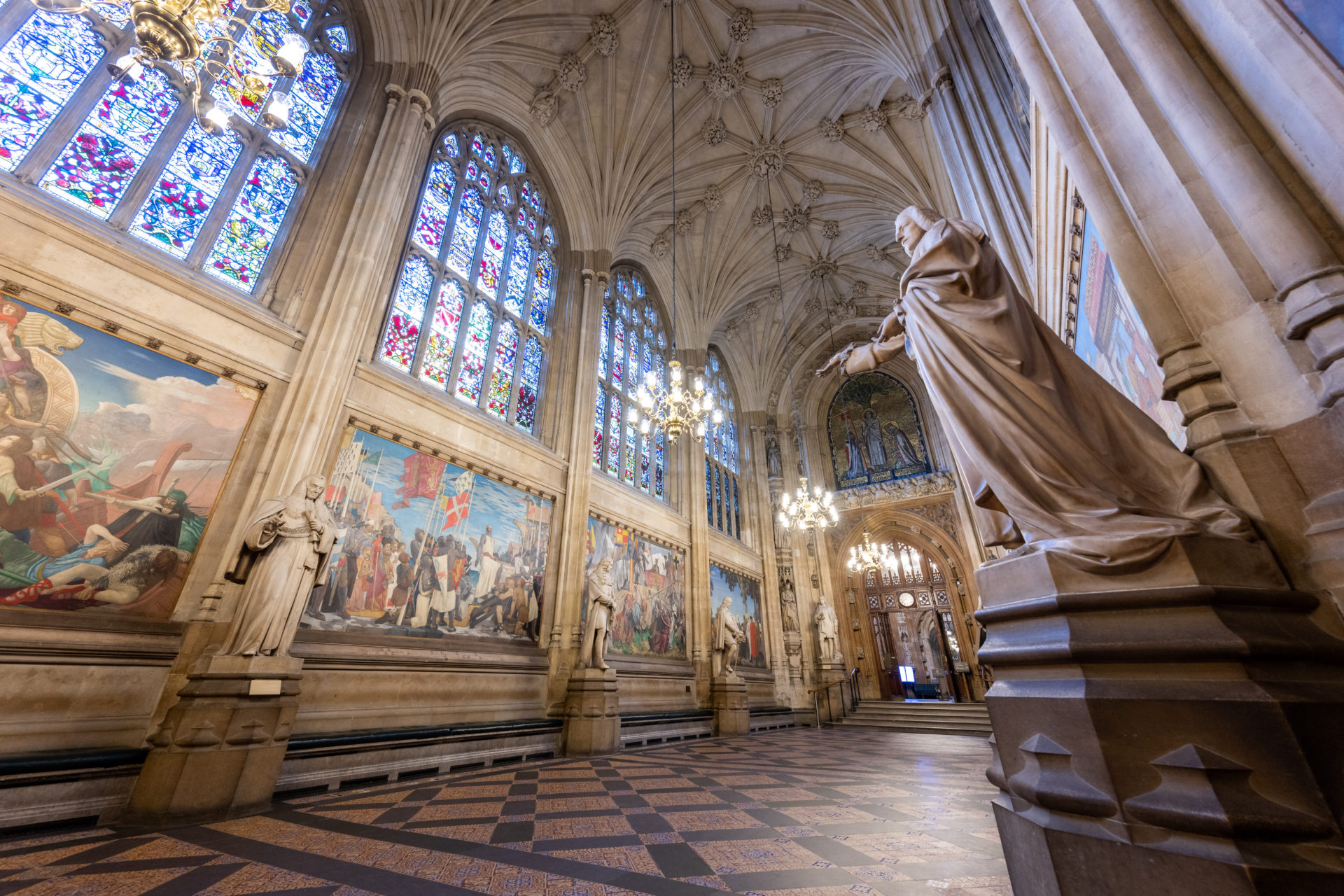
Contractor DBR has completed work to clean and repair the ceiling in St Stephen’s Hall in the Houses of Parliament.
The specialist work was part of a wider programme focusing on the repair and replacement of stonework, as well as mechanical and electrical systems in the Palace of Westminster.
Marble statues of 12 famous parliamentarians, which face one another on either side of the Hall, were covered while work was underway. Contractors also covered and protected eight large oil paintings depicting events in British history.
This is not a paywall. Registration allows us to enhance your experience across Construction Management and ensure we deliver you quality editorial content.
Registering also means you can manage your own CPDs, comments, newsletter sign-ups and privacy settings.
DBR used scaffolding in St Stephen’s Hall that was already in place as part of a project to repair and restore the cast iron roof above. As the scaffold could give access to the ceiling, there was an opportunity for preservation work on the ceiling’s stonework.
Workers applied a special latex coating to the ceiling, before peeling away once dry to remove decades of pollution damage. This innovative method allowed them to reach into any porous surface of the stone, without leaving behind chemicals or damaging or degrading the material.
Architect Donald Insall Associates and structural engineer Alan Baxter undertook the surveying and specification of works. Parliament’s in-house teams, including conservation architects and the Heritage Collections team, oversaw DBR’s work.
A university student on a one-year placement in the House of Commons also assisted the teams.
St Stephen’s Hall contains 10 stained-glass windows, five on either side, depicting the arms of various parliamentary cities and boroughs. The brass chandeliers were installed in 1960, but designed by Robert Smirke for the temporary House of Commons Chamber following the fire of 1834 which destroyed the old Palace.
Speaker of the House of Commons Lindsay Hoyle said: “It is fantastic to see the work that has gone in to improving St Stephen’s Hall, which until the mid-16th century was the home of the House of Commons.
“It was here that Charles I was shunned by Speaker Lenthall when in 1642 he stormed in to arrest five MPs. It was also the place where suffragettes protested over the lack of a right to vote for women.
“St Stephen’s Hall is such an important part of our parliamentary history – so I am delighted that it has been refurbished to its former glory for all those who work here or visit to enjoy once again,” said Heather Oakley, senior project leader.
“It’s been a privilege to work on such an iconic area of the Palace, collaborating with teams across Parliament and our specialist contractors. With the scaffolding removed and statues unboxed, staff and visitors can once again appreciate the artwork, carvings and tiles that make up St Stephen’s Hall.”
The January/February 2026 issue of Construction Management magazine is now available to read in digital format.
Powered Access
CM, in partnership with IPAF, has launched a new survey to explore the industry’s views and experiences with powered access machines on construction projects.
This is not a first step towards a paywall. We need readers to register with us to help sustain creation of quality editorial content on Construction Management. Registering also means you can manage your own CPDs, comments, newsletter sign-ups and privacy settings. Thank you.