












The Royal Borough of Kensington and Chelsea Tenant Management Organisation turned down a “golden opportunity” to take advice on CDM regulations after they changed and the role of CDM-coordinator was replaced by that of principal designer in 2015, the Grenfell Tower Inquiry has heard.
The Inquiry heard how up until April 2015, the governing regulations for the Grenfell Tower project were the CDM Regulations 2007 but they changed when in April 2015, the CDM Regulations 2015 came into force, with a transitional period from April to October.
As part of the change in regulations, the role of CDM coordinator (CDM-C) which had up until this point been performed by employer’s agent Artelia, was superseded by the role of principal designer.
The TMO itself ultimately ended up fulfilling the role of principal designer in 2015, after Artelia, main contractor Rydon and architect Studio E, as well as a third-party consultant that had not previously been involved in the project, all turned down the role.
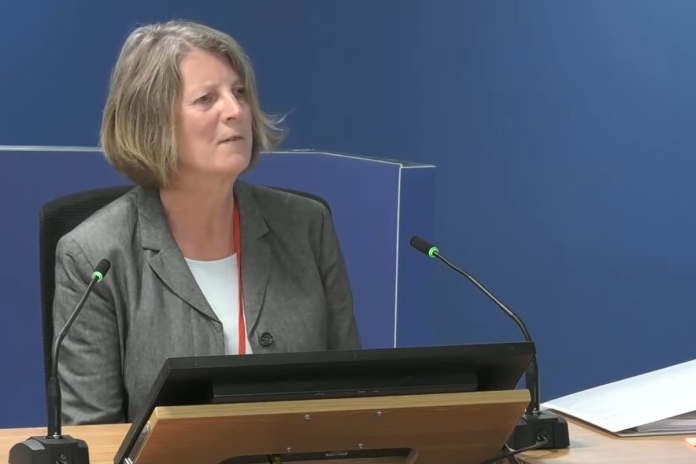
Lead counsel to the Inquiry Richard Millett QC, asked TMO project manager Claire Williams, appearing before the Inquiry for a third day, if she had received training on the 2015 regulations. Williams said: “I believe we did yes”, however she couldn’t remember who delivered it. She also claimed to have received handouts on the regulations to refer to afterwards.
But Millett said his team had seen no documents relating to any training or any handouts. Williams said: “It would have been something I would have had at my desk.” Williams also confirmed to Millett that she understood that the TMO would have to appoint a principal designer if the project continued beyond 6 October 2015.
She added that she understood that the new principal designer (PD) took over the majority of the old CDM-C role “in terms of pre-construction information they should be presenting and looking at the health and safety of the materials and the workers in the run-up to the project, and then that the role of compiling the health and safety file, which is at the end of the project, would be something the PD would take on.”
‘Substantial undertaking’
Minutes from a September 2015 progress meeting showed that Williams initially planned to appoint a principal designer from the TMO’s new consultancy framework. Williams said she went to consultant Bailey Garner, who were “reticent” because, the firm said, the role ought to be fulfilled by a consultant who had been involved with the scheme from inception.
She added: “Initially I thought Artelia were going to take it on. They kept saying: ‘Oh, you need to appoint a principal designer’ but they didn’t say: ‘It can’t be us.’…When ultimately they said no, they weren’t going to do it, I’d gone to Rydon and Studio E and neither of those parties were able to take it on.”
Millett asked: “Given that nobody was prepared to be appointed principal designer, who had been involved in the project up to that point, did that indicate to you that it was a substantial undertaking?”
Williams said: “No, not at this stage, because the project completion date was nearing and the role didn’t have any design checking at that stage and it was seemingly more about putting together the health and safety file at the end of the project.”
In the end, the TMO itself took on the role. Asked why, Williams said: “Because when Simon Cash [of Artelia] did speak to me, we talked about the stage of the project and that the design was completed, and I think he gave me the expression “fundamentally complete”, so there would be no design input required, but it would be the role at the end of the scheme which was compiling the health and safety role.”
Millett asked: “Did it occur to you that the TMO could have held the role of principal designer temporarily from 6 October until somebody more skilled with that role came in?”
Williams said: “That was never put to me as an option and I hadn’t thought of it.”
‘Let down’
In her witness statement given prior to the hearing, Williams stated: “It is my belief that the TMO was let down by its professional team in respect of the appointment of a principal designer. The TMO had appointed Artelia as its CDM-C and was entitled to rely on it to advise as to how best to meet its CDM duties. There was an obvious delay in Artelia formally informing the TMO of the need for the principal designer appointment and of its inability to take on the role. Furthermore, it failed to provide the TMO with any solution when Rydon, Studio E and Bailey Garner declined to take on the role.”
Williams said in the hearing that she felt let down by Artelia’s CDM-C team in particular. “There was a gap, and I would have expected them to have given us advance notice and given us proposals as to how to manage…As employer’s agent, they would known that we would need to have this appointment in place, because it would be essential for the contract.”
Millett highlighted the fact that Artelia had, however, offered to provide a CDM advisor (CDM-A) service. However, the TMO did not accept the offer.
He asked: “I wonder whether, on reflection, your criticism of Artelia is really justified…in light of the fact that Artelia had offered to provide the CDM-A role to you, which you refused, and in light also of the fact that the termination of their CDM-C role was one required by the legislation.”
Williams replied that she felt the firm’s “engagement was not perhaps as rigorous as it could be”.
Millett asked why the TMO didn’t take up Artelia’s offer to act as a CDM-A. She replied: “I thought they’d have given me as their handover enough information to be able to do it easily.”
Millett said: “The truth is, Ms Williams, that you were offered a golden opportunity to get this right and you turned it down.”
Williams said: “We didn’t take up the offer of the CDM-A.”
Invasive inspections ‘not expected’ of clerk of works
Earlier in proceedings, the hearing heard how clerk of works Jonathan White of John Rowan Partners (JRP) had not been expected to conduct in-depth or invasive inspections.
Williams said that the TMO wanted JRP on the project as “another pair of eyes”.
She said: “If he [Jonahthan White] found that he wasn’t getting enough time, he would ask for more time, and I believe what happened ultimately was he signed off a couple of floors at a time. But it would quite often be at the end, when there was the finished cladding panel. He wouldn’t actually see whatever was behind it… We just wanted another pair of eyes and somebody who would ask the questions, but as I say, it was an extra layer because Rydon had responsibility.”
‘Frustrations’ with Rydon
Millett asked Williams about a 30 March 2016 email between Neil Reed of Artelia and Steve Blake at Rydon, which detailed Artelia’s “frustrations” that Rydon “could and should be doing more in the run-up to completion”.
Williams said she agreed with its contents and was aware the email was being drafted. She also agreed that she was frustrated with “slow progress of works” and the “lack of responsiveness in some areas”.
“I think we’d been talking for a couple of months about the problems and Rydon were not upping their resource to meet our queries, our expectation.”
Millett asked if Williams was concerned that Rydon had not resourced the project properly.
Williams replied that she was. She said: “I think towards the middle/end of the project, they were short of some of their labour. You appreciate Rydon do construction management, so everyone they employ is a subcontractor and the clerk of works had in their reports been raising the issues of a lack of people fitting the cladding, there were reports of slow workmanship in the new flats. Everything was progressing at a sedentary rate.”
But when Millett asked if her concern about inadequate resourcing led her to be concerned that Rydon might be tempted to deliver poor workmanship or cut corners to stay on budget, Williams replied: “No, that wasn’t something that I was aware of or I heard any of our clerks of works say. Nobody had any comment about the quality.”
The Inquiry continues.
Comments
Comments are closed.


Following the introduction of the CONSTRUCTION (DESIGN AND MANAGEMENT) REGULATIONS 2015 (which came into force on 6th April 2015) and the superseding thereby of the CONSTRUCTION (DESIGN & MANAGEMENT) REGULATIONS 2007 – Albeit RBKCTMO apparently subsequently unsuccessfully sought their (as against RBKC?) consultant Artelia’s agreement to accept the role of CDM Principle Designer, and the TMO rejected Artelia’s offer to act as CDM Advisor – I understand that, where a project was already in progress, and a respective CDM Coordinator had already been appointed:
(1) Under Clause 5 of Schedule 4, the “Transitional and Saving Provisions”, of the new regulations in question, the duties and responsibilities of the already-in-place CDM Coordinator for the most part remained unchanged; their duties and responsibilities did not immediately cease.
(2) Under Clause 4 of that same Schedule 4, if the Project had by then not “come to a close the “Client” was required to appoint a Principle Designer before 08/10/2015, and in the meantime (at least) the CDM Coordinator responsibilities and duties were for the most part unchanged – Given that the TMO themselves apparently eventually (confirmed in writing or not to RBKC and Rydon?) took on role of Principle Designer, presumably that deadline is the default date by which it may be deemed the TMO had for legal purposes done so.
By 08/10/2015, the specification and installation details of all the refurbishment cladding elements (rainscreen system, with associated sub-structure and fixing brackets; cavity natural ventilation means and fire/smoke-spread barriers system; external wall insulation; and new window units with associated sub-frames and reveal linings) had presumably all been finalised and accepted/agreed by all the principle parties involved with the project – I can but wonder:
(A) whether the TMO (as they clearly should have) sought a “final” report from Artelia covering Artelia’s efforts and findings prior to 6th April 2015 and during the regulation enforcement statutory transition period, and when if they did so require?
(B) whether Artelia produced such a report, and when if they did?
(C) Whether the TMO took possession of the documentation gathered up to 08/10/2015 by Artelia intended for inclusion in the CDM Health & Safety File?
Terence Jones
Property Development Management & Design Consultant
The more that is exposed about the management ( or lack of an adequate clear simple management system ) amazes me and I find it incredible that a Scheme can be made so complicated and convoluted and still ‘ comply ‘ with normal Contractual Procedures never mind CDM Regulations. I hope that a major shake up in Construction Contract Law and CDM Regulations is the outcome of this inquiry so a repeat of this fiasco is not seen again.
Peter Anderson