Construction Management is the highest circulation construction-based publication serving the UK built environment.
News
Grenfell: Definition of class 0 ‘degraded with time’
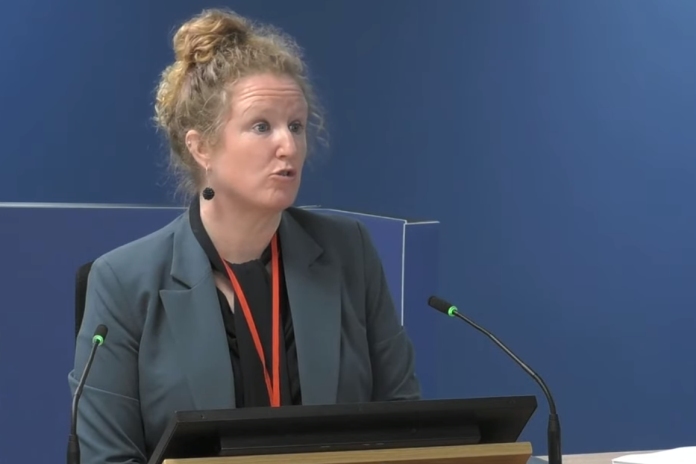
Dr Barbara Lane
The ‘class 0’ classification indicating that materials adequately resist the spread of fire over the external walls of high-rise buildings “degraded with time”, an expert witness has told the Grenfell Tower Inquiry.
Dr Barbara Lane, a chartered fire engineer and a director of
Arup, told the Inquiry how the external surface of a building and the
insulation behind it “have been considered separately for several decades” in terms
of fire performance, and that class 0 had been the reference for external
surface performance since 1965. Over time, its definition had been “reduced” from
non-combustible materials throughout, she said.
She added that the role of the substrate was removed from
the statutory guidance document “yet both the national and European reaction to
fire testing regime very carefully sets out rules regarding substrates and
their impact on fire performance when testing”.
This is not a paywall. Registration allows us to enhance your experience across Construction Management and ensure we deliver you quality editorial content.
Registering also means you can manage your own CPDs, comments, newsletter sign-ups and privacy settings.
Reynobond PE, the cladding used on Grenfell Tower, was given
a British Board of Agrément (BBA) certificate rating it as Class 0. The Celotex
RS5000 insulation product used behind the cladding during the refurbishment of
Grenfell Tower also had fire rating classification of class 0.
Dr Lane’s evidence appeared to suggest that there were flaws
in the fire testing regime.
She highlighted how the regime is associated with “internal
room phenomena”, despite being relied upon in the statutory guidance document
to reduce danger from fire spread up the external face of a building.
Meanwhile, she detailed how the national reaction to fire
tests include just one surface spread of flame test, and this measures spread
in the horizontal direction, rather than the vertical.
She also warned that the “window of assessment” of the data
from the large-scale British Standard 8414 test, which relates to the fire
performance of external cladding systems, is early in the fire and “may be
before peak temperatures are measures for relevant cladding materials”.
Dr Lane said: “Extensive work seems to have gone into
defining these tests, how to derive results from them, and how to rely on them
to classify construction products and materials. It would be of considerable
interest to hear the perspective from those that created and monitored the
reaction to fire test standards in this country, those companies that carried
out the tests, those companies that issued classification reports, and those
companies that issued certificates, their understanding of how those parameters
were derived, how those parameters were relied upon, and how relevant they
consider them to be to the fire performance of external walls.”
The January/February 2026 issue of Construction Management magazine is now available to read in digital format.
Powered Access
CM, in partnership with IPAF, has launched a new survey to explore the industry’s views and experiences with powered access machines on construction projects.
This is not a first step towards a paywall. We need readers to register with us to help sustain creation of quality editorial content on Construction Management. Registering also means you can manage your own CPDs, comments, newsletter sign-ups and privacy settings. Thank you.