Construction Management is the highest circulation construction-based publication serving the UK built environment.
News
Government to trial first heat network zones in England
Cristina Lago Deputy Editor
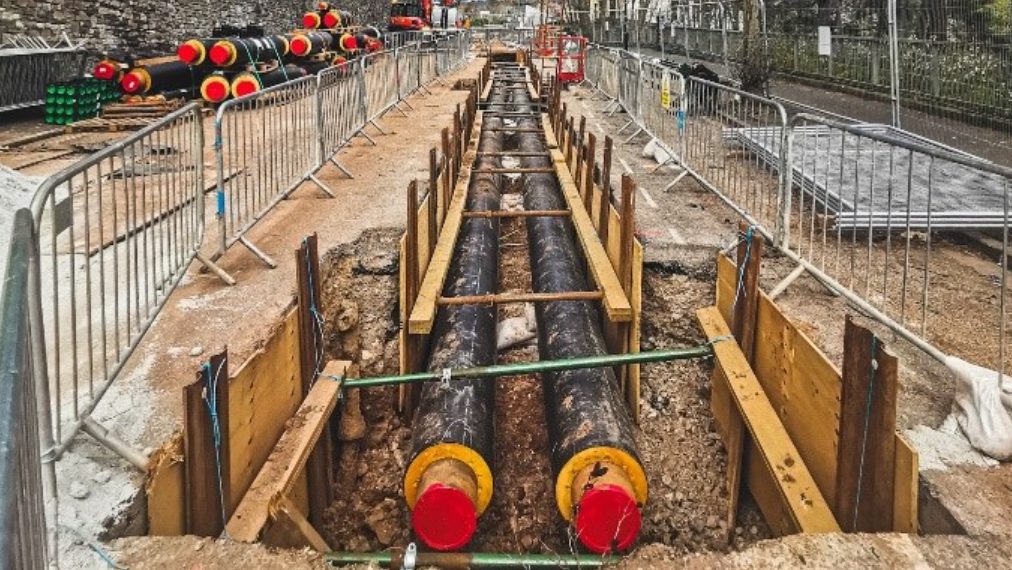
Heat network zones involve underground pipes that distribute heat from centralised sources (Image: Vital Energi)
The Department for Energy Security and Net Zero (DESNZ) has selected six towns and cities in England to develop England’s first heat network zones.
Leeds, Plymouth, Bristol, Stockport, Sheffield and two schemes in London will receive a combined £5.8m in government funding to create networks of insulated underground pipes that distribute heat from centralised sources to large non-domestic buildings and those that are already communally heated.
Heat network zones use data to identify the best spots and help plan and build the technology at scale. They require suitable buildings, such as hotels and large offices, to connect when it is cost-effective for them to do so.
This is not a paywall. Registration allows us to enhance your experience across Construction Management and ensure we deliver you quality editorial content.
Registering also means you can manage your own CPDs, comments, newsletter sign-ups and privacy settings.
DESNZ said that developing zones for heat networks in urban areas is “the cheapest and most efficient way” to deliver this technology, which recycles excess heat (from data centres or factories, for example) to heat several buildings simultaneously.
For example, in the Old Oak and Park Royal Development in West London, the heat network will use excess heat from data centres to warm connected buildings.
Decarbonising heat
DESNZ said the development of heat networks across the country has the potential to create “thousands of jobs” and help the UK achieve its 2050 net zero target.
Aecom has been working with DESNZ for some years to support the rollout of largescale heat networks.
Channa Karunaratne, sector lead for district energy at Aecom, said: “Today’s funding allocation is the biggest commitment to date from the new government for zoning and is a clear indication that it is throwing its support behind heat network zoning as a major contributor to decarbonising heat in England.
“Designating funds to the first tranche of heat network zones provides certainty for developers and investors that will unlock significant investment and accelerate the deployment of heat networks at scale.”
Construction of the six schemes is expected to start in 2026.
The January/February 2026 issue of Construction Management magazine is now available to read in digital format.
Powered Access
CM, in partnership with IPAF, has launched a new survey to explore the industry’s views and experiences with powered access machines on construction projects.
This is not a first step towards a paywall. We need readers to register with us to help sustain creation of quality editorial content on Construction Management. Registering also means you can manage your own CPDs, comments, newsletter sign-ups and privacy settings. Thank you.