This is not a paywall. Registration allows us to enhance your experience across Construction Management and ensure we deliver you quality editorial content.
Registering also means you can manage your own CPDs, comments, newsletter sign-ups and privacy settings.
According to the Health and Safety Executive (HSE), in an attempt to speed up the project, the company planned to work over the weekend of 13-14 January 2024. To help deliver the roof repairs, the company took on extra workers, including the subcontractor.
The company did not arrange for scaffolding to be erected at the open edges of the roof, nor make adequate arrangements to prevent or mitigate falls through fragile areas of the roof, HSE said.
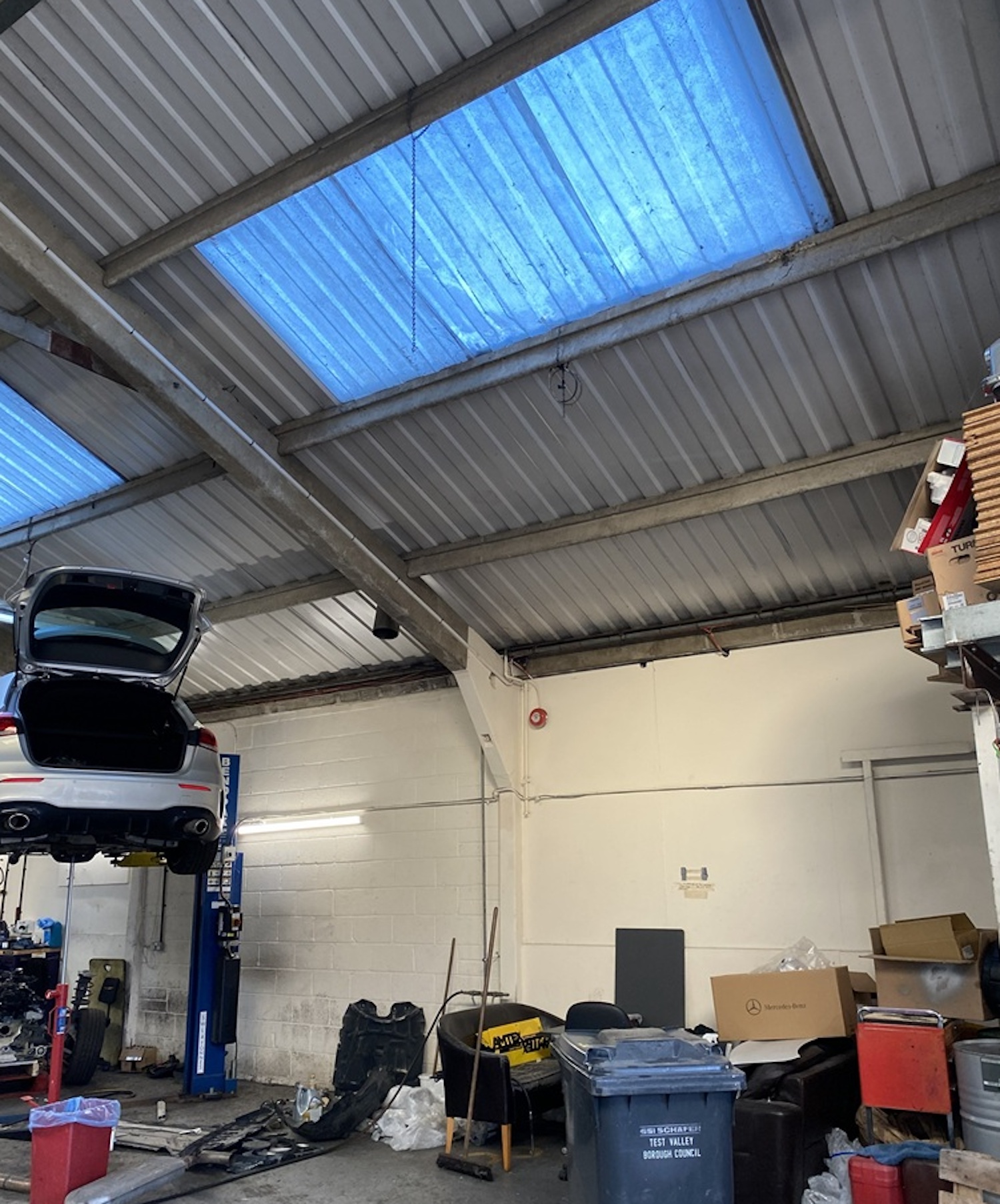
As there was nothing to prevent or reduce the fall through the skylight, the worker fell from the height of the roof to the solid floor below.
A worker fell through a skylight while undertaking roof repairs at a site in Hampshire. Image: HSE
J Smith Construction Services and the remaining subcontractors returned to complete the work the following day, HSE said, with no additional safety measures in place.
An investigation by the regulator found that the company had failed to take appropriate precautions to ensure the safety of the workers on the roof.
Health and safety compliance
The company pleaded guilty to breaching the Work at Height Regulations 2005, Regulation 6(3).
As well as the £80,000 fine, the company was ordered to pay costs of £2,630.
Company director, Joseph Smith, who had been present throughout the works, pleaded guilty to Health and Safety at Work etc Act 1974, s.37(1).
At the same court hearing, Smith was given a three-month prison sentence, suspended for 12 months, and ordered to pay costs of £2,630.
After the hearing, a spokesperson for HSE said: “These sentences should send a clear message to employers that HSE and the courts take a failure to comply with health and safety legislation extremely seriously.
“Too many workers are injured or killed every year as a result of falls from height during construction work. These incidents can be prevented if reasonably practicable measures, such as scaffolding or netting, are put in place to protect workers.”
The January/February 2026 issue of Construction Management magazine is now available to read in digital format.
Powered Access
CM, in partnership with IPAF, has launched a new survey to explore the industry’s views and experiences with powered access machines on construction projects.
This is not a first step towards a paywall. We need readers to register with us to help sustain creation of quality editorial content on Construction Management. Registering also means you can manage your own CPDs, comments, newsletter sign-ups and privacy settings. Thank you.