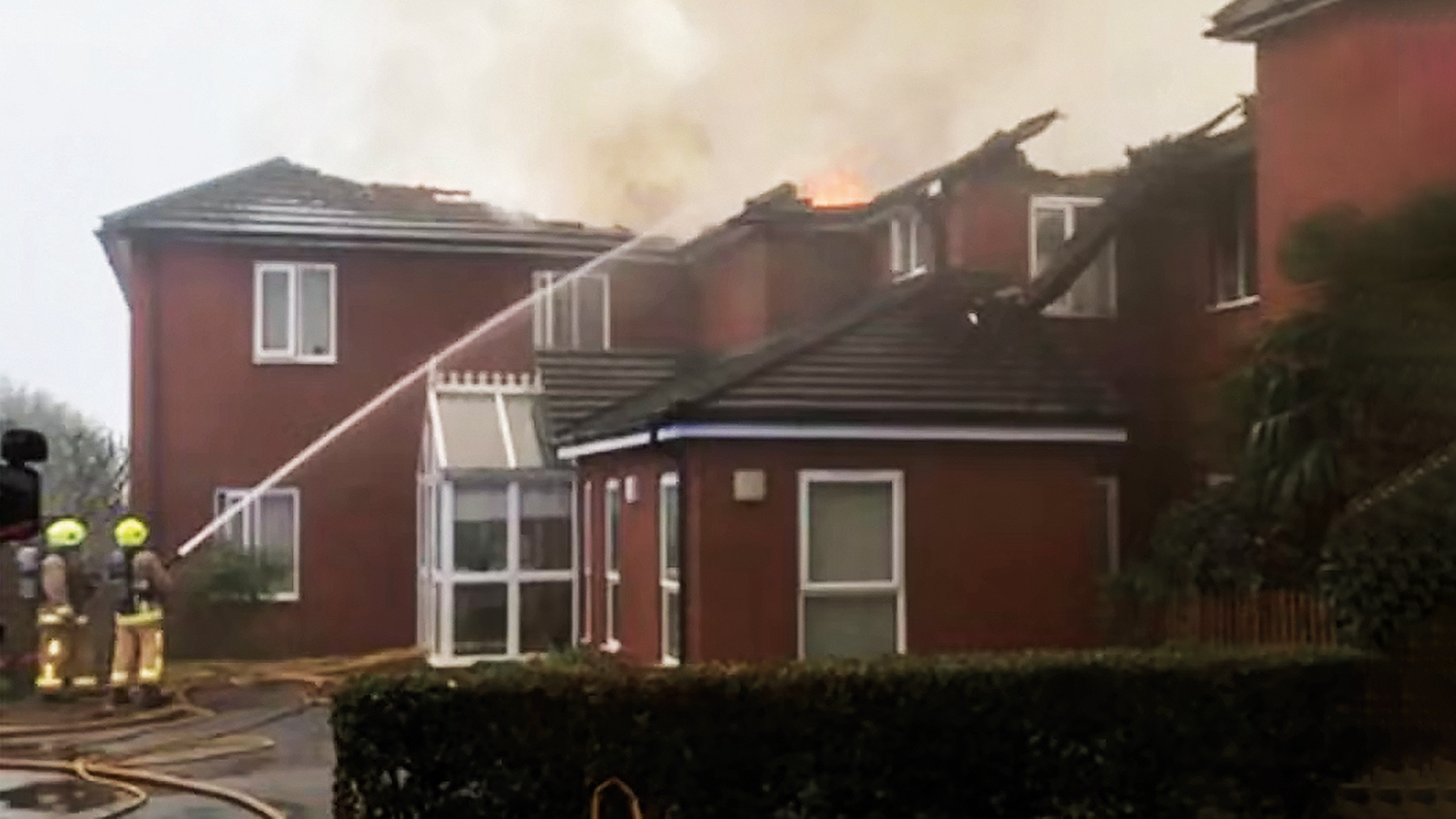
CIOB is supporting a campaign to change care home fire safety regulations after a member’s mother-in-law died in a blaze.
Steven Miles FCIOB and his wife Claire have lobbied government since the April 2017 tragedy at Newgrange Care Home in Hertfordshire. They argue that care homes should be classified as ‘higher-risk buildings’ and that sprinklers should be mandatory.
Claire Miles said: “Most care homes are just two storeys. Many residents are not mobile and can’t self-evacuate. They become disorientated and confused easily. So why are care homes not ‘higher risk’?”
This is not a paywall. Registration allows us to enhance your experience across Construction Management and ensure we deliver you quality editorial content.
Registering also means you can manage your own CPDs, comments, newsletter sign-ups and privacy settings.
Eddie Tuttle, director of policy, external affairs and research at CIOB, said: “Claire and Steven’s harrowing experience brings home the importance of building safety and the laws that enforce it. Behind every failure there are stories of tragedy and loss.
“With development of the secondary legislation for the Building Safety Act, which is currently going through Parliament, law makers have the opportunity to help make the built environment a safer one for all.
“We support Claire and Steven’s campaign to make sprinkler systems mandatory for care homes with residents of limited mobility, and that those homes are defined as ‘higher-risk buildings’. This would go a long way to ensure the terrible incident at Newgrange is never repeated.”
Fire safety offences
Following the fire on 8 April 2017, in which two residents died, the owner of Newgrange Care Home pleaded guilty to five fire safety offences. They were fined £175,000.
The inquest coroner, Geoffrey Sullivan, wrote to Michael Gove, secretary of state for the Department for Levelling Up, Housing and Communities, expressing concern that sprinkler systems are not “mandatory” for care homes whose occupants have limited mobility, and that “care homes are not ‘higher-risk buildings’”.
Gove replied that “we think the current definition is correct” but added that “we are looking at further potential fire safety measures in housing for vulnerable residents as part of our ongoing review of Approved Document B”.
CM asked DLUHC for an update on the review of Approved Document B. It responded that the review into sprinkler systems in care homes is “ongoing” and “we will provide an update in due course”.
CM also asked whether DLUHC would consider redefining care homes for residents of limited mobility as ‘higher-risk buildings’. It said that “the definition of higher-risk building was determined on the basis that the risk to multiple households is greater when fire spreads in buildings of at least 18m. That followed extensive consultation and we do not propose to lower the height threshold at this time.”
*After CM went to press, DLUHC announced the opening of a consultation on recommending sprinklers in care homes, regardless of height.