Construction Management is the highest circulation construction-based publication serving the UK built environment.
News
Balfour uses temporary structure during medieval bridge refurb
Cristina Lago Deputy Editor
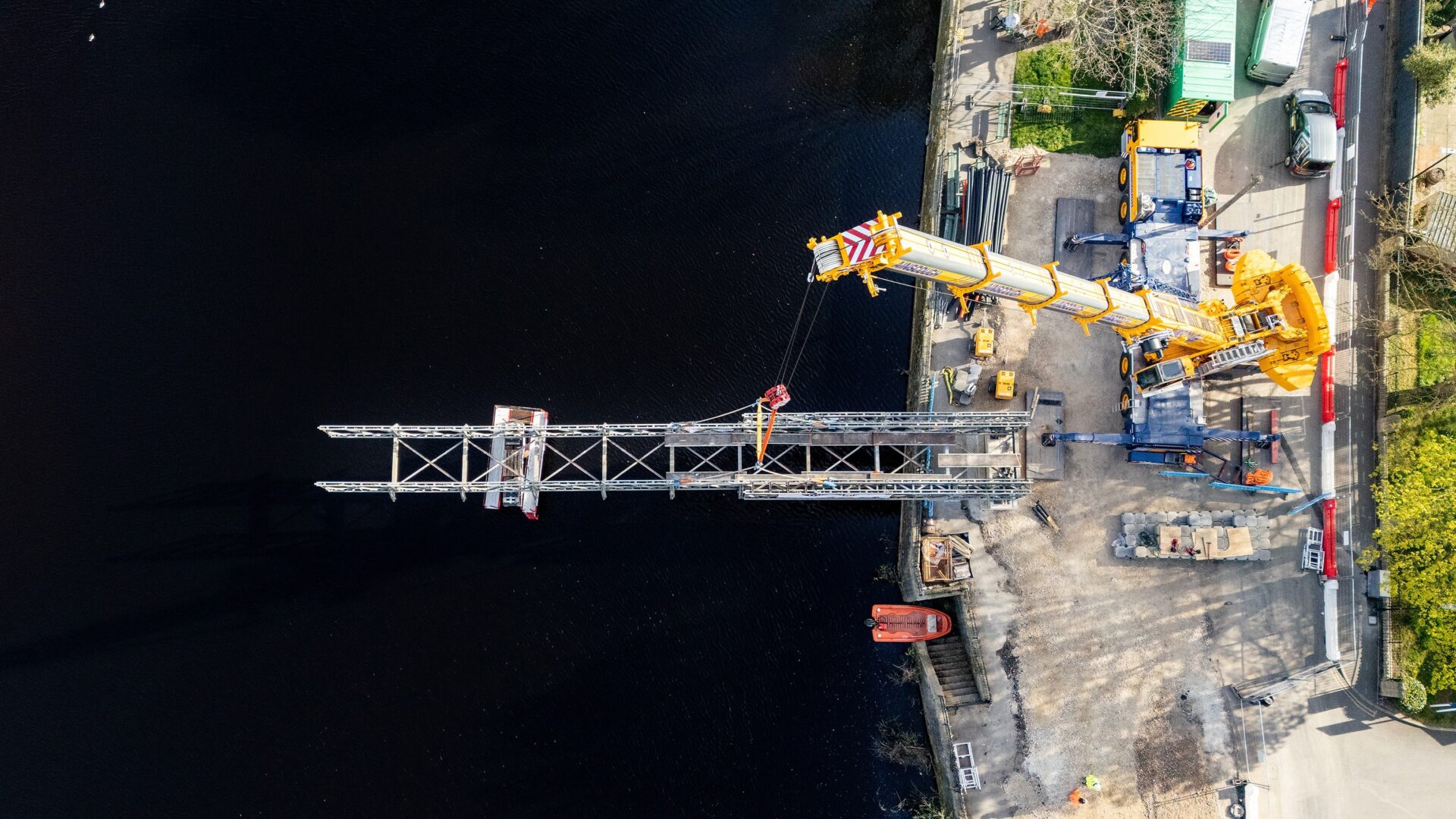
Work begins on the temporary structure at Otley Bridge (Image: Balfour Beatty)
Temporary works specialist Mabey Hire has installed a temporary structure during the replacement of a footway attached to the 13th-century listed Otley Bridge in West Yorkshire.
Leeds City Council appointed Balfour Beatty to dismantle and reconstruct the concrete pedestrian walkway added to the historic stone bridge in the 1950s, following concerns raised in 2023 about its structural condition.
Balfour Beatty contracted Mabey Hire to design, supply and install a 62m-span temporary bridge to minimise disruption to the local community during the works.
This is not a paywall. Registration allows us to enhance your experience across Construction Management and ensure we deliver you quality editorial content.
Registering also means you can manage your own CPDs, comments, newsletter sign-ups and privacy settings.
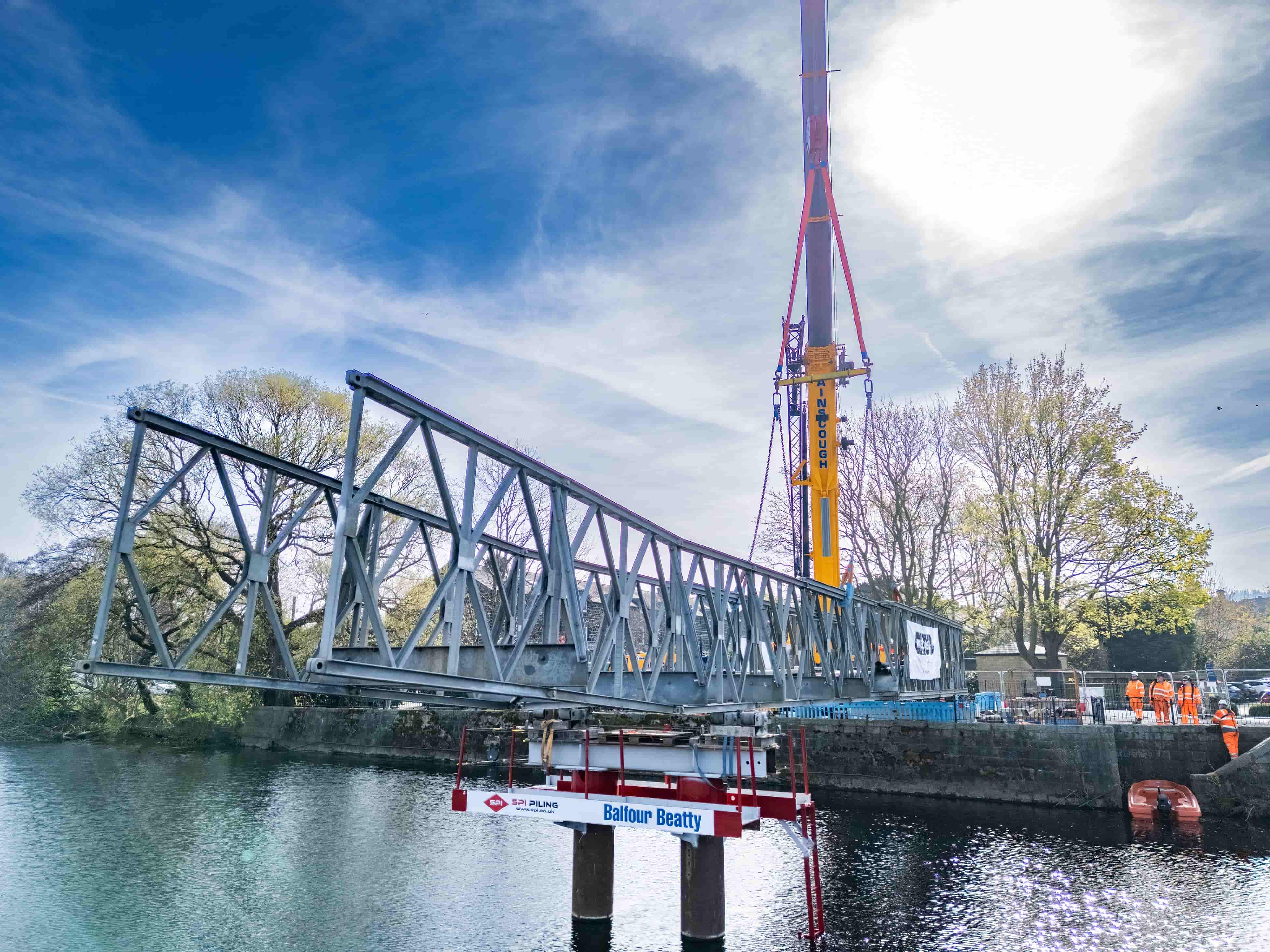
The temporary Compact 200 (C200) is a heavy-duty panel bridge comprising interchangeable steel components with mesh infill panels that prevent debris from falling off the structure.
Limited access to the site
The first 10 bridge bays were assembled on the river’s south bank before a 300-tonne mobile crane lifted and placed them onto the south abutment and a pre-constructed river pier.
https://www.youtube.com/watch?v=VZNcJZ1wOE8
3D video outlines the works to install the temporary footbridge and the new footway
Mabey Hire then used a telehandler to attach more bays and launch the bridge length across the river using the pier as the centre of gravity.
Following completion of the incremental launch, Mabey Hire constructed ramps and pathways on either end of the bridge for pedestrian access.
Daniel Barnes, project manager from Balfour Beatty, said: “Given the central location of the existing footbridge and the importance it holds to people on their daily commutes, it was essential that we provided a temporary alternative in the interim.
“There were multiple factors at play, with limited access to the work site and the need to divert live services across the temporary bridge. As such, we needed to ensure any solution provided could satisfy all these requirements.
“To this end, we approached Mabey Hire, having worked with them on previous projects and well aware of both their full-service offering and modular bridging solutions.”
The Compact 200 (C200) is a heavy-duty panel bridge comprising interchangeable steel components (Image: Balfour Beatty)
Seven stages carefully planned
Russell Ward, major projects sales manager at Mabey Hire, added: “Space was extremely limited on site, with existing buildings in close proximity, as well as footpaths and other furniture on both banks. All of this meant that we only had a very small footprint in which to assemble and manoeuvre the bridge.
“Using our in-house install team’s experience, we were able to adapt to the site conditions and plan accordingly. Thanks to the modular nature of our temporary bridging equipment, we were able to stagger the deliveries to site, ensuring they took place outside of peak commuting hours. The bridge launch itself was conducted in seven carefully considered stages.”
Otley Bridge was first built in 1229 after being commissioned by the Archbishop of York a year earlier. It has undergone many repairs and extensions over the centuries, with widening works conducted in the 18th century and the pedestrian portion added in 1957.
Balfour Beatty is expected to finish the removal and replacement of the old footway in October, after which the temporary bridge will be removed.
The January/February 2026 issue of Construction Management magazine is now available to read in digital format.
Powered Access
CM, in partnership with IPAF, has launched a new survey to explore the industry’s views and experiences with powered access machines on construction projects.
This is not a first step towards a paywall. We need readers to register with us to help sustain creation of quality editorial content on Construction Management. Registering also means you can manage your own CPDs, comments, newsletter sign-ups and privacy settings. Thank you.