Construction Management is the highest circulation construction-based publication serving the UK built environment.
News
Algae could unlock sustainable road construction, says Tarmac
Cristina Lago Deputy Editor
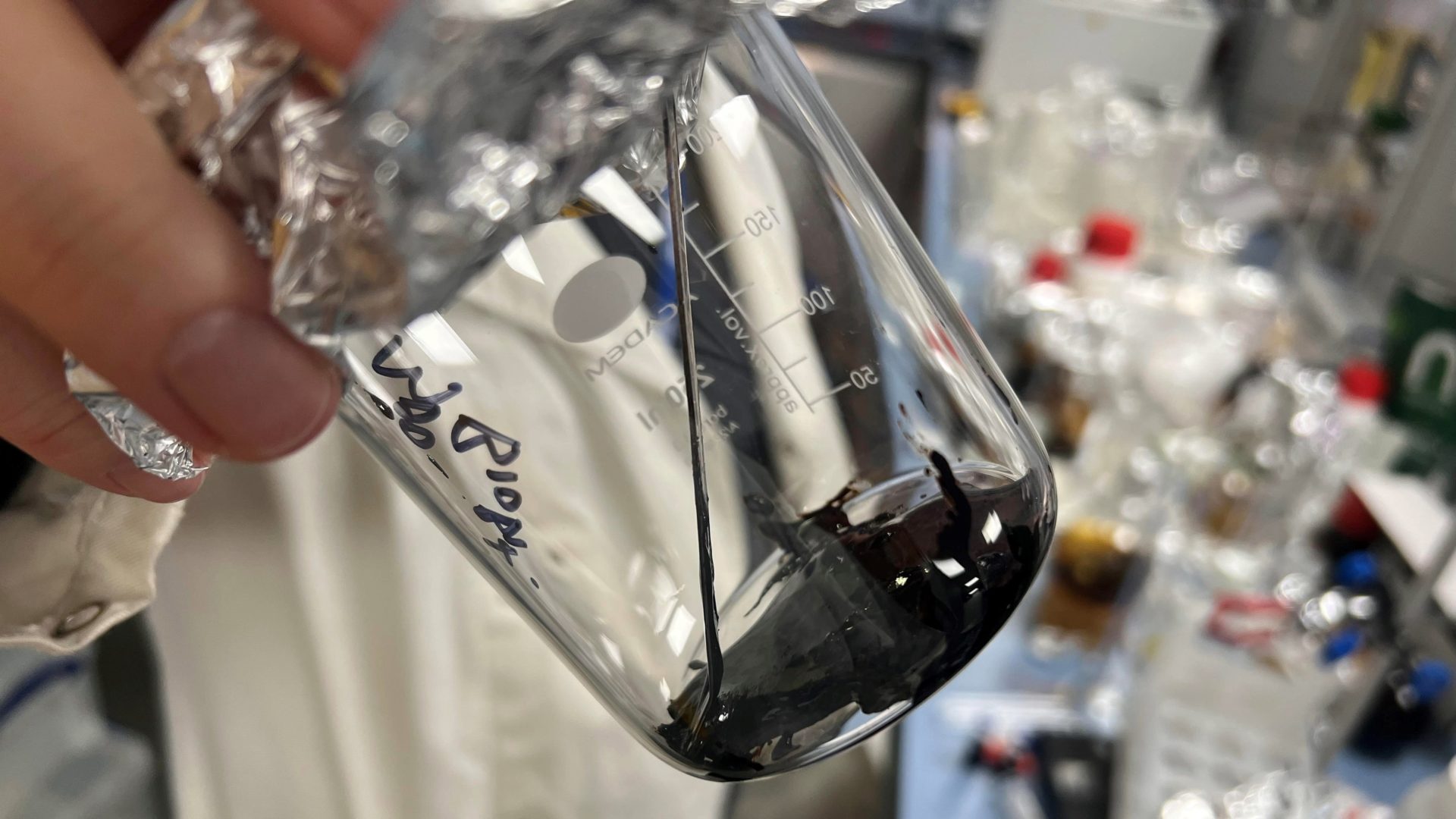
The algae could be used in sustainable road construction (Image: Tarmac)
A ‘bio-based’ bitumen made from algae could be used as a sustainable alternative in UK road construction if scaled up.
Tarmac and other industry companies are working with Imperial College London and the University of London on a research project led by carbon removal company CO2CO to develop a new method that uses algae as a biomass source material to produce ‘bio-bitumen’.
This transforms algae biomass into a black, viscous water-repellent material that resembles petroleum-derived bitumen, but with significantly less carbon.
This is not a paywall. Registration allows us to enhance your experience across Construction Management and ensure we deliver you quality editorial content.
Registering also means you can manage your own CPDs, comments, newsletter sign-ups and privacy settings.
Professor Mark Sephton of Imperial College London said the bio-bitumen’s viscoelastic properties result in unique characteristics that make the material an ideal binder for aggregates in asphalt production.
Tarmac said it will complete live laboratory testing of the material at its technical facilities in Ettingshall, Wolverhampton. Although still in its early development stages, if scaled up it could be used for large-volume production of different grades of bio-bitumen that meet UK industry standards.
Maximising environmental benefits
During the next phase, researchers will advance the product development to higher technology readiness to further develop and validate the product in relevant environments.
Tim Smith, regional technical manager (South East) at Tarmac, said: “Early-stage research has shown that the bio-bitumen derived from algae could be a very viable alternative to the energy-intensive process of traditional bitumen production.
“It provides the same properties but offers significant carbon savings when compared to petroleum-derived bitumen. However, to maximise the environmental benefits, we also need to complete thorough testing and development to ensure these new bio-bitumens are as durable and recyclable as possible, and do not affect the performance of the finished asphalt material.”
The January/February 2026 issue of Construction Management magazine is now available to read in digital format.
Powered Access
CM, in partnership with IPAF, has launched a new survey to explore the industry’s views and experiences with powered access machines on construction projects.
This is not a first step towards a paywall. We need readers to register with us to help sustain creation of quality editorial content on Construction Management. Registering also means you can manage your own CPDs, comments, newsletter sign-ups and privacy settings. Thank you.