Construction Management is the highest circulation construction-based publication serving the UK built environment.
Opinion
Women in skilled trades: are numbers improving?
Ridha Shah Turner & Townsend
Image: Dreamstime.com
Construction can learn important lessons from manufacturing when it comes to attracting women to hands-on roles, writes Ridha Shah.
The UK construction industry has experienced significant workforce structure changes over the past decade. According to the Office for National Statistics (ONS), 15% of UK construction professionals are women, with a small percentage in the manual workforce.
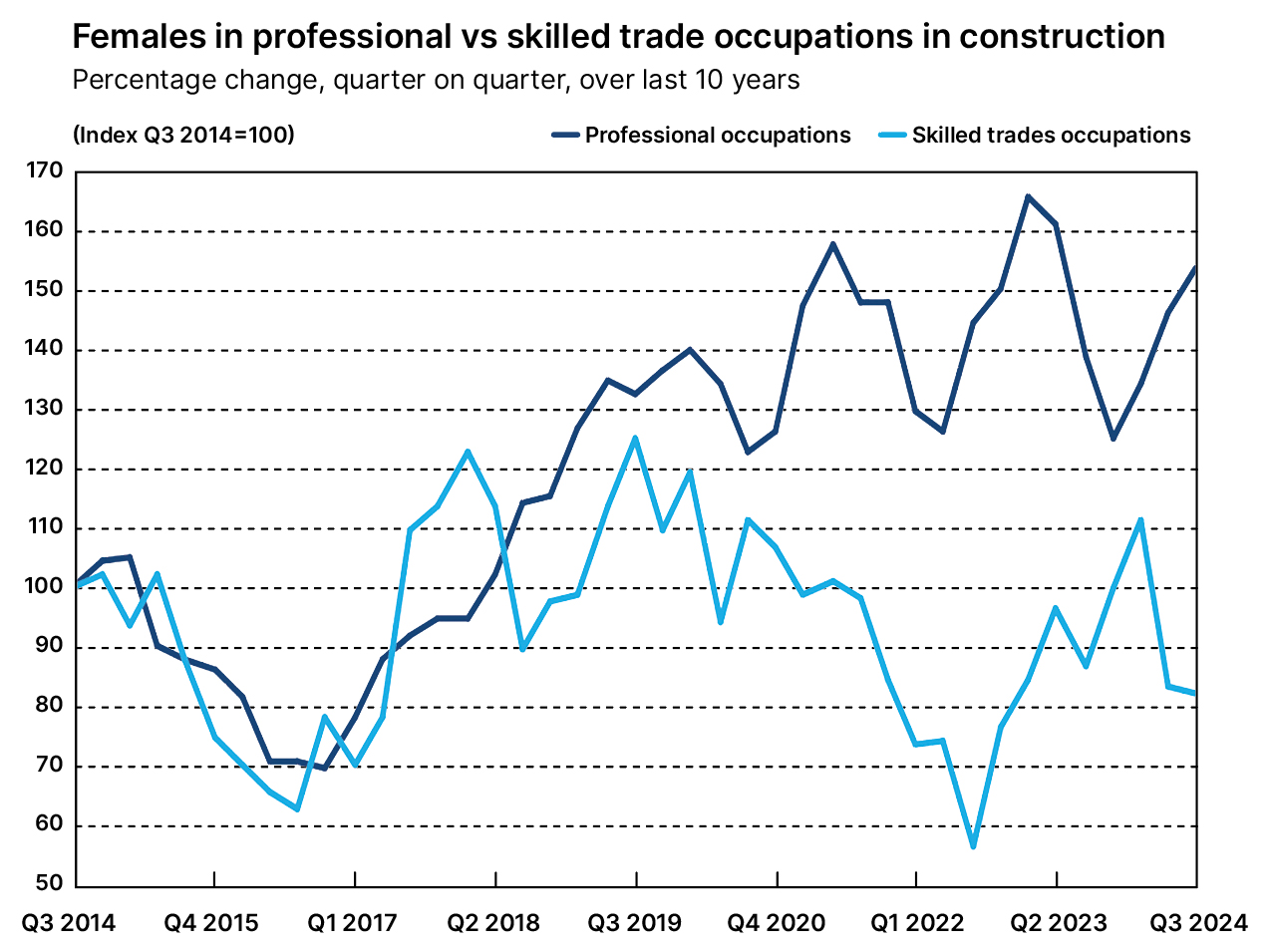
While female professional roles increased by 53.5% over the past 10 years, women in skilled trades have steadily declined by around 18% in the same period.
This is not a paywall. Registration allows us to enhance your experience across Construction Management and ensure we deliver you quality editorial content.
Registering also means you can manage your own CPDs, comments, newsletter sign-ups and privacy settings.
There was a shift in the pattern for both professional and skilled trades occupations around Q3 2020, as shown in the graph below. The rise of working from home as a result of the Covid-19 pandemic significantly impacted working arrangements, especially for office jobs.
Source: ONS figures based on the standard occupational classification 2020 definitions for construction-related work
In Q3 2024, women in professional occupations increased by 10.6% year-on-year, while the number of men in these positions fell by 5.3%.
In contrast, from Q3 2020 to Q3 2024, women in skilled trade occupations decreased by 26.2%. The pausing or delay of many construction projects led to job losses and reduced opportunities, which likely contributed to the decline in skilled trades as people looked for jobs in other industries.
Lessons from manufacturing
Although the participation of women in skilled trades occupations within the construction industry has been volatile in recent years, there has also been some growth.
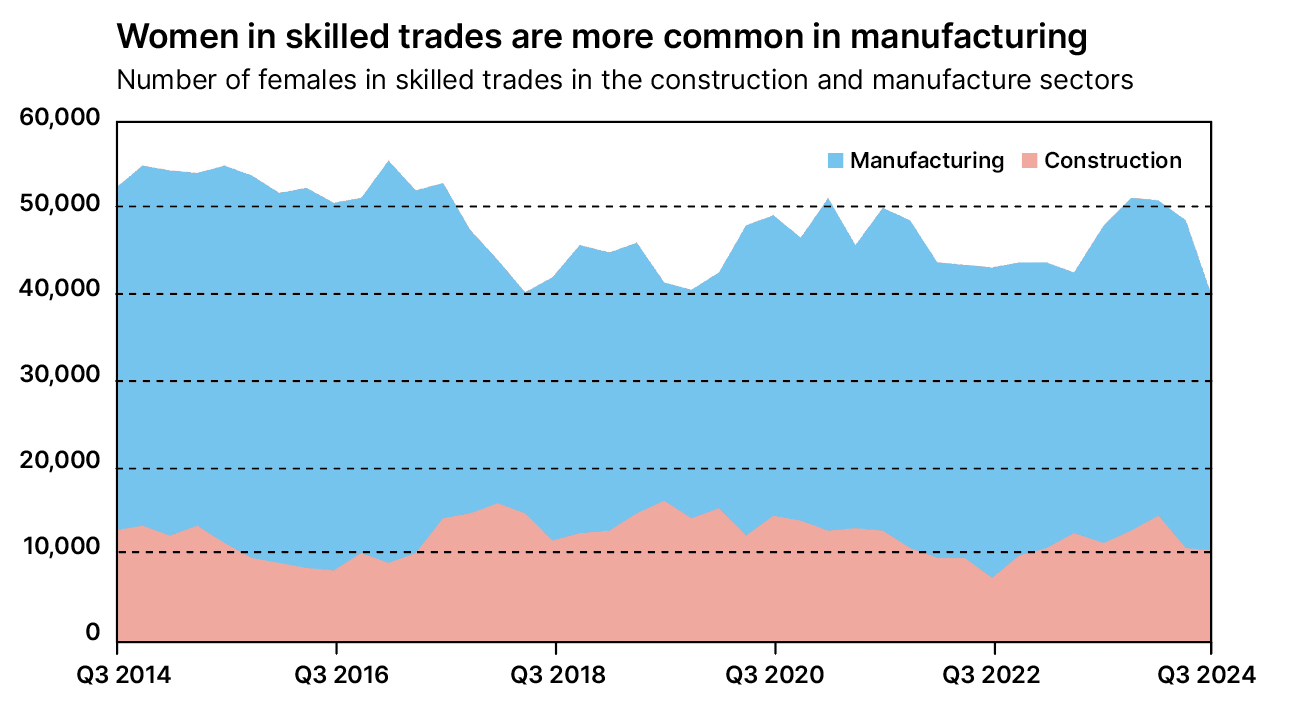
When comparing skilled trades occupations in the construction sector with manufacturing, notable differences appear. Both involve practical, hands-on work with tools, machinery and materials; however, the construction sector lags behind the manufacturing sector.
As shown in the bottom graph on this page, the number of women in skilled trade occupations in manufacturing is consistently and significantly higher compared to construction.
Over the last 10 years, the average number of women in manufacturing skilled trades was 47,912 out of a total workforce of 588,873, whereas construction showed a much lower average of 12,149, out of a workforce of 1,017,763.
According to the Women in UK Manufacturing 2024 report, women are increasingly attracted to skilled roles in manufacturing due to better diversity and inclusion initiatives, the perception of more equal opportunities, career advancement opportunities and more structured work environments.
Source: ONS
Supporting women’s participation in skilled construction trades is crucial for bridging the gender gap, bringing diverse perspectives and addressing the skills shortage in our industry. There are valuable lessons to learn from sectors like manufacturing, which have made greater progress in this area.
Effective strategies used include targeted mentorship programmes, recruitment campaigns, actively showcasing successful female role models and introducing flexible working measures.
Implementing such strategies can help create a more inclusive and innovative construction workforce, ultimately driving the industry forward.
Ridha Shah is an economist and diversity and inclusion lead (Yorkshire and North East) at Turner & Townsend.
The January/February 2026 issue of Construction Management magazine is now available to read in digital format.
Powered Access
CM, in partnership with IPAF, has launched a new survey to explore the industry’s views and experiences with powered access machines on construction projects.
This is not a first step towards a paywall. We need readers to register with us to help sustain creation of quality editorial content on Construction Management. Registering also means you can manage your own CPDs, comments, newsletter sign-ups and privacy settings. Thank you.