Construction Management is the highest circulation construction-based publication serving the UK built environment.
Digital Construction
What’s the future of COBie?
Vitalij Tetervov Co-founder, yBIM
What is the future of COBie? Is it COBie 2.5? Or may be COBie 3? Or could it be AOH-BSEM? Vitalij Tetervov offers this insight.
Before discussing the future of COBie, it’s worth spending a few moments on the boring part: the history.
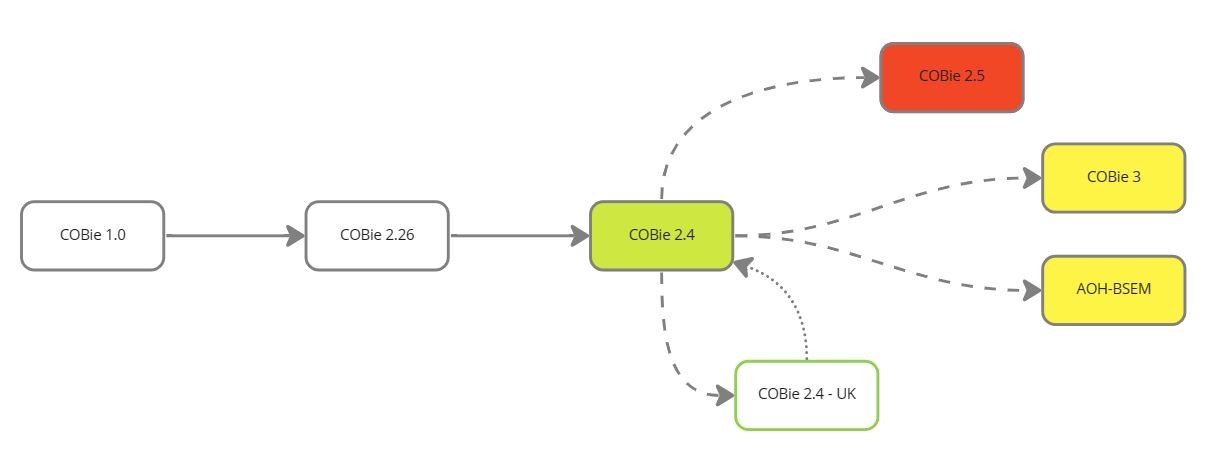
The COBie saga began more than 15 years ago with the first publication of COBie 1.0, which quickly progressed to COBie 2.26 and finally matured into what we know as COBie 2.4.
If you are delivering COBie on your projects, it is most likely the COBie 2.4 version. If not, you may want to double check what you signed up for. You can learn a bit more about COBie’s history by visiting History - buildingSMART COBie.
This is not a paywall. Registration allows us to enhance your experience across Construction Management and ensure we deliver you quality editorial content.
Registering also means you can manage your own CPDs, comments, newsletter sign-ups and privacy settings.
COBie 2.4 is described in the NBIMs version 3 standard. At some point, we had a spin-off in the UK, which was somewhat described in BS 1192-4 and named as COBie 2.4 - UK. ISO 19650-4 superseded BS 1192-4, and the former has a clear reference back to NBIMs v3. I may talk more about this in a later article.
Before I jump into the next section, let’s repeat the simple diagram from the top of the page to help you navigate your way around:
Asset Operations Handover
In 2020, there was a proposal for COBie 2.5, which seemed like a great idea at the time, but sort of died in the making (at least the name).
However, there is a live project underway at buildingSMART, which is the most promising to date. After multiple iterations to the project name, it is now known as Asset Operations Handover – Building Systems Equipment Maintenance (AOH-BSEM). It even has a nickname: ‘Son of COBie’.
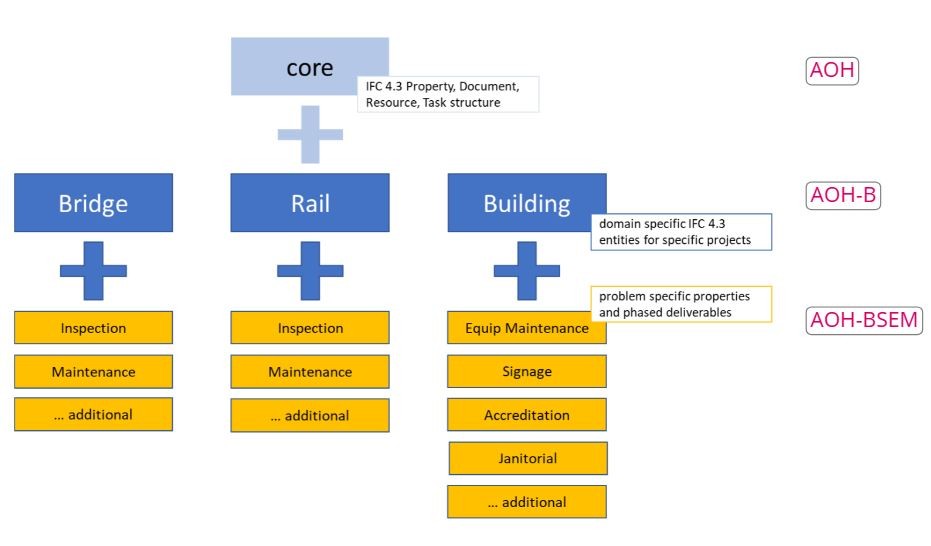
AOH is a framework. It is an effective communication and development concept to simply describe the organisation of solutions for many use cases across multiple domains, such as buildings, or rail, for example. Each solution will be implemented using the emerging buildingSmart International tool sets – Use Case Management and Information Delivery Specification.
To describe the Son of COBie, the project picks the core framework and delves into the building domain to describe the exchange requirements for equipment maintenance.
In short, the diagram below describes the AOH framework schematic:
The above implementation will be a game-changer in the handover process, but it needs further funding. The project received a lot of interest, yet just a handful committed financially.
The shocking part
I’m not sure about you, but I totally missed something that is called COBie 3! According to the National Institute of Building Sciences, COBie 3 will replace COBie 2.4, to be published in the NBIMs v4 in 2023.
According to Ian Howell, interim CEO of buildingSMART: “The COBie 3.0 specification defines US industry requirements supported by the IFC schema that will also inform the new Asset Operations Handover project being proposed by buildingSMART.”
If you want to see the draft changes, follow this link.
So, what’s the future of COBie?
Well, at some point we will get an update on COBie 2.4. However, having two projects, COBie 3 and AOH-BSEM, running in parallel does not give us any clarity. It seems that COBie 3 will most likely replace COBie 2.4 in the US, yet it’s unclear if the rest of the world will follow suit.
While the AOH-BSEM project seems to be well thought through and has some documented processes, it is not yet complete. For now, COBie 2.4 is still the current version.
Vitalij Tetervov is co-founder of yBIM and has worked for BIMBox and Turner & Townsend. He delivers annual guest lectures at the University of Salford and the University of Liverpool on ISO 19650 series implementation and COBie. He also holds COBie Practitioner certification.
This is not a first step towards a paywall. We need readers to register with us to help sustain creation of quality editorial content on Construction Management. Registering also means you can manage your own CPDs, comments, newsletter sign-ups and privacy settings. Thank you.