Construction Management is the highest circulation construction-based publication serving the UK built environment.
Legal
What can be done to combat discrimination in construction?
Nick Hobden Thomson Snell & Passmore
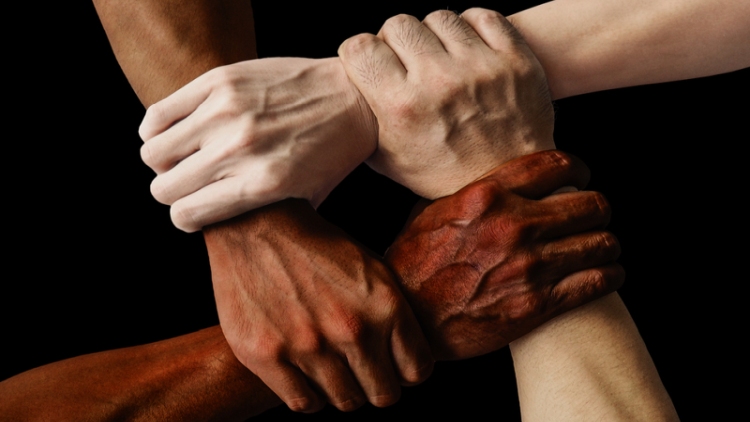
Image: Dreamstime
Discrimination is an important topic and the construction industry is taking the issue more seriously. Nick Hobden answers key questions about discrimination and how to combat it.
What is direct discrimination?
Discrimination is defined as treating someone differently, in a less favourable way than a comparator, because of a protected characteristic. Protected characteristics are defined in the Equality Act 2010 and are: race, religion or belief, age, sex, sexual orientation, gender reassignment, marriage and civil partnership and disability.
Within employment, there are two types of discrimination, direct and indirect. Direct discrimination is directly treating someone unfairly and less favourably because of a protected characteristic, for example if a well-qualified employee is not offered a job promotion because they are a woman, but a less qualified man (the comparator) was awarded the promotion.
What is indirect discrimination?
Indirect discrimination is where rules, policies or arrangements (referred to as a provision criterion or practice) have a less favourable effect on a particular group who share the same protected characteristic, for example asking all employees to start working on Sundays may be discriminatory against practising Christians who could not work on Sundays.
This is not a paywall. Registration allows us to enhance your experience across Construction Management and ensure we deliver you quality editorial content.
Registering also means you can manage your own CPDs, comments, newsletter sign-ups and privacy settings.
The employer must show that the rule or arrangement was a proportionate means of achieving a legitimate aim. For example, an airline requests that all pilots must have 20/20 vision, an applicant who is 50 claims that this is age discrimination as eye sight deteriorates as you get older. The airline says that the 20/20 vision requirement is a proportionate means of achieving a legitimate aim as pilots need to ensure the safety of hundreds of passengers and so perfect vision is necessary.
Which protected characteristic is most affected?
In 2021, HR software supplier CIPHR conducted a survey of 2,000 UK adults. More than a third of UK adults reported experiencing workplace discrimination and the most common form of discrimination reported was age discrimination. Young people appear to be particularly affected: 66% of students said that they had been discriminated against, either whilst in employment or when applying for a job. Sex, disability and race were also among the top types of discrimination. In 2019/20, sexual orientation discrimination claims received the largest average award at £28,000 compared with other discrimination jurisdictions. The highest maximum award in 2019/20 was for disability discrimination at £266,000.
What are the effects of discrimination?
Discrimination in the workplace can have a significant and serious impact on the lives of those it affects. As a result, many individuals being discriminated against have feelings of isolation which may lead to mental health concerns. The 2020 TIDES study found that acts of discrimination are associated with greater psychological stress, anxiety and depression as well as poorer physical health. Therefore, the importance of mitigating the risk of discrimination is crucial.
Can my employee bring a claim for discrimination?
To bring a claim for discrimination, employees do not have to have a specific length of service. If an employee believes there has been discrimination, a claim must be made within three months less one day from the act of discrimination or from the most recent act if the discrimination was ongoing and part of a chain of events (the primary limit).
Would-be claimants must obtain a certificate of early conciliation from ACAS first to start a claim. That process can extend the three month time limit by a further one month, if they apply for early conciliation before the primary limit. Awards for discrimination include compensation, which is uncapped and will invariably include compensation for injured feelings.
Compensation for injured feelings is calculated using the ‘Vento band’ system (as of April 6 2021):
Lower band for less serious cases - £900 to £9,100;
Middle band for cases which do not merit an upper band award - £9,100 to £27,400;
Upper band for most serious cases - £27,400 to £45,600.
Due to the nature of the uncapped compensation, employers may be faced with financial risk if a claim were to be brought against them. Therefore, employers need to ensure that they are taking steps to minimise the risk of any claims.
What can be done to mitigate the risks of discrimination?
ACAS recommends the following:
Making sure employers do not ask questions related to protected characteristics in the interview process, for example are you married and planning on having children soon?
Providing an up-to-date equality policy and regular anti-discrimination training to all staff and employees.
Having a non-judgmental and open channel of communication when discrimination does happen and comforting employees that their claims will be taken seriously.
Having regular, private one-on-one conversations and catch ups with employees, ensuring that any concerns are dealt with quickly and confidentially.
Nick Hobden is partner and head of employment law at Thomson Snell & Passmore.
The January/February 2026 issue of Construction Management magazine is now available to read in digital format.
Powered Access
CM, in partnership with IPAF, has launched a new survey to explore the industry’s views and experiences with powered access machines on construction projects.
This is not a first step towards a paywall. We need readers to register with us to help sustain creation of quality editorial content on Construction Management. Registering also means you can manage your own CPDs, comments, newsletter sign-ups and privacy settings. Thank you.