














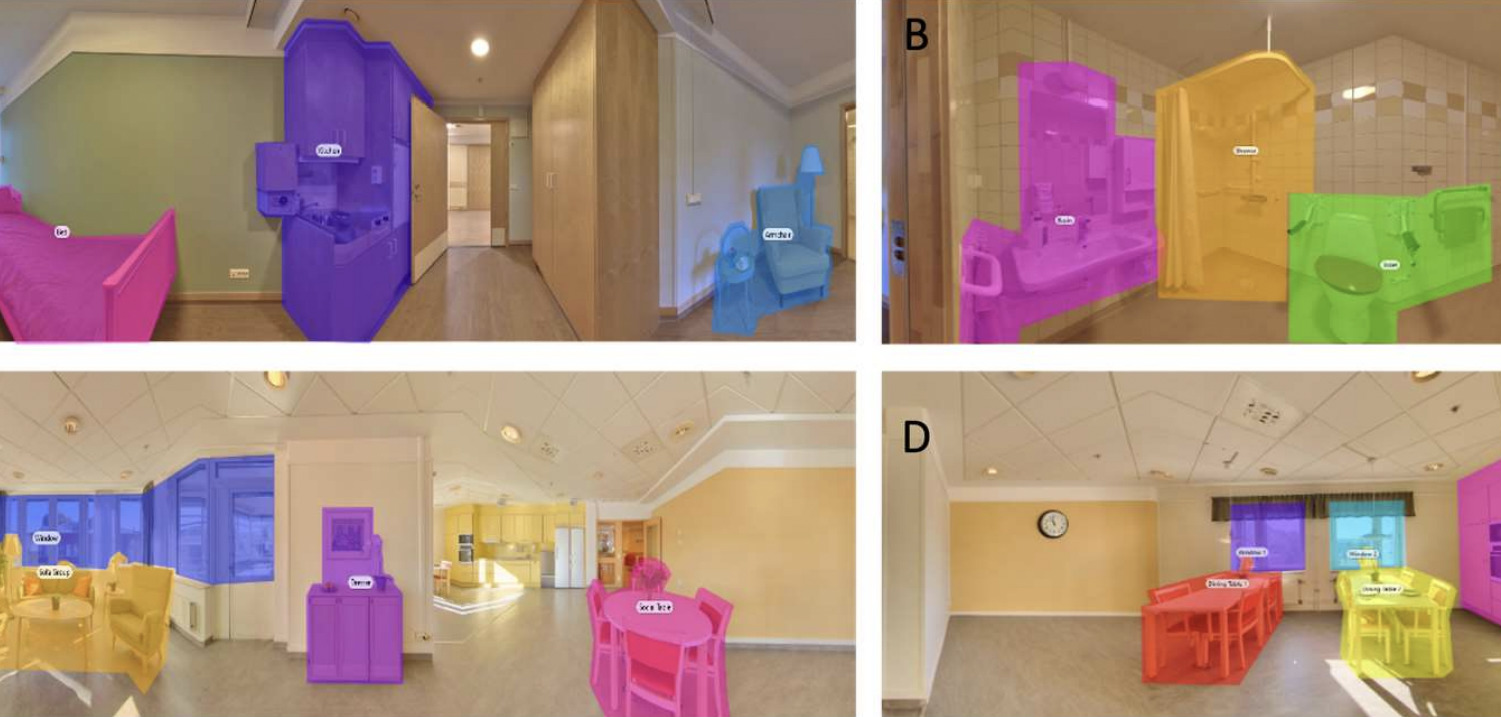
VR versions of built environments are a valid platform for testing users’ response to designs, according to new research.
An experiment measured the emotional responses and experiences of a sample of 10 people with a mean age of 69, and eight health workers when exploring an elderly care home in Stockholm, Sweden. Half of the test subjects viewed the real facility first. The other half viewed a desktop VR version (generated by London-based digital twin and visual intelligence start-up Spinview) first. Both sets of subjects then swapped over to the other environment.
Subjects were instructed in both environments to imagine that they had just moved in and that this was the first time they had visited the care home with everything in place. They were encouraged to feel at home and informed that it was okay to walk around as they pleased.
Their emotional reactions to both the physical and VR environments were recorded and compared. This was measured with eye-tracking technology provided by Stockholm-based Tobii. This recorded how the participants navigated their digital and physical environments. Galvanic skin responses, a method for measuring emotions, were also taken.
Register for free or sign in to continue reading
This is not a paywall. Registration allows us to enhance your experience across Construction Management and ensure we deliver you quality editorial content.
Registering also means you can manage your own CPDs, comments, newsletter sign-ups and privacy settings.


