Construction Management is the highest circulation construction-based publication serving the UK built environment.
Digital Construction
The drive-by Tesla approach to building carbon data capture
Justin Stanton Editor, CM Digital
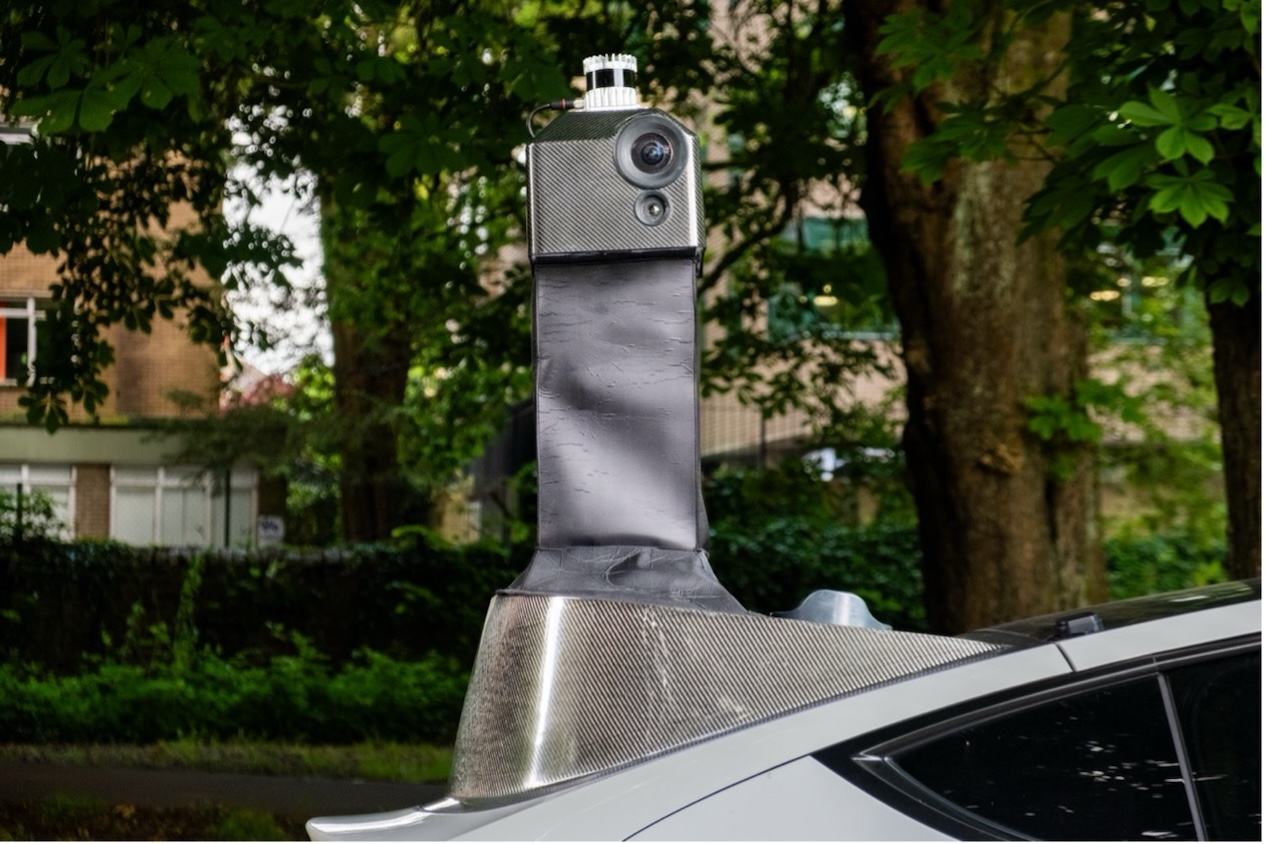
The scanning equipment, including infrared and LiDAR, rises from the back of the Tesla to assess buildings as the car is driven by at normal speeds
A pair of Teslas fitted with scanners have been used to capture building data at scale in a trial funded by Innovate UK, the Welsh government and the UK Space Agency.
The Innovate UK Net Zero Heat Programme trial used Teslas fitted with data capture specialist XRI’s Building Environment Scanning System (BESS). The cars scanned 1.5 million properties in three months earlier this year.
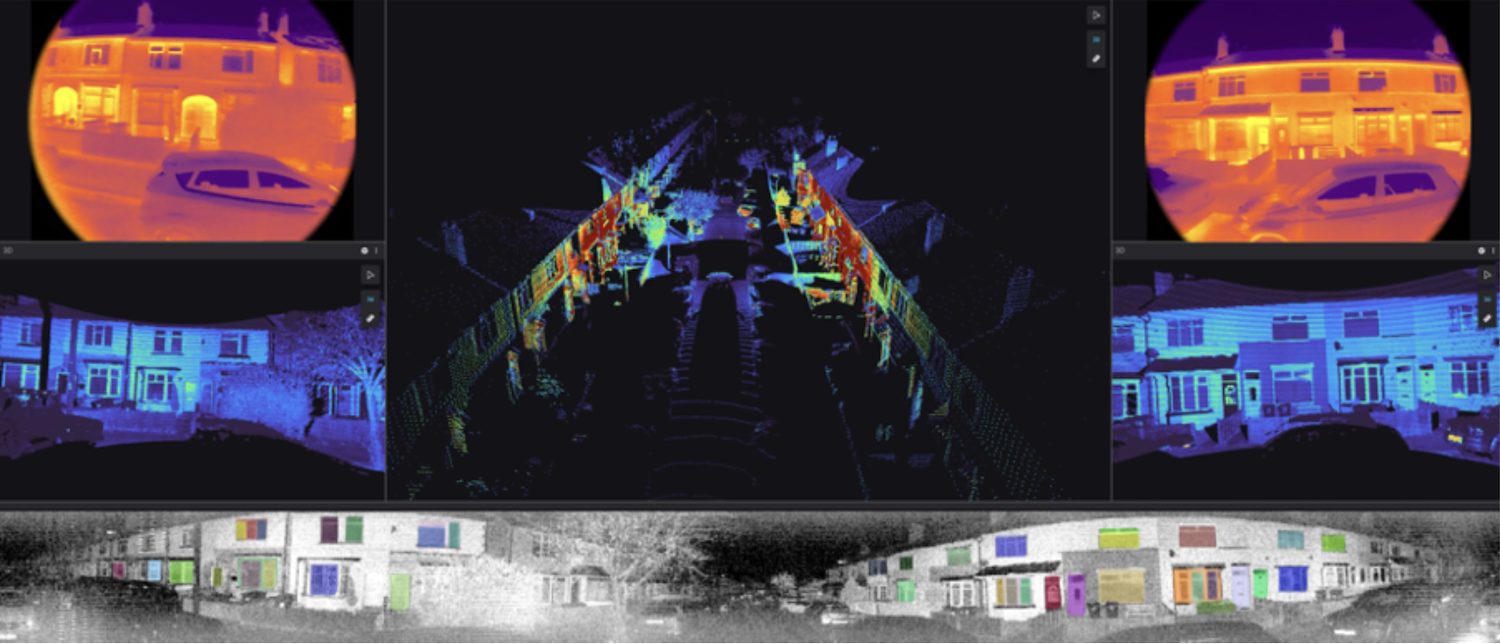
The XRI technology gathers images, thermal characteristics and dimensions from the roadside, on the go. This means data capture can happen year round with the infrared identifying heat defects, and LiDAR creating a point cloud, giving distances and dimensions. Computer vision and AI is used to isolate and identify components of the buildings.
This is not a paywall. Registration allows us to enhance your experience across Construction Management and ensure we deliver you quality editorial content.
Registering also means you can manage your own CPDs, comments, newsletter sign-ups and privacy settings.
Data collection is fully automated with mapping and simultaneous localisation. This allows each BESS in the fleet to know where the others are in real-time for efficient scanning across locations.
The data captured can be used to define:
classifications of materials, including wall material and cladding finishes, window and door framing and glazing types, and chimney, guttering and ancillary feature materials;
building features, including building type, configuration and attachment, porches, overhangs, bay windows, extensions, modifications and shading; and
thermal characteristics, including relative thermal performance across building components and key points of leakage.
What the Tesla-mounted scanning equipment sees
Cost-effective assessment
Innovate UK noted: “All of this [was] achieved without any need to enter the property – no more awkward door knocking! [That said] the BESS is not designed to replace in-person visits, which are vital for understanding internal home layouts and for resident engagement. However, in-person surveys are expensive and can be tricky to carry out. The BESS can deliver cost-effective assessments of building quality and condition and, when combined with other data, can suggest suitability for a range of energy efficiency measures prior to a home visit, making the subsequent visits by renovation experts more valuable.”
Data gathered by BESS during the Innovate UK project is being made available to a small number of other projects within the Net Zero Heat programme over the coming months. Later in 2024, further beta data sets will be released for interested organisations to use.
The technology has caught the attention of New Scientist, which created the video below.
This is not a first step towards a paywall. We need readers to register with us to help sustain creation of quality editorial content on Construction Management. Registering also means you can manage your own CPDs, comments, newsletter sign-ups and privacy settings. Thank you.