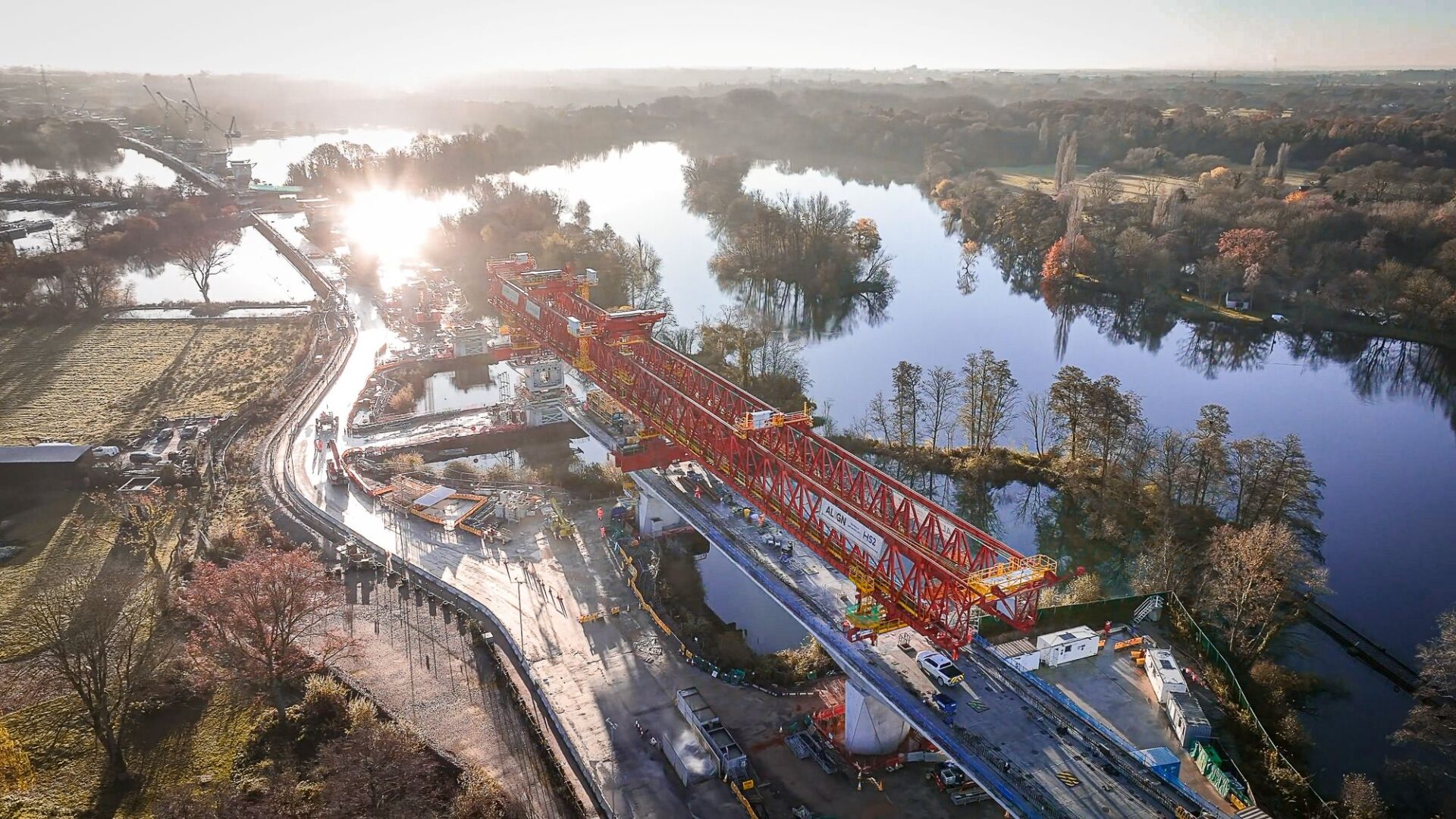
Installing structures during construction that ultimately won’t remain in the finished building or infrastructure may not sound cost effective. Nonetheless, investing time to plan and design such temporary works can improve sequencing, as well as reducing the risk of programme and cost overruns once work progresses onto site.
While this approach is tried and tested, it calls for early engagement and extensive design and construction experience to maximise the benefits.
Two new codes of practice, plus project lessons published by a major infrastructure client, provide valuable guidance on how to use temporary works effectively.
This is not a paywall. Registration allows us to enhance your experience across Construction Management and ensure we deliver you quality editorial content.
Registering also means you can manage your own CPDs, comments, newsletter sign-ups and privacy settings.
What are temporary works?
Understanding exactly what is meant by temporary works is key to knowing when their use might provide a solution to complex sites or difficult project sequencing. Temporary works are frequently used to resolve, among others, geotechnical, access and in-situ concrete casting challenges.
Essentially, temporary works allow or enable construction of, protect, support or provide access to, the permanent works and may not remain in place when the works are complete.
They can include elements of the permanent works that are temporary, such as short-term loading conditions, as well as structures that undergo various states of modification or demolition. An example of temporary loading conditions is where a pile is loaded more heavily during a sequence of the construction work than it will be under the final design.
“Temporary works design specialists are often low down the supply chain and brought into projects later than designers working on the permanent works.”
While these temporary structures may not remain in the permanent works, the attention to detail and design rigour is the same as that used for the final structure. The design tools and technologies for analysis of temporary works are often the same as for the design of permanent works, and the level of safety required in design is also similar.
Where the two may differ is in the durability of the structures – permanent works are likely to call for a 120-year design life, but temporary works may only exist for days, weeks or months at a time.
Drivers of cost savings
When temporary works for geotechnical solutions are combined with the observational method – where the construction process is adjusted based on real-time monitoring of the ground and structure’s behaviour – there are major gains to be made.
Recent work by Mott MacDonald used this method to construct a new underbridge below an existing railway during a track possession, delivering a £1.2m saving on a conventional approach. The use of temporary works, combined with the observational method, gave the project team more certainty about how long the work would take, so there was less risk around the reopening of the rail line.
As well as the cost savings, the rail line was reopened on time, as planned. Using an approach focused on the permanent works would have meant a longer line closure and created uncertainty over the ability to reopen the line on time.
Knowledge is key to success
While the benefits are clear, a challenge facing temporary works is the small number of people with the right skills to design and deliver them.
The best temporary works designers generally have extensive construction and design experience, but the industry lacks people with experience of both contracting and consulting. This means that a contractor’s temporary works team may have limited design skills, while the consultant’s temporary works designers may have limited appreciation of constructability.
There are several small specialists with expertise in temporary works design, but these firms are often too low down in the supply chain and brought into projects much later than the designers working on the permanent works. This late involvement limits these specialists’ ability to develop the most innovative solutions that could offer the most gains.
Early engagement is the best way for the teams to work together and develop a solution that meets both the cost and risk reduction aspirations, while also improving constructability.
Cross-industry lessons
The recent publication of new guidance and best practice documents reflect changes in understanding.
Two codes of practice – BS 5975-1:2024 Temporary works – Management procedures for the control of temporary works and BS 5975-2:2024 Temporary works – Falsework: Design and implementation – were published on 31 December 2024. These incorporate the latest technical advancements and best practice, reinforcing the importance of rigorous control measures, training and design specifications to deliver high-quality, safe outcomes on site.
Those codes came out just 12 months after Network Rail published some lessons learned on constructability and temporary works, which was based on real-life project experience. The Early Focus on Constructability and Temporary Works report encourages early contractor involvement and delivers advice on how to integrate temporary works and permanent works, at both design and delivery stages.
If the sector can take these new documents and combine them with collaborative working, then the temporary works sector will continue to evolve and advance. Nonetheless, early engagement will always be critical to success and delivering the best results.
Alan Willoner is technical director at Mott MacDonald.