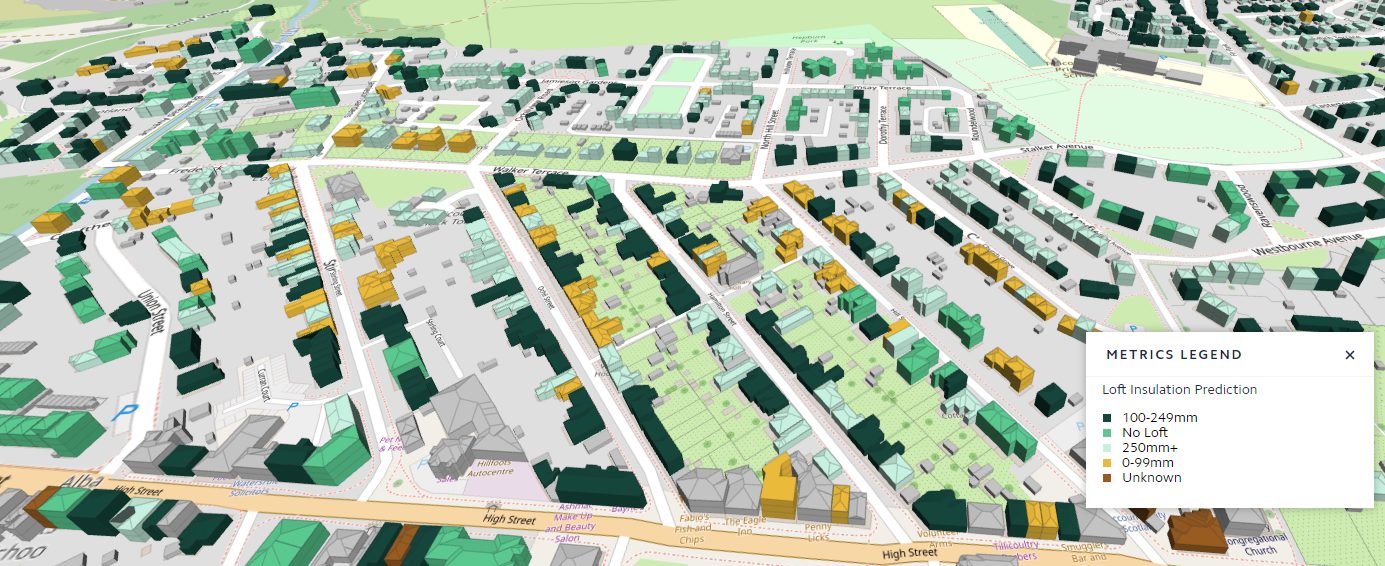
Stirling and Clackmannanshire councils are using a digital twin of their regions to help meet their net-zero targets.
Taking into account both national and regional targets, the digital twin provides evidence-based projections of future energy demands and emissions, informing the pathway to reach a net-zero energy system across the region.
This is not a paywall. Registration allows us to enhance your experience across Construction Management and ensure we deliver you quality editorial content.
Registering also means you can manage your own CPDs, comments, newsletter sign-ups and privacy settings.
The councils’ Regional Energy Masterplan spans four stages between 2023 and 2045, covering energy efficiency, heat management and energy generation. Founded on evidence from the digital twin, it underlines which – and in what order – low-carbon energy systems should be deployed across the region to create the most effective results from economic, environmental, and social sustainability perspectives.
IES’s simulations have revealed that carbon emissions produced by the energy used to heat and power the region’s domestic and non-domestic buildings can be reduced by approximately 98% by 2045, when compared against a 2022 baseline, through the actions and projects identified.
Biggest impact, most efficient
Craig McKendrick, public sector lead at IES, said: “In a world where energy is vulnerable to socio-economic and geopolitical factors, and we’re increasingly aware of our climate emergency, energy planning is a major public sector priority. The decisions we make now need to look at the long-term and be informed by the data. Accessing the evidence that intelligent tech now affords can be a gamechanger when it comes to planning the route to improved efficiency and reduced emissions.
"By creating a digital twin of the entire Stirling and Clackmannanshire region, we can see how things are actually working in practice and identify what could be done to make the biggest impact in the most efficient way."
The digital model of Stirling and Clackmannanshire remains live and will be used as an ongoing resource for the councils to test future scenarios and access the data they need to make informed decisions.
Following on from the initial Regional Energy Masterplan project, IES is now developing outline business cases for two large-scale renewable projects for the councils.
Don’t miss out on BIM and digital construction news: sign up to receive the BIMplus newsletter.