Construction Management is the highest circulation construction-based publication serving the UK built environment.
Technical
Why making buildings smart makes sense
Eszter Gulacsy Mott MacDonald
From creating a more pleasant working environment through to saving energy, smart sensors can deliver a host of benefits for both new and existing buildings. Mott MacDonald’s Eszter Gulacsy explains.
The Edge building in Amsterdam has 30,000 sensors (Image: Dreamstime)
The 30,000 sensors incorporated into the Edge building in Amsterdam are a key part of what helped the building, designed by PLP Architects, earn the moniker of “greenest building in the world”. The building has smart sensors that detect occupancy, adjust lighting and temperature to the occupants’ preferences, monitor water usage and help manage the use of the renewable energy generated by the building, among many other things.
While the Edge demonstrates state-of-the-art use of smart sensors, there are lots of ways such technology can also improve the operation and functionality of existing buildings. The digital solutions enabled by smart sensors are increasingly seen as an essential tool for building owners and operators to collect data about building usage and performance.
This is not a paywall. Registration allows us to enhance your experience across Construction Management and ensure we deliver you quality editorial content.
Registering also means you can manage your own CPDs, comments, newsletter sign-ups and privacy settings.
For existing buildings, it has historically been notoriously difficult to obtain building performance data, but the installation of smart sensors can unlock that. On new buildings, the drivers are different – their use helps ensure data is generated to deliver on the desired outcomes for the building and adapt it to changes in use.
Essentially, whether on a new or existing building, use of smart sensors can deliver a wide range of data, so installing the right sensors to deliver the ambition is critical. The array of different sensors available is huge. As standalone types, they don’t deliver much insight, but in combination and with the right analysis, they can unlock powerful information.
Types of smart sensor
The most commonly used smart sensors measure ambient temperature in an indoor space.
Before carbon dioxide (CO2) sensors became widespread, temperature sensors in HVAC systems were often used as a proxy for detecting potentially poor air quality in meeting rooms. When used in this application, an increase in room temperature from occupants signalled increased CO2 concentrations and poor air quality.
Temperature sensor data can also help to detect poor energy performance, such as a lack of night-time setbacks for HVAC systems, with the data showing the impact of leaving the heating on all night or over the weekend in an office building.
Other sensors that provide data to improve energy performance include occupancy and daylight sensors, which can be used to reduce the need for artificial lighting and save energy.
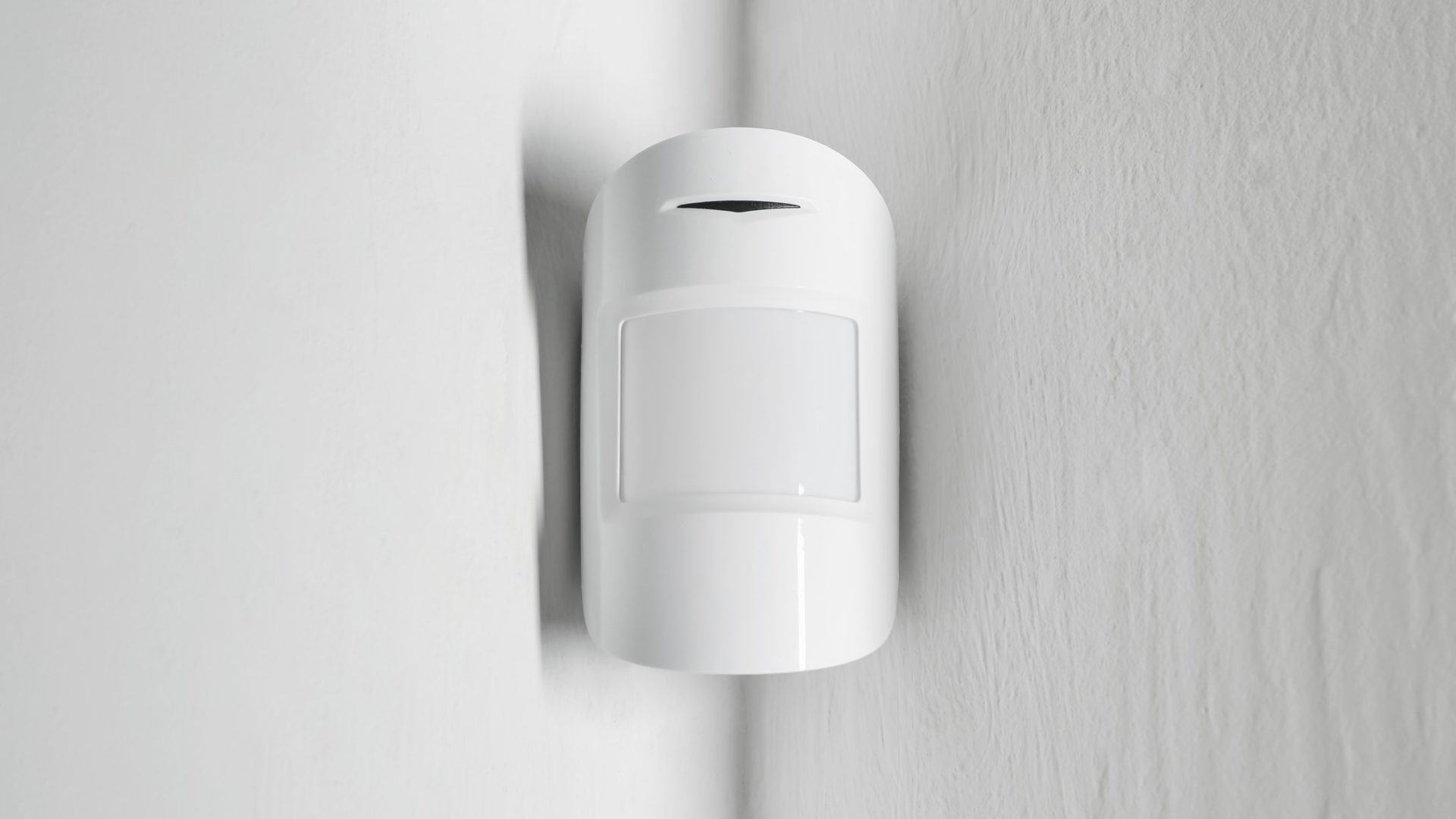
Motion sensors can detect the presence or absence of people (Image: Dreamstime)
Occupancy sensors are typically simple motion sensors and detect the presence or absence of people, rather than the number of occupants, and can be used to switch off lighting automatically in unoccupied spaces. Similarly, daylight sensors, when placed and commissioned correctly, can save energy by allowing perimeter lighting to be automatically switched off in daylight.
Longer-term space planning
Data from motion sensors, commonly found on automatic doors, along with occupancy sensors, can also be used for longer-term space planning to identify frequently and less-frequently used areas. Identifying weekly or seasonal occupancy patterns in buildings is also achievable.
Smart sensor data is not just good for the environment and the building operator’s costs, it also offers the potential to improve the wellbeing of people using the spaces. This is one of the drivers for CO2 monitors becoming increasingly common in many types of buildings, including schools, healthcare settings and offices. As a metabolic gas, increased indoor concentrations of CO2 can lead to cognitive impairment.
Research shows that even at the top end of ‘good’ air quality at 1,000ppm concentration of CO2, there is a 15% drop in cognitive functions, while at 1,400ppm the drop is as much as 50%.
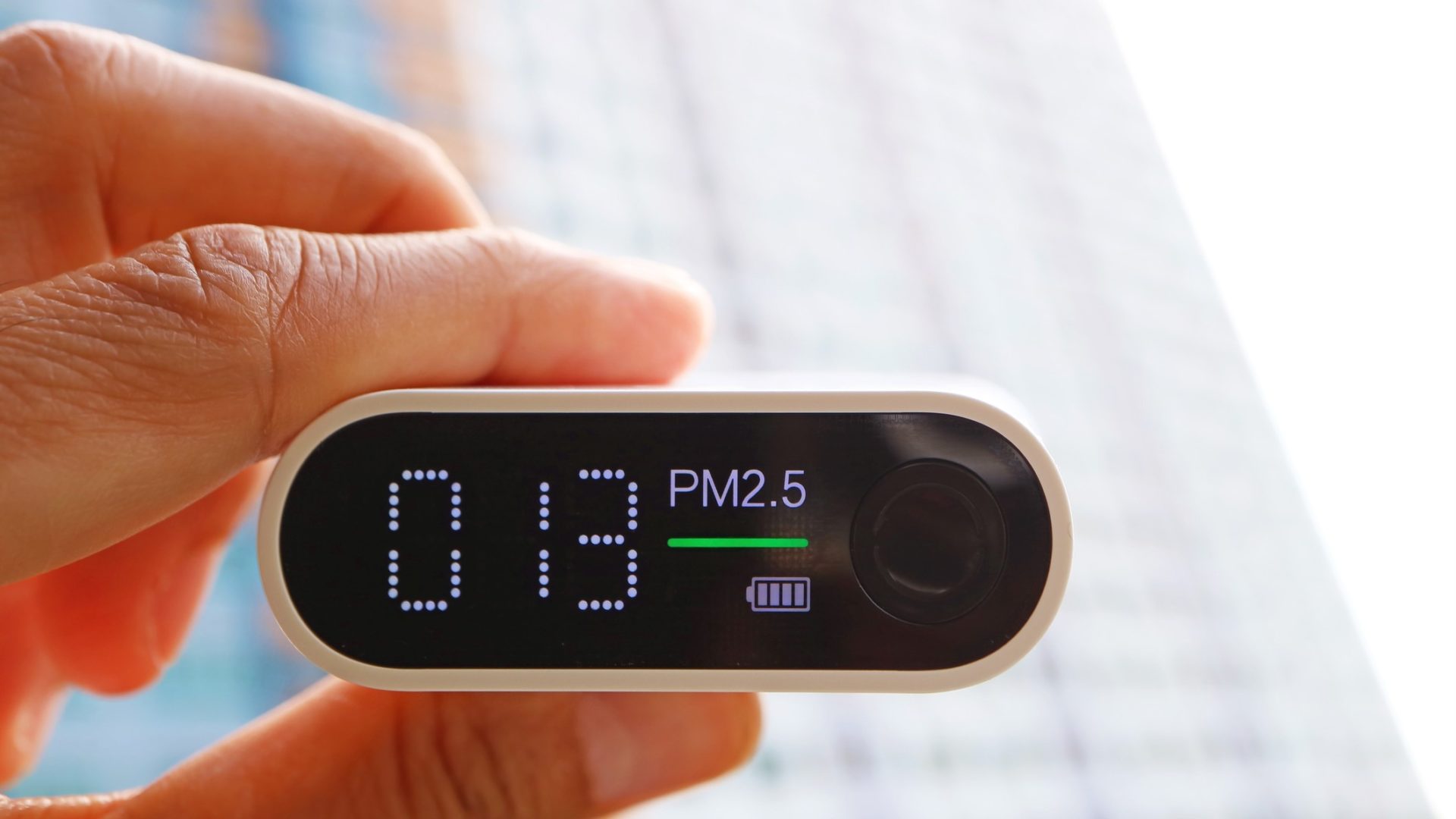
Other, less commonly used, indoor environmental quality sensors include particulate matter detectors, total volatile organic compounds and formaldehyde sensors, noise sensors and pressure sensors on ventilation systems.
Air-quality sensors are increasingly common in schools, healthcare settings and offices (Image: Dreamstime)
Indoor monitoring of outdoor air pollutants is important in locations where outdoor air pollution is significant, as prolonged exposure to these compounds has been proven to have negative health impacts, especially in vulnerable populations. Reduction in indoor air pollutants is also a basic requirement in the performance-based health and wellbeing WELL rating system and sensors can be part of the solution to ensure concentrations are kept below the limits set by the standard.
Barriers to adoption
There are clear advantages to the use of smart sensors, but there are barriers that need to be overcome as well. A decade after the opening of the Edge, sensors have not been embraced on the same scale in new buildings and existing buildings are only just starting to catch up.
One of the biggest challenges is the lack of systems thinking. In a recent survey of commercial workplace occupiers by commercial real estate operator CBRE, 61% of respondents indicated that they use only foundational technologies or early-stage digital processes and coherent digital strategies still lag. This often results in ad-hoc purchases of technology, which will inherently have a short lifespan and often do not result in tangible, long-term value.
Hardware costs were once seen as a barrier but, while prices have fallen for some solutions, not all technologies offer long-term monitoring data and may focus more on instantaneous data, such as alerting about an open window. These lower-cost options may also be standalone or subscription-based solutions that don’t allow for a systems thinking approach.
The lack of data analytics capability can also be an issue. Sensors can be used to detect problems with building performance, but only if the data is analysed regularly and conclusions are drawn from it. This requires skills in data analytics, statistics and building operations, as well as active management of the building itself.
Design and commissioning
Even if smart sensors have been installed, the design and commissioning may not deliver the desired results. Lack of awareness of the role and purpose of sensors can result in poor placement and installation of sensors. For example, CO2 monitors should always be placed at seated height but are sometimes positioned in air ducts or behind curtains or furniture.
None of these challenges are insurmountable and the future doubtless lies with gathering and analysing more data about building usage and operations. Perhaps this will drive the rise of new professions in the facilities management world in a similar way to data analysts and BIM professionals appearing on the design side. Artificial intelligence will also provide further insight and automation to optimise building performance.
However, it must be remembered that sensors will not suddenly turn a poorly-designed building into a great one and passive design principles will always remain the foundation of great buildings.
Eszter Gulacsy is a technical director at Mott MacDonald
The January/February 2026 issue of Construction Management magazine is now available to read in digital format.
Powered Access
CM, in partnership with IPAF, has launched a new survey to explore the industry’s views and experiences with powered access machines on construction projects.
This is not a first step towards a paywall. We need readers to register with us to help sustain creation of quality editorial content on Construction Management. Registering also means you can manage your own CPDs, comments, newsletter sign-ups and privacy settings. Thank you.