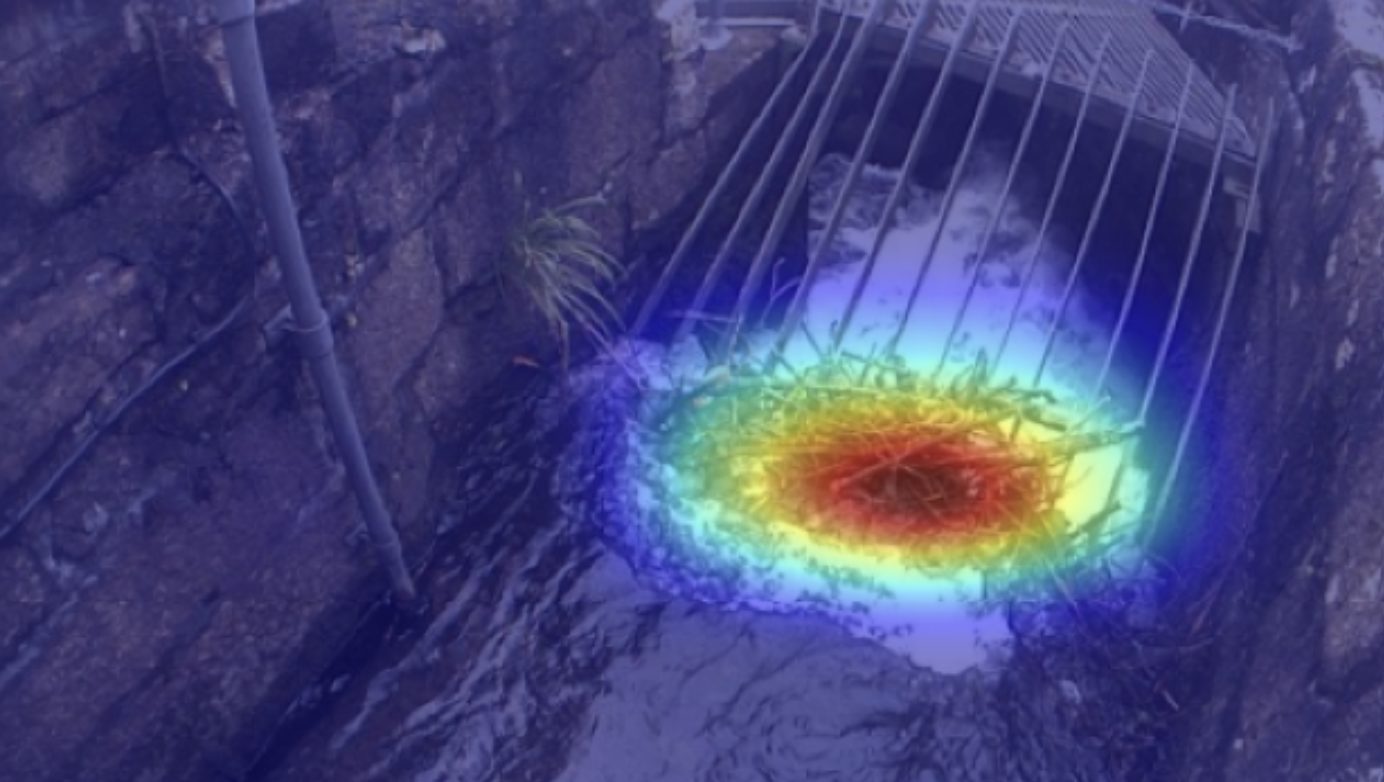
The researchers’ detection software, dubbed ‘AI on The River’, was proven to accurately detect debris, litter or waste blocking trash screens on culverts with 90% accuracy.
This is not a paywall. Registration allows us to enhance your experience across Construction Management and ensure we deliver you quality editorial content.
Registering also means you can manage your own CPDs, comments, newsletter sign-ups and privacy settings.
There are more than a million culverts in the UK across cities, towns and built-up areas on stretches of water that flow under roads, railway embankments and near housing. If the culvert screen is blocked, flooding is a risk.
Dr Andrew Barnes, a lecturer in Bath’s Department of Computer Science and a member of the Centre for Climate Adaptation and Environment Research, was part of the team that developed the software.
He said: “We’ve been able to develop an efficient model that can capture and identify blockages before they become a problem. It’s proactive, so doesn’t wait for a flood to happen before raising the alarm.
Flexible and scalable
“We’ve developed the system to be flexible and scalable. It could be applied almost anywhere, giving it huge potential in countries where flooding is an issue but where the resources to develop similar tools locally may be scarce.”
Dr Thomas Kjeldsen, a reader in Bath’s Department of Architecture and Civil Engineering and a member of the Centre for Regenerative Design and Engineering for a Net Positive World (RENEW), said: “Climate change means the risk of flooding is growing all around the world.
“This work opens the potential for the development of new, lightweight and cost-efficient flood management systems in urbanised areas, enabling authorities around the globe to adapt to the changing climate.
“This study is a first step toward a sustainable solution to flood forecasting, and it has opened a multitude of areas for exploration and exploitation.”
Don’t miss out on BIM and digital construction news: sign up to receive the BIMplus newsletter.