The lasting pressures of the pandemic as well as the cost-of-living crisis means that now is a particularly tough time for everyone’s mental health and wellbeing. This is particularly true in the construction industry. A recent Mates in Mind survey found that 48% of respondents had taken time off work due to unmanageable stress.
Construction work has a variety of pressures, from time-sensitive contracts to long hours and extended periods away from home. If contractors are only on a job for a few months, recognising someone is struggling and offering the right signposting becomes more difficult.
Although the sector is changing and becoming more diverse, men still struggle to talk about their mental health. Research shows that around one in eight men has a common mental health issue such as depression, anxiety, panic disorder or obsessive-compulsive disorder (OCD) and men are three times as likely to die by suicide.
This is not a paywall. Registration allows us to enhance your experience across Construction Management and ensure we deliver you quality editorial content.
Registering also means you can manage your own CPDs, comments, newsletter sign-ups and privacy settings.
The pandemic only magnified the pressures felt across our industry, as projects halted overnight and budgets were cut. When restrictions were lifted, our work force was greatly reduced as many went home to Europe. This meant more work needed to be done but by fewer people. While the restraints that came with Covid-19 have receded, other factors such as the cost-of-living crisis mean we are still facing enormous pressures.
Skanska’s approach to wellbeing
At Skanska, we knew we had a responsibility to create a long-term and sustainable wellbeing strategy that puts the mental and physical health of our people, on an equal footing.
In 2016 we began a campaign to place greater focus on wellbeing and remove the stigma attached to mental ill health that persists in construction. By working with Mental Health First Aid (MHFA) England, we designed and implemented a mental health training programme to empower a network of Mental Health First Aiders (MHFAiders®) with the skills and knowledge to spot the signs of mental ill health among their colleagues, offer support, and signpost them to further help.
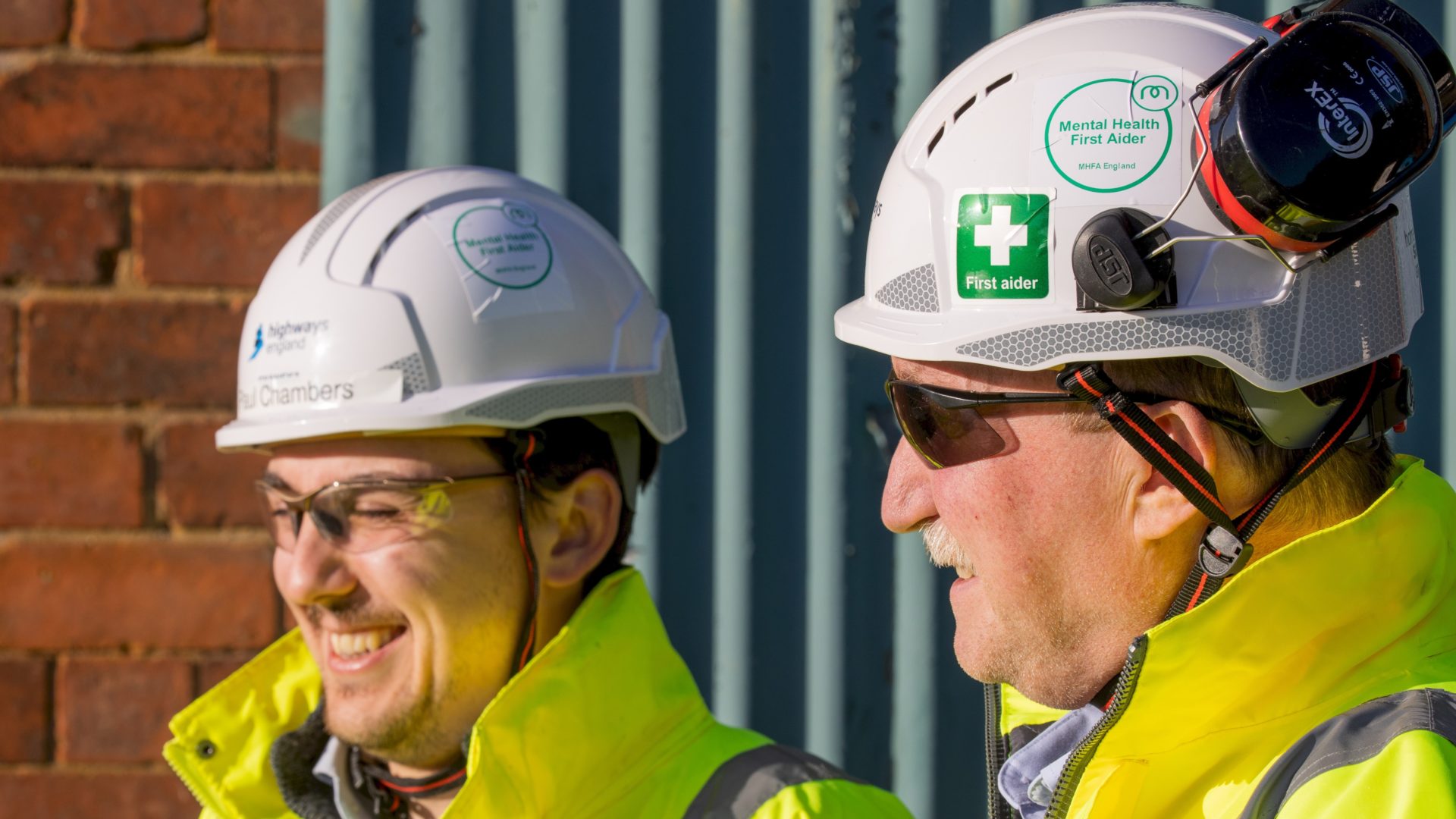
MHFAiders® like Ken Reid, a health and safety manager at Skanska, now wear Mental Health First Aider stickers on their hard hats.
“Currently around 60% of employees at Skanska have been trained in either mental health skills or as MHFAiders®”
Since introducing MHFAiders® we have seen a noticeable culture shift within our organisation. Employees note how engaging, informative and relatable the training they received has been. Currently around 60% of employees at Skanska have been trained in either mental health skills or as MHFAiders®.
We understand that MHFAiders® are, and can only ever be, just one part of the wider workplace wellbeing puzzle. It is important to create a wider organisational culture that sets MHFAiders® up for success and that encourages conversations on mental health and wellbeing.
Other mental health initiatives
As well as training, Skanska is involved in national mental health initiatives such as Mental Health Awareness Week. We also arrange regular community events for colleagues to discuss their wellbeing. This approach has extended to wider wellbeing projects such as the ‘Out of the Blue’ intervention packs, to help our leaders prepare teams should a potentially traumatic event such as a sudden death or suicide occur.
We also have our employee assistance programme run by UK provider Health Assured, which offers round-the-clock support and counselling.
We continue to build on the success of our wellbeing strategy and MHFAiders® can further embed and improve this work. Our mission is to have all line managers and executive staff attend MHFA training too. And we’re aiming to increase the number of employees taking the training from 55% to 75%.
MHFA England recently launched its new MHFA course – the only licensed, internationally accredited, evidence based MHFA course in England. It has been redeveloped through an inclusive lens–promoting equity and understanding around mental health.
Lilly Richardson is an occupational hygienist in Skanska’s occupational health team.