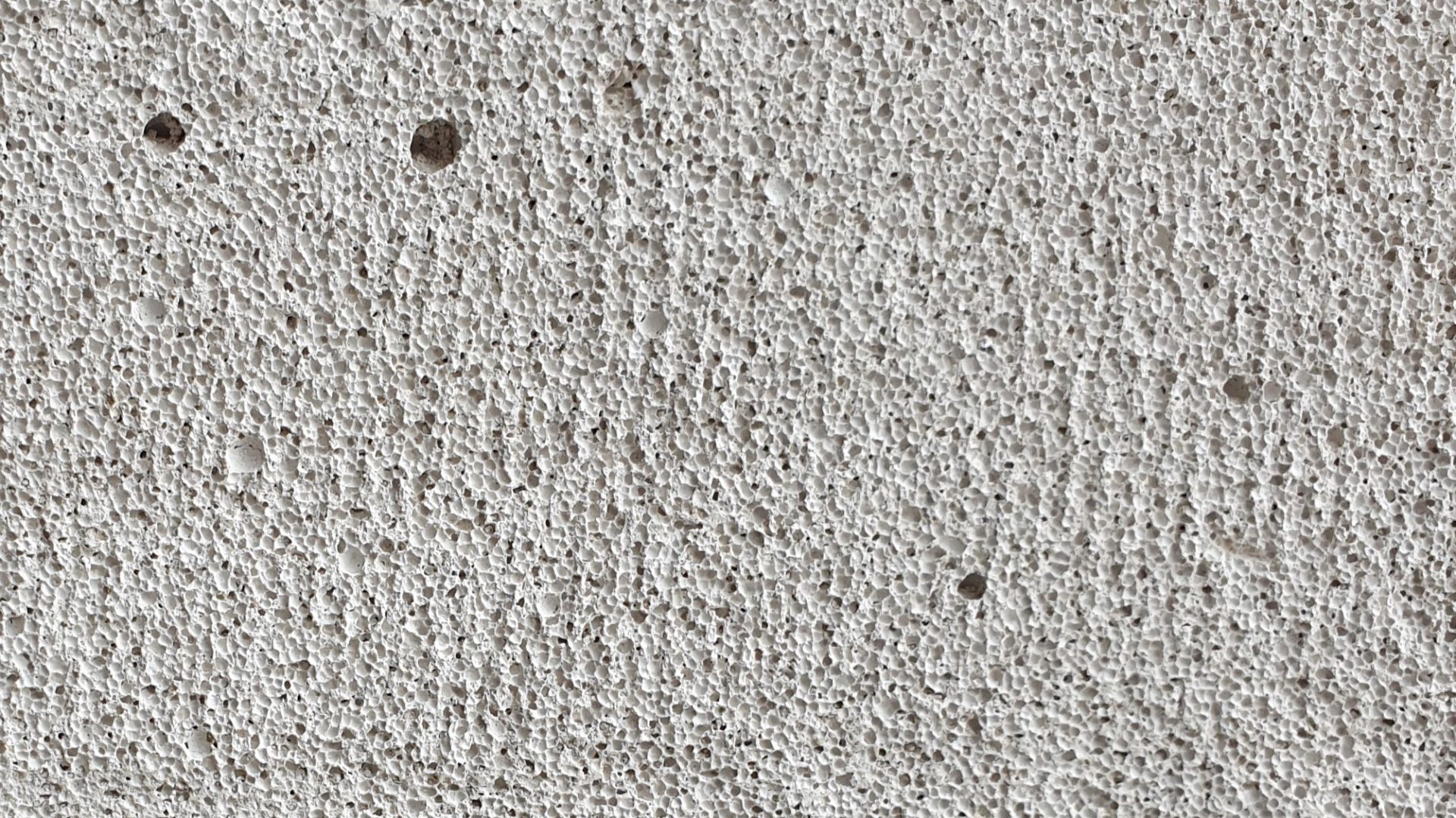
What is RAAC and what should you do if it’s present in your building? CM spoke to Loughborough University’s Chris Goodier MCIOB, professor of construction engineering and materials, and Chris Gorse MCIOB, professor of construction management and engineering.
What is Reinforced autoclaved aerated concrete (RAAC)?
Reinforced autoclaved aerated concrete (RAAC) is an aerated lightweight form of concrete with no coarse aggregate. The material properties and structural behaviour therefore differ significantly from ‘traditional’ reinforced concrete.
How widely was RAAC used in the UK?
Tens of thousands of these structural panels exist across a broad cross-section of buildings, many constructed in the 1950s, 60s and 70s. Many are showing signs of wear and tear and deterioration. The vast majority form the roof of the structure, usually flat, and hence are difficult to access, survey, maintain and replace.
This is not a paywall. Registration allows us to enhance your experience across Construction Management and ensure we deliver you quality editorial content.
Registering also means you can manage your own CPDs, comments, newsletter sign-ups and privacy settings.
The Standing Committee on Structural Safety (SCOSS) report, issued in May 2019, highlighted the significant risk of failure of these planks. In September 2022, the Office of Government Property sent a Safety Briefing Notice to all property leaders, regarding the dangers of RAAC, stating that “RAAC is now life-expired and liable to collapse”.
It is essential that those responsible for the management, maintenance or alteration of buildings know whether they contain RAAC.
Chris Goodier MCIOB, Loughborough University
It is therefore essential that those responsible for the management, maintenance or alteration of buildings know whether their buildings contain RAAC. If they do not know, they should seek appropriate expert advice. If not properly managed, RAAC structural building components have significant safety implications.
It is RAAC from the 1950s, 60s and 70s that is of main concern, especially if it has not been adequately maintained. RAAC examples have been found with bearings (supports) which aren’t big enough, and RAAC with the steel reinforcement in the wrong place, both of which can have structural implications. Prolonged water ingress (not uncommon on old flat roofs) can also lead to deterioration.
What is being done to address concerns about RAAC?
The NHS is at the forefront of understanding and tackling the issue and has issued instructions requiring the removal of RAAC planks by 2030. Nationally there are seven trusts that have buildings predominately constructed of RAAC. It has also commissioned research, led by Loughborough University, to help it better understand the unique nature of the material and the problem, and hence make appropriate decisions.
Is there a recommended process for identifying if RAAC is present in a building?
The Institute of Structural Engineers (IstructE) has provided guidance on RAAC inspections and surveys and provides some illustrations and photographs that show the aerated nature of RAAC.
Further research is being undertaken and new guidance is also emerging. The main concern with RAAC is its bearing. So it is important that the bearings of the RAAC panels are inspected. The IstructE recommends a bearing of 75mm. If this bearing cannot be assumed through drawings or simple observations, then it is important to physically establish the bearing distance and position of the reinforcement bars. Transverse reinforcement bars must be evident over the bearing.
How can you identify an RAAC panel?
RAAC is lightweight and much more malleable than traditional concrete. A screwdriver or drill will relatively easily penetrate the structure. If, when inspected. a sharp instrument can be pushed into the concrete, then this is likely to be RAAC rather than traditional concrete.
If RAAC is present in a building, what actions are required?
The end bearing must be inspected. If it cannot be determined that a 75mm bearing exists then physical inspection is necessary, probing into the RAAC using a drill or sharp implement to discover the position of the transverse reinforcement and depth of bearing.
The ease with which RAAC can be cut and damaged renders it prone to abuse during maintenance or operations.
Chris Gorse MCIOB, Loughborough University
If transverse reinforcement is over the bearing and the manufacturer’s recommended bearing is achieved (40mm-50mm), then the RAAC would be expected to perform. But if bearing is not sufficient, then end bearing supports should be provided along with other remedial action.
Is there a reason why RAAC is of particular concern, compared to other forms of concrete?
The ease with which RAAC can be cut and damaged does render it more prone to abuse during maintenance or operations. You can see RAAC that has been cut through to accommodate services with little consideration for the structure. Reinforcement bars that have been hammered out of position, excessively deflected or distorted beams can be a result of the way RAAC has been loaded, handled and serviced.
RAAC is not an inherently bad material, but some manufacturing and assembly processes have resulted in insufficient bearing and reinforcement over the bearing – inadequate bearing is the main risk.
Is RAAC still being used?
RAAC is still manufactured and installed all over the world and can be an appropriate construction material if properly designed, manufactured, installed and maintained. Our research has shown, however, that this is often not the case for RAAC panels constructed in the 1950s, 60s and 70s.
The January/February 2026 issue of Construction Management magazine is now available to read in digital format.
Powered Access
CM, in partnership with IPAF, has launched a new survey to explore the industry’s views and experiences with powered access machines on construction projects.
This is not a first step towards a paywall. We need readers to register with us to help sustain creation of quality editorial content on Construction Management. Registering also means you can manage your own CPDs, comments, newsletter sign-ups and privacy settings. Thank you.