Construction Management is the highest circulation construction-based publication serving the UK built environment.
Digital Construction
Real-time sensors signal the end of ‘leaves on the line’
Justin Stanton Editor, CM Digital
Image: Altitudevs | Dreamstime.com
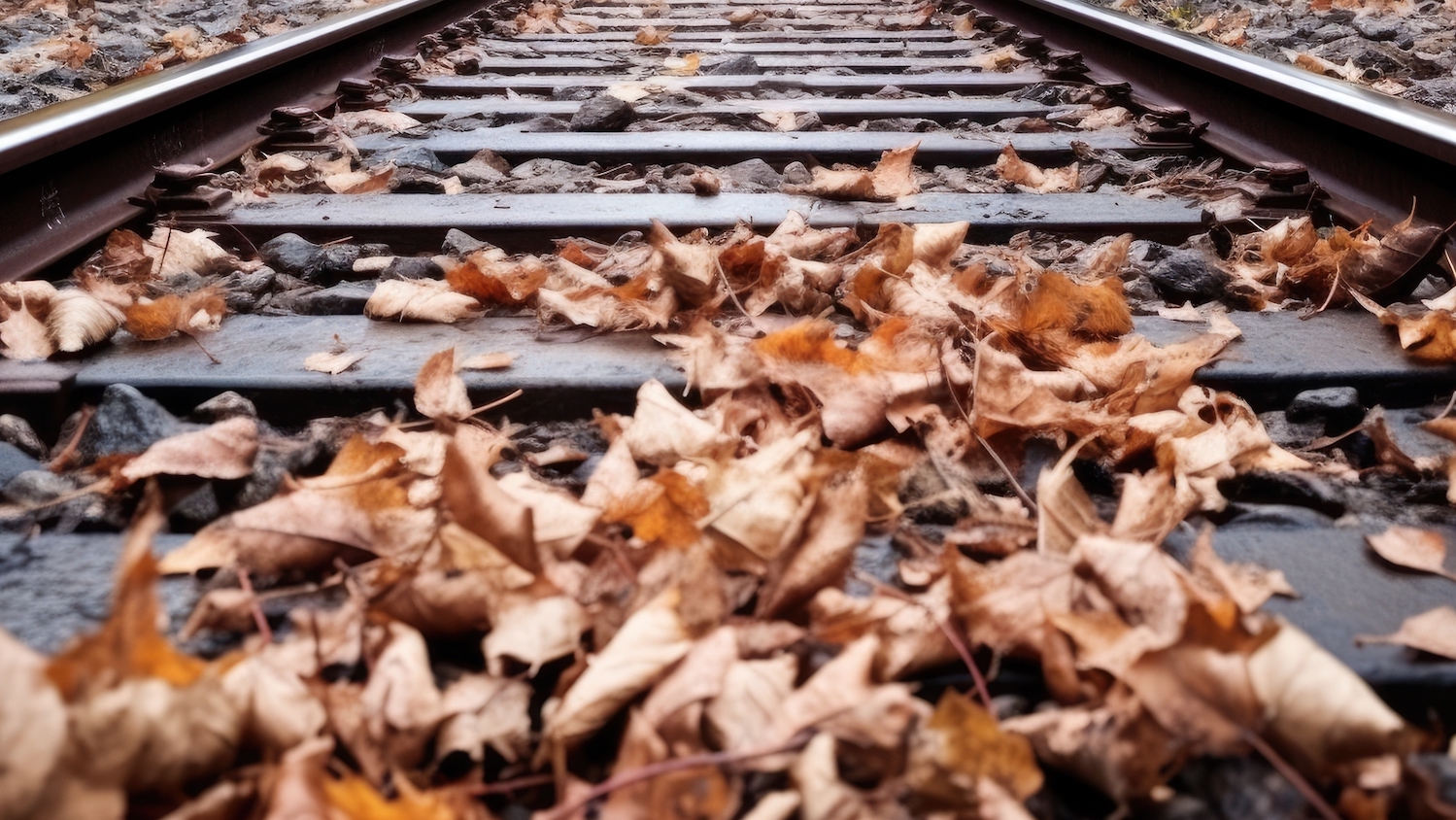
Real-time sensors that can detect leaves and the leaf mulch that slows trains could signal the end of the dreaded railway announcement of “leaves on the line”.
Track cleaning specialist PlasmaTrack has secured nearly £400,000 from the Department for Transport and Innovate UK to develop a system that uses Raman spectroscopy sensing to measure, analyse and predict railway conditions. This will enable pre-emptive mitigation and prevent the delays (and the £355m annual cost to society) caused by leaves on railway lines.
Leaves fall on and around tracks and the aerodynamic wake from passing trains deposits more onto them. Furthermore, when a train passes over the leaves, the wheels compress them into a paste (with a force of around 30 tonnes a square inch) between the wheel and track. The leaves become a black Teflon-like surface (called a third-layer contaminant) that’s bonded to the track surface. This slippery layer reduces grip, meaning trains need to accelerate and brake gently to avoid slipping. Other contaminants, such as grease, oil, fuel and corrosion, can also cause this problem.
This is not a paywall. Registration allows us to enhance your experience across Construction Management and ensure we deliver you quality editorial content.
Registering also means you can manage your own CPDs, comments, newsletter sign-ups and privacy settings.
There is currently no system for sensing and measuring track conditions in real-time, according to PlasmaTrack.
Raman sensing is used in chemical and pharmaceutical industries to analyse material compounds. PlasmaTrack, with support from the National Physical Laboratory, has used this system to analyse and develop simulants of the leaf layer in its laboratory.
It has been able to characterise the key components in the leaf layer and is proposing to develop its track-cleaning technology specifically tuned to the leaf layer and other low-adhesion contaminant signatures.
Limiting the scanning to the specific signatures will enable more rapid analysis, PlasmaTrack claims.
Robotic and AI testing of rail arches
PlasmaTrack’s project is one of nearly 20, designed to improve either the running of the railway or travellers’ experience of using it, that have received funding.
Among the other projects is a robot and AI combination to automate the inspection of cladded tenanted arches within the UK's rail infrastructure using non-destructive testing solutions. There are 10,425 tenanted arches in Network Rail’s portfolio.
The Manufacturing Technology Centre’s project will focus on the use of robotic devices coupled with non-destructive testing techniques, such as ground-penetrating radar and backscatter X-ray to build an accurate 3D picture of the overall health of the tenanted arches and automatically detect defects in the structures.
The government funding will support the projects through their development phases, including real trials on the railways, to give them a better chance of being used across the network in the long term.
This is not a first step towards a paywall. We need readers to register with us to help sustain creation of quality editorial content on Construction Management. Registering also means you can manage your own CPDs, comments, newsletter sign-ups and privacy settings. Thank you.