Construction Management is the highest circulation construction-based publication serving the UK built environment.
Technical
Qatar 2022: a game changer for worker exploitation?
Rod Sweet Global Construction Review
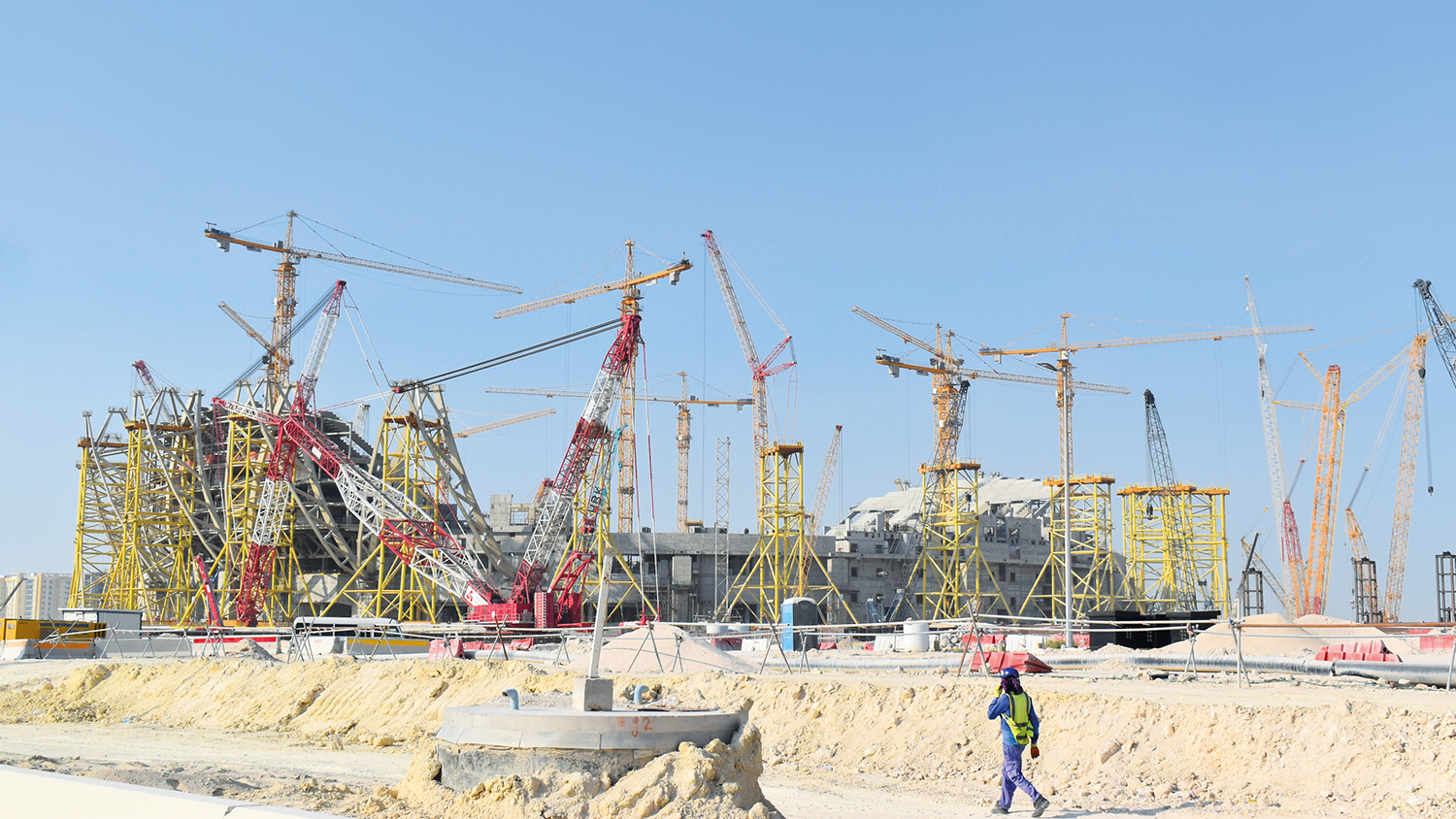
Human rights groups have criticised Qatar’s World Cup construction programme for its treatment of workers (Image: Dreamstime.com)
Rod Sweet examines how the World Cup construction programme turned the spotlight on supply chain ethics, leading to CIOB’s campaign to stamp out modern slavery.
Qatar won the hosting rights for the 2022 FIFA World Cup back in 2010. Twelve years later, the moment is almost here: the host nation faces Ecuador in the opening match on 20 November.
Awarding the tiny Gulf state the tournament was controversial at the time, and has become even more so since. The wholesale transformation of Qatar’s built environment, to prepare for the tournament, has made the country a global emblem of worker abuse.
In 2014, CIOB began its campaign against modern slavery in construction during its Members’ Forum, which it held – aptly – in Qatar. By then, a bevy of human and labour rights organisations were decrying the hated kafala system of sponsorship. Common in the Gulf region, kafala prevented migrant workers from switching employers without their employers’ consent, creating the conditions for de facto modern slavery.
This is not a paywall. Registration allows us to enhance your experience across Construction Management and ensure we deliver you quality editorial content.
Registering also means you can manage your own CPDs, comments, newsletter sign-ups and privacy settings.
On top of that was a continual stream of reports about workers racking up unmanageable debt through exorbitant and illegal recruitment fees, rampant wage theft, and hair-raisingly unsafe working conditions. Rights groups predicted that the price for our enjoyment of the tournament – and the handsome profit FIFA would make from it – would be thousands of preventable deaths and injuries, and thousands of already vulnerable families pushed into greater misery and penury.
‘Victory’?
CIOB issued its Modern Slavery: The Dark Side of Construction report in 2015
Qatari authorities did engage with rights groups’ concerns. After years of tinkering, the government officially ended the kafala system in 2020, becoming the first state in the Arab Gulf region to do so. It introduced a basic minimum wage and established a labour dispute resolution process, among other reforms.
After her 10-year campaign for labour rights in Qatar, Sharan Burrow, general secretary of the International Trade Union Confederation (ITUC), last month proclaimed “victory” in the battle against abuse. “I can honestly say my advice to fans is to go to the World Cup, have fun,” she told Global Construction Review.
Others have a different view. A September report by the UN’s International Labour Organisation (ILO) found that while the kafala system had largely been dismantled, some unscrupulous employers were still retaliating against workers who exercised their legal right to change jobs.
Workers also still complain about non-payment of wages and benefits, and report that the new dispute resolution regime is time-consuming and unpredictable, the ILO said.
The consensus among rights groups is that while Qatar did eventually respond, its actions came too late and were too weakly implemented to prevent untold death and suffering in the 10 years prior to 2020.
#PayUpFIFA
For that reason, attention has turned to FIFA itself, the tournament’s instigator and chief beneficiary.
A coalition of rights groups including Amnesty International and Human Rights Watch has called on the body to set aside at least $440m (£390m) to establish a reparation fund for the thousands of migrant workers who have suffered human rights abuses, loss of pay, injury and death in Qatar during its 12-year World Cup construction boom. The sum is equal to the prize money at the tournament.
“The consensus among rights groups is that while Qatar did eventually respond, its actions came too late to prevent untold death and suffering.”
They point out that FIFA adopted the UN Guiding Principles on Business and Human Rights in 2016, and enshrined its responsibility to respect human rights in its own statutes.
Their call has gained traction in the beautiful game. Former Australian national football captain Craig Foster, a staunch supporter of the so-called #PayUpFIFA campaign, said in September that he would donate his salary as a commentator to families of deceased workers.
On 13 October, FIFA deputy secretary general Alasdair Bell told a Council of Europe session on labour rights in Qatar: “It’s important to try to see that anyone who suffered injury as a consequence of working in the World Cup, that that is somehow redressed. This is certainly something that we’re interested in progressing.”
Back home
Having begun in Qatar, CIOB’s campaign against modern slavery continues to produce results in the UK. In 2015, it examined the issue in its Modern Slavery: The Dark Side of Construction report. In 2017, the institute teamed up with Stronger Together to develop an online toolkit supporting construction companies in tackling modern slavery. It helps businesses across the supply chain mitigate the risk of modern slavery in their own operations, with subcontractors and suppliers, labour providers, service providers and more.
Fragmented supply chains
Its 2018 report, Construction and the Modern Slavery Act: Tackling Exploitation in the UK, took an uncompromising stance against the industry’s complacency and slowness to act. It noted that the National Crime Agency had identified construction as one of the most common sectors for labour exploitation in the UK.
The report points out that major contractors have long and fragmented supply chains with little visibility beyond tiers 1 or 2, and that they rely heavily on temporary labour – factors that combine to create virulent breeding grounds for modern slavery.
As then UK anti-slavery commissioner, Kevin Hyland, put it: “Workers within the construction sector are at risk of abuse and exploitation as traffickers and slave masters target the vulnerable. This is modern slavery, something we cannot shy away from.”
The January/February 2026 issue of Construction Management magazine is now available to read in digital format.
Powered Access
CM, in partnership with IPAF, has launched a new survey to explore the industry’s views and experiences with powered access machines on construction projects.
This is not a first step towards a paywall. We need readers to register with us to help sustain creation of quality editorial content on Construction Management. Registering also means you can manage your own CPDs, comments, newsletter sign-ups and privacy settings. Thank you.