Construction Management is the highest circulation construction-based publication serving the UK built environment.
Technical
Laing O’Rourke adopts smart thinking in Sydney
Colin McCarthy Laing O’Rourke
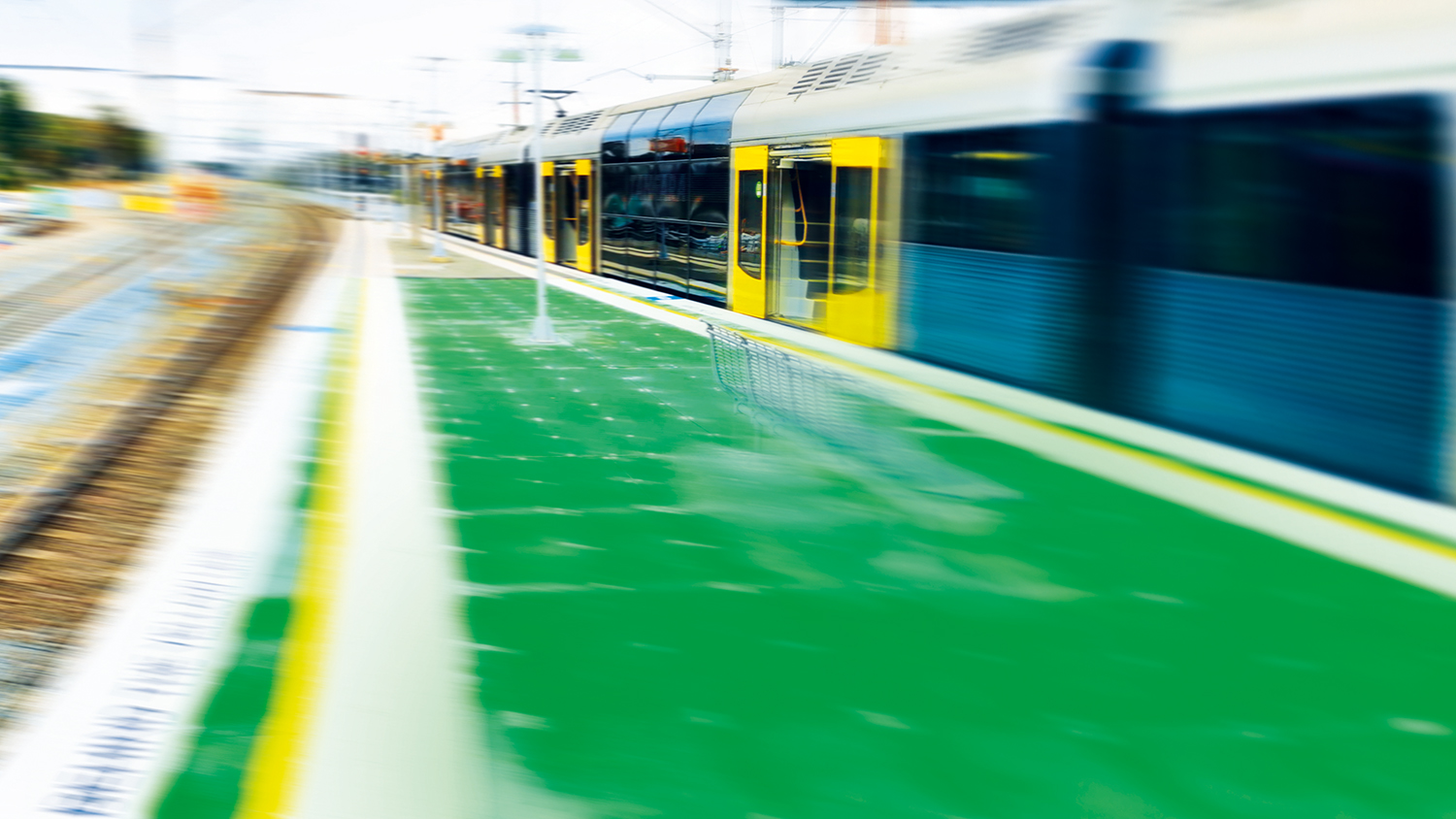
The temporary FRP-surfaced platform could easily be removed for access
Laing O’Rourke CIOB member Colin McCarthy explains how an ingenious temporary platform solution helped upgrade a Sydney train station.
Transport for Tomorrow, a partnership between Laing O’Rourke, KBR and Transport for New South Wales (NSW), has pioneered the use of a temporary, modular railway platform surfaced with fibre-reinforced polymer (FRP) to help with a station upgrade.
Initially installed in June 2021 at Waterfall Station on the Illawarra line serving Sydney, the temporary platform was removed on approximately five occasions to enable construction activity to be completed in short opportunity windows and replaced for customer usage over a two-year period.
This is not a paywall. Registration allows us to enhance your experience across Construction Management and ensure we deliver you quality editorial content.
Registering also means you can manage your own CPDs, comments, newsletter sign-ups and privacy settings.
It may not sound very exciting, but the use of a light and manoeuvrable platform at an operational station was a major feat.
Transport for Tomorrow is delivering station, infrastructure and rail corridor upgrades between Sydney CBD and the south coast as part of a programme commissioned by Transport for NSW.
Construction activities have included: installing a new retaining wall along the corridor boundary to widen the rail corridor and provide more tracks; rearranging tracks on the western side to create a stabling yard; building a new staff amenity block; and connecting a footbridge.
All this had to be done while the station stayed open for regular passenger services.
The challenge
An area of platform, covering about 100 sq m, had to go to enable access to the ground underneath for the installation of new footbridge foundations among other things.
However, as trains and passengers were still using the station, access to the end of the platform had to be maintained. Therefore, a temporary platform replacement that could easily be removed to facilitate work in limited possession windows, over a prolonged period, was needed.
It had to look like a permanent platform and be durable enough to not degrade over time and in heavy use, mitigating potential issues for the travelling public or station staff.
The platform was durable enough not to degrade with heavy use
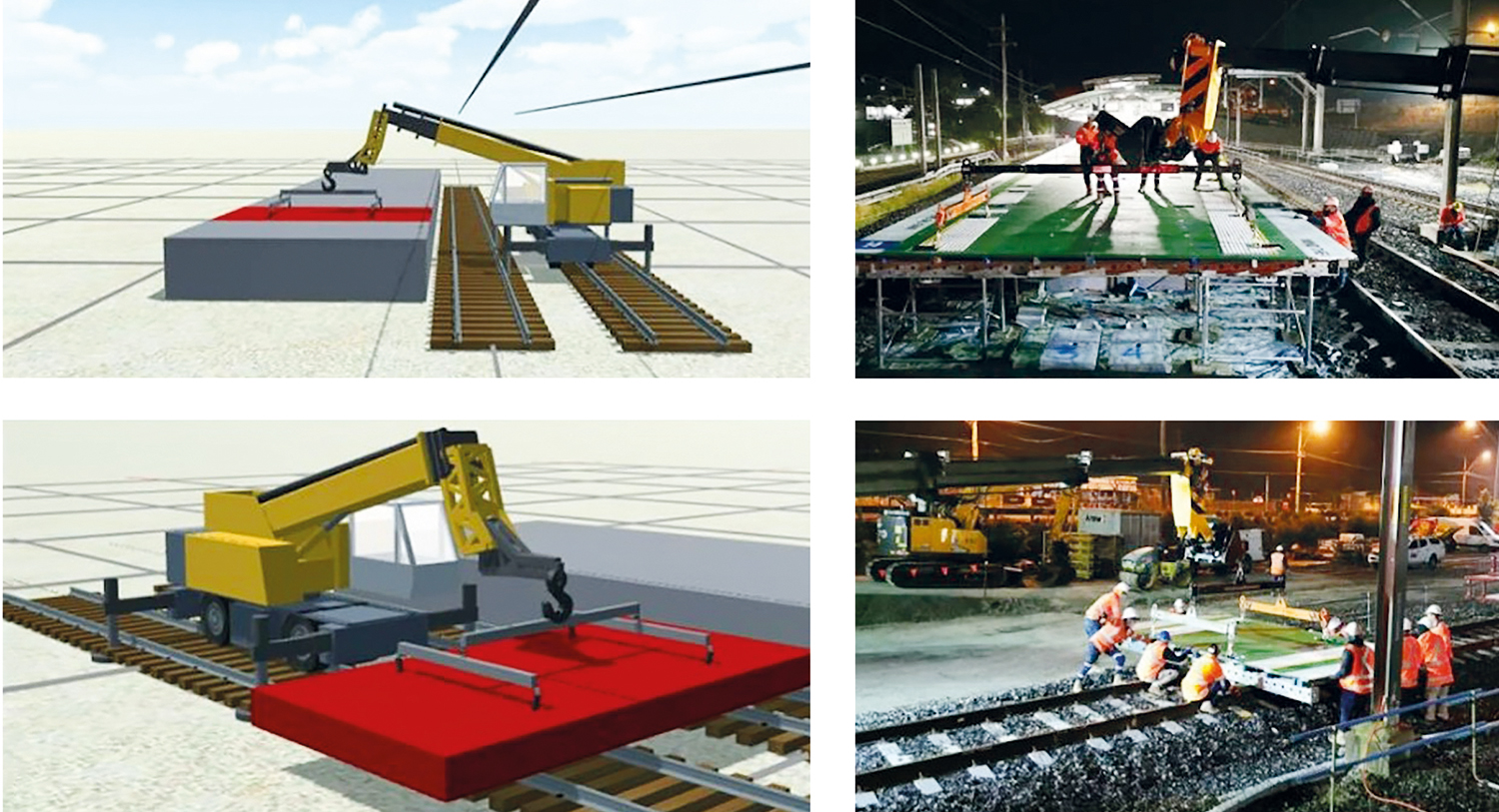
With help from engineer ADG, a temporary, removable platform was designed, 1.6m in height, surfaced with a fibre-reinforced-polymer deck supplied by Treadwell. It was modular, comprising five separate parts, with a temporary propping system supplied by Acrow.
Put together, it was structurally compliant and light enough to remove and replace quickly with small craneage. That meant the team was able to get in and do what needed to be done with minimal disruption.
The temporary platform did its job across a two-year period and has since been replaced with a new permanent concrete platform at Waterfall Station.
Colin McCarthy is project manager for the Waterfall Stabling Yard and Platform Extension Project being delivered by Transport for Tomorrow, a partnership comprising Laing O’Rourke, KBR and Transport for NSW.
The January/February 2026 issue of Construction Management magazine is now available to read in digital format.
Powered Access
CM, in partnership with IPAF, has launched a new survey to explore the industry’s views and experiences with powered access machines on construction projects.
This is not a first step towards a paywall. We need readers to register with us to help sustain creation of quality editorial content on Construction Management. Registering also means you can manage your own CPDs, comments, newsletter sign-ups and privacy settings. Thank you.