Construction Management is the highest circulation construction-based publication serving the UK built environment.
People
How to build social value on construction sites: three industry exemplars
Desiree Blamey Considerate Constructors Scheme
In this month’s column, Desiree Blamey from the Considerate Constructors Scheme explains why respectful community engagement goes beyond the rulebook and shares practical ways to make it happen.
Image: Dreamstime
Today, construction is about more than structures; it’s about building trust and leaving a positive footprint in the communities we touch.
CCS1.1.1 – How has the registered activity engaged with the impacted community to understand and address concerns prior to the start of site activity?
CCS1.1.2 – How does the registered activity ensure that impacts on the community from construction activity are minimised?
CCS1.1.3 – How are compliments, comments and complaints sought, recorded and proactively managed?
This is not a paywall. Registration allows us to enhance your experience across Construction Management and ensure we deliver you quality editorial content.
Registering also means you can manage your own CPDs, comments, newsletter sign-ups and privacy settings.
The Considerate Constructors Scheme (CCS) code sets the framework, but it’s the spirit of respect that truly transforms how we build. When we embed respect from the planning stage to the final handshake, we turn neighbours into partners and sites into community assets.
Too often, engagement is treated as a tick-box exercise. In 2026, that approach is no longer acceptable. Respect starts early and continues through every interaction on site. It’s about moving beyond compliance and making engagement a genuine part of project success.
So, how do we make respect visible and actionable every day?
Here are some practical steps:
Start early and listen actively. Engage before the first equipment arrives. Host community days, share plans openly and invite feedback. Listening isn’t passive, it’s a commitment to adapt where possible. Explain what’s coming in plain language, not jargon. Show residents how their input shapes the project. This early dialogue builds trust and reduces friction later.
Train your workforce. Sites often operate in diverse communities. Cultural awareness training helps teams understand local norms and avoid unintentional disrespect. Add courtesy reminders to morning briefings and give supervisors a quick-reference card with key community considerations and engagement tips. These small touches make respect a daily reality and show that it’s personal.
Create visible channels for dialogue. Make it easy for people to talk to you. Use community boards, digital platforms and appoint a dedicated liaison officer so residents can raise concerns and get timely responses. Visibility matters – and when people know who to contact and see their feedback acted on, trust grows.
Why it pays off
The CCS code isn’t just a guideline; it’s our commitment to creating real social value. Construction has an opportunity to lead the way in delivering positive impact far more tangibly than many other industries. By prioritising respect, we not only reduce disruptions and foster goodwill, but we also leave a legacy of trust and shared success.
Projects that engage effectively experience fewer complaints, lower risk of delays and stronger stakeholder relationships. And respect doesn’t stop at the site boundary. When employees feel valued and supported, productivity rises and retention improves. Initiatives like mental health support, flexible working and inclusive policies make sites kinder, safer and more human.
Let’s make community engagement a defining part of our projects. Respect isn’t just a slogan or a metric, it’s a principle that shapes every decision and every interaction on site, forming the very foundation of considerate construction.
The three examples below show how to build social value on construction sites – and the benefits.
1. Morgan Sindall - data‑driven social value for local impact
Morgan Sindall introduced a data‑driven system to plan, measure and report social value on projects. The approach enables the team to identify community needs, track delivery and ensure that commitments translate into measurable local benefits.
Key features:
Use of social value software to track KPIs and outcomes;
Real‑time dashboards for visibility and accountability;
Collaboration with local authorities and community partners to target support where it’s most needed.
Impact:
Improved alignment of project activity with local priorities;
Stronger evidence of community benefit;
Enhanced reporting for CCS assessments and client engagement.
2. Wates - talking hoardings
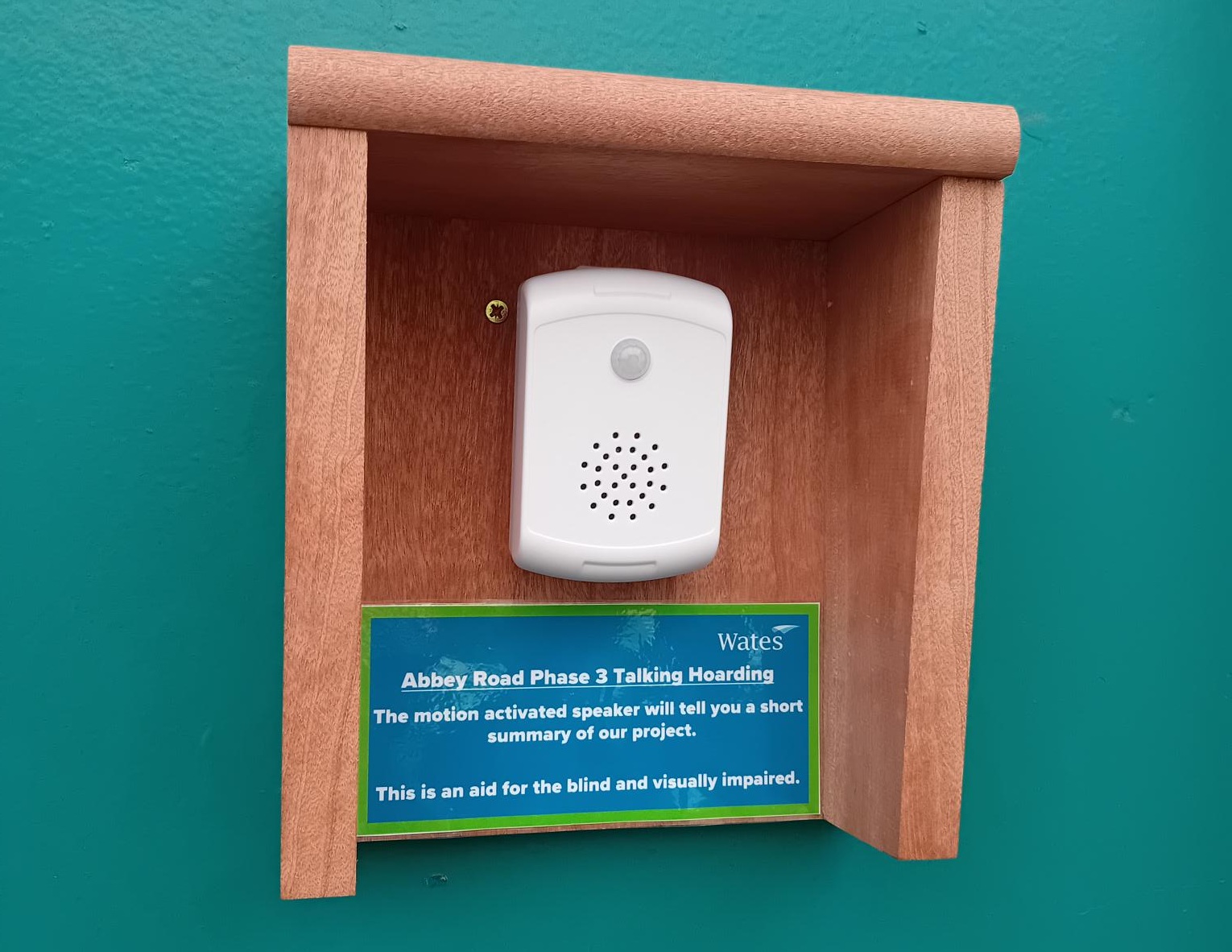
The Wates 'talking hoarding'. Image: CCS
Wates developed ‘talking hoardings’ to engage passers‑by and local communities using QR‑activated audio stories and information panels installed on hoardings.
Key features:
Interactive hoarding with audio messages accessed via smartphones;
Content created in partnership with community groups and project stakeholders;
Designed to increase accessibility, inclusivity and understanding of project benefits.
Impact:
Increased positive engagement from local residents;
Improved community relations during construction;
Strong demonstration of CCS principles around communication and respect.
3. Mulalley - 4D sequencing video for resident consultation
This is not a first step towards a paywall. We need readers to register with us to help sustain creation of quality editorial content on Construction Management. Registering also means you can manage your own CPDs, comments, newsletter sign-ups and privacy settings. Thank you.