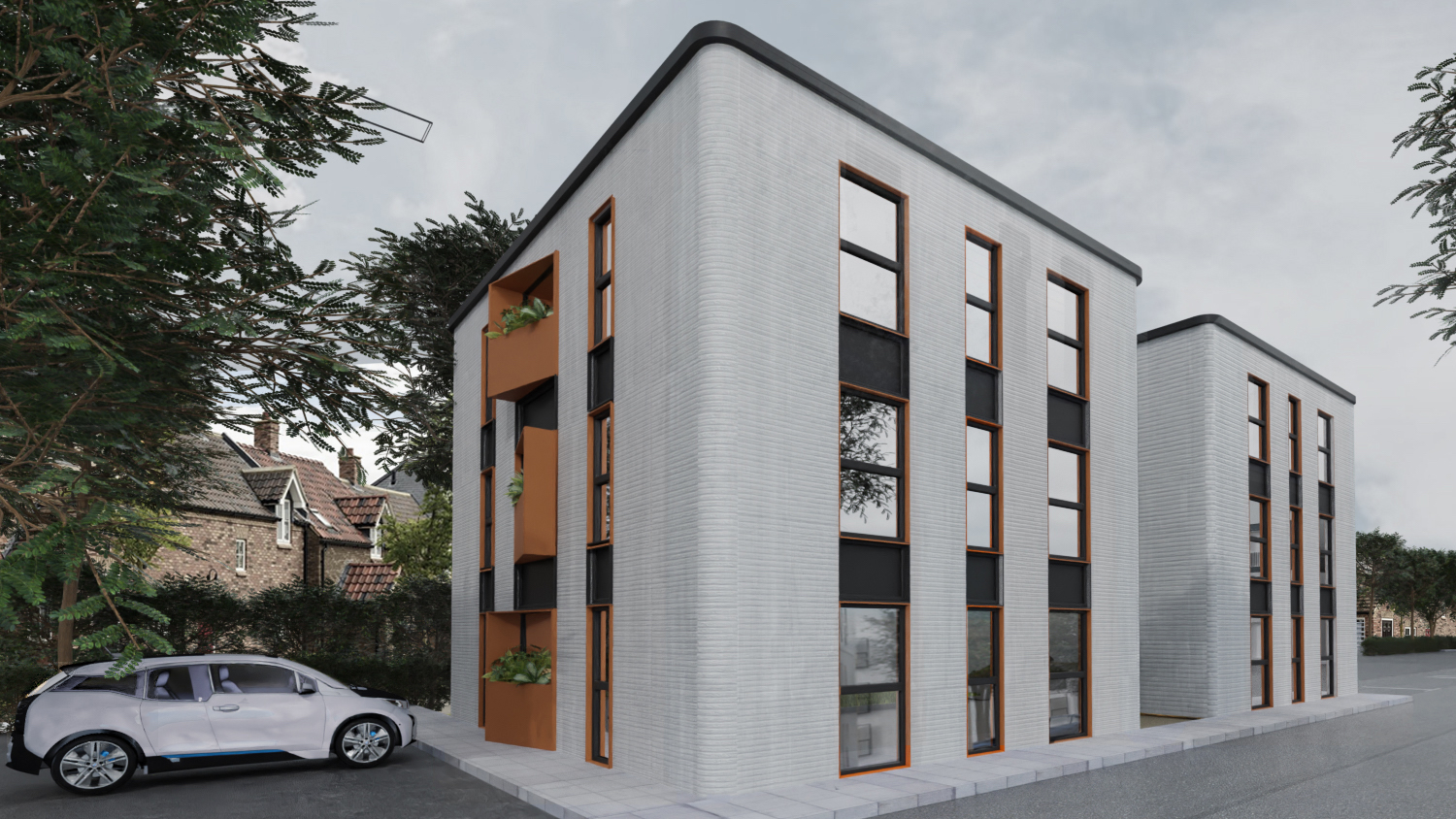
The insurance will help underwrite 3D-printed homes under Adrian Flux’s non-standard home insurance products. It will cover a range of perils, such as escape of water, theft, and fire. The policy is available for individuals only, not companies. It offers cover whether the whole house or just a portion of it is 3D printed. It does not offer a structural builder’s warranty, for example the 10-year NHBC Warranty.
Strict housing regulations, problems around planning permission and difficulties in getting cover for laser-printed buildings has slowed the uptake of the technology in the UK compared to America and parts of Europe, according to the broker. But the ability to insure 3D-printed properties will enable homeowners to get a mortgage and thus help accelerate uptake.
This is not a paywall. Registration allows us to enhance your experience across Construction Management and ensure we deliver you quality editorial content.
Registering also means you can manage your own CPDs, comments, newsletter sign-ups and privacy settings.
“We’re passionate about producing pioneering policies that have a positive impact,” said Gerry Bucke, general manager of Adrian Flux. The company introduced the UK’s first driverless car insurance policy in 2016.
“This will help the UK’s 3D-printed homes movement gather pace as it looks to follow the lead of the US and other countries like the Netherlands. It will take time to catch up, but we’re proud to be helping put some crucial and supportive steps in place.”
Market reaction
HTL.tech, the Irish company that is building the UK’s first 3D-printed housing development in Accrington, Lancashire, welcomed the announcement.
“3D construction printing provides the capacity to deliver housing substantially quicker, of a quality that is significantly higher than traditional construction and at a reduced comparative cost,” said Justin Kinsella, chief executive of Harcourt Technologies.
“Such technology has never been so needed as it is now. We are very encouraged to see Adrian Flux embrace this new technology. It serves as a game changer for helping more people secure stronger, healthier and more affordable housing.”
HTL is working with not-for-profit organisation Building for Humanity on the £6m Accrington project. It will house homeless veterans and low-income families in 46 eco-friendly properties. When complete, it will be the largest residential development of its kind in Europe.
This is not a first step towards a paywall. We need readers to register with us to help sustain creation of quality editorial content on Construction Management. Registering also means you can manage your own CPDs, comments, newsletter sign-ups and privacy settings. Thank you.