Forward planning and investment are key to boosting construction’s lagging figures, writes Kris Hudson.
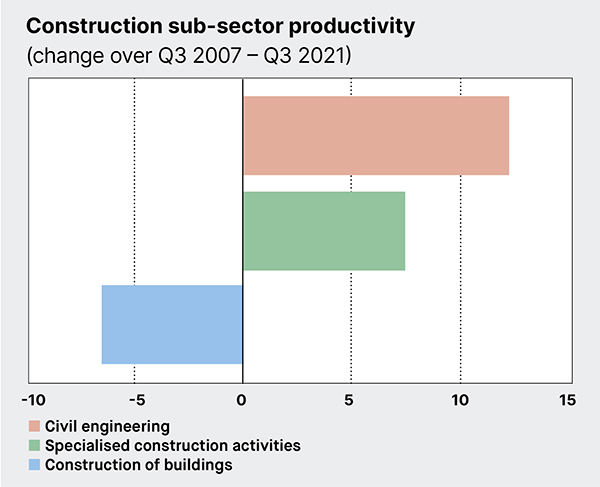
For governments and businesses, improving productivity is a critical measure of success and benchmark of competitiveness. Yet UK construction has long been a poor performer, not just lagging behind other sectors, but actually becoming less productive over time. In the two decades to Q3 2021 the industry’s productivity fell by 9.1% while manufacturing saw an 89.2% increase in the same period.
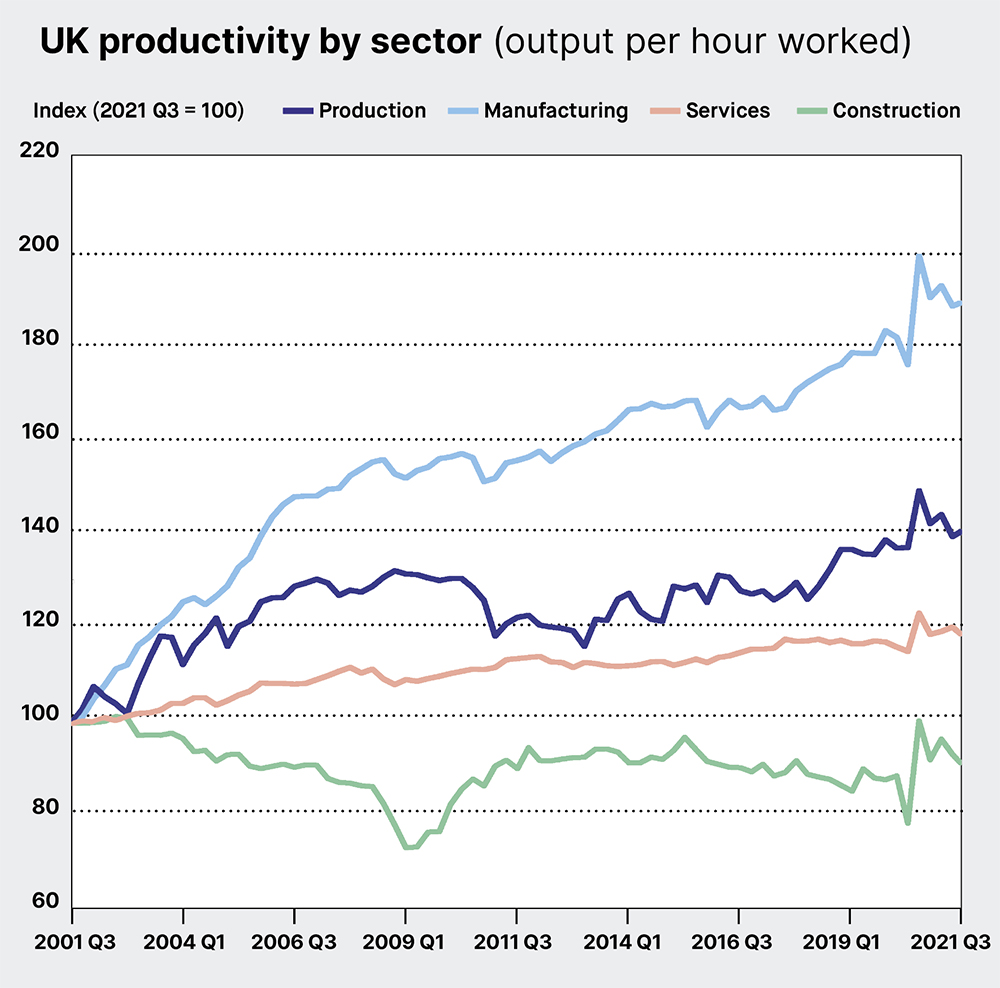
Unproductive firms limit the sector’s adaptability – making it harder to responded to the sort of demand spikes and supply challenges the past two years have brought. Low productivity also leads to low margins, leaving firms vulnerable at a time when they need to be resilient. The near future will be one of high market unpredictability, and the wider economy will need a strong construction sector as an engine of growth, recovery and the green transition.
Discussion on construction’s poor productivity is longstanding because the fundamentals of the problem are so entrenched. The sector has a high number of self-employed workers and small firms, with limited means or opportunity to radically improve performance or benefit from economies of scale. Given major challenges ahead in 2022, helping these firms and contractors needs to be priority.
Register for free or sign in to continue reading
This is not a paywall. Registration allows us to enhance your experience across Construction Management and ensure we deliver you quality editorial content.
Registering also means you can manage your own CPDs, comments, newsletter sign-ups and privacy settings.