









Signs are beginning to show how the construction sector’s growth is slowing, with Glenigan’s Construction Index demonstrating a 5% fall in the value of new work to Q2 2022.
The S&P Global Purchasing Managers’ Index (PMI) also dropped to 52.6 in June from 56.4 in May – largely due to a fall in housing and commercial work. While the cost of living crisis has begun to temper consumer demand, the Conservative leadership contest over the summer is also putting into question decisions on housing and public spending. All this while costs – from materials to labour, energy to transport – continue to rise.
Material cost inflation is being felt acutely across the board in UK real estate. For example, Turner & Townsend’s own International Construction Market Survey (ICMS) data shows the cost of softwood timber has surged by 66.7% in Leeds and 66.6% in Manchester in the past 12 months.
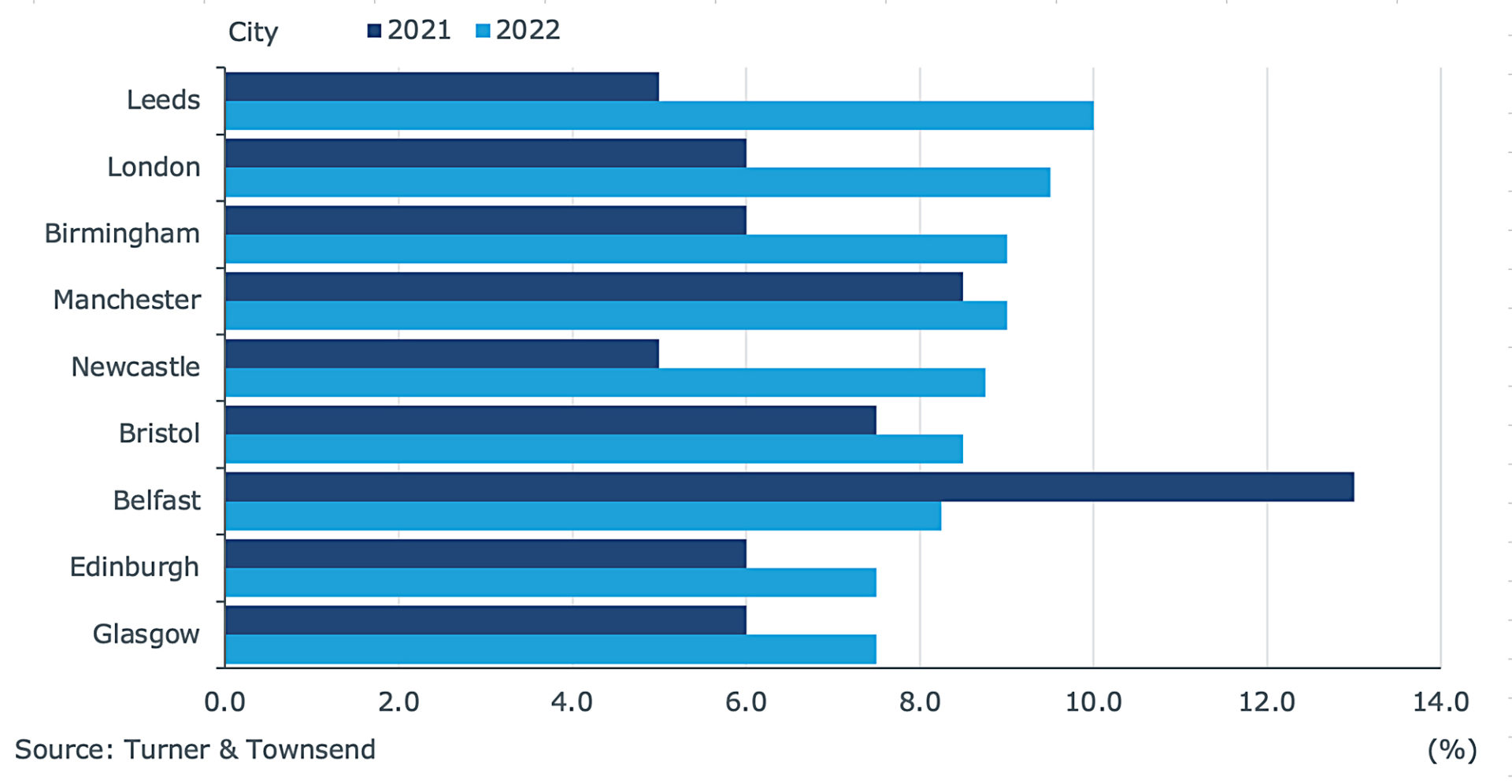
The UK’s real estate markets should prepare for ongoing inflationary pressures. The data suggests that construction cost inflation is likely to rise to 10% in Leeds through 2022, followed closely by London, Birmingham and Manchester – 9.5%, 9% and 9%, respectively. Even the markets with the lowest inflation, Edinburgh and Glasgow, can expect to see costs rise by 7.5% this year.
Register for free or sign in to continue reading
This is not a paywall. Registration allows us to enhance your experience across Construction Management and ensure we deliver you quality editorial content.
Registering also means you can manage your own CPDs, comments, newsletter sign-ups and privacy settings.