The project to build Ridgeley Farmhouse, a striking new-build family home in Buckinghamshire, is a beautiful illustration of collaborative working at its best.
Clients Hertford and Vicky King wanted to replace two agricultural sheds with a home in two halves: one that evoked a timber-clad barn, the other which echoed an adjacent red-brick property, connected with a glazed link.
The buildings are timber framed and designed to be low carbon footprint in operation with high levels of insulation, beneficial solar gain and natural ventilation.
This is not a paywall. Registration allows us to enhance your experience across Construction Management and ensure we deliver you quality editorial content.
Registering also means you can manage your own CPDs, comments, newsletter sign-ups and privacy settings.
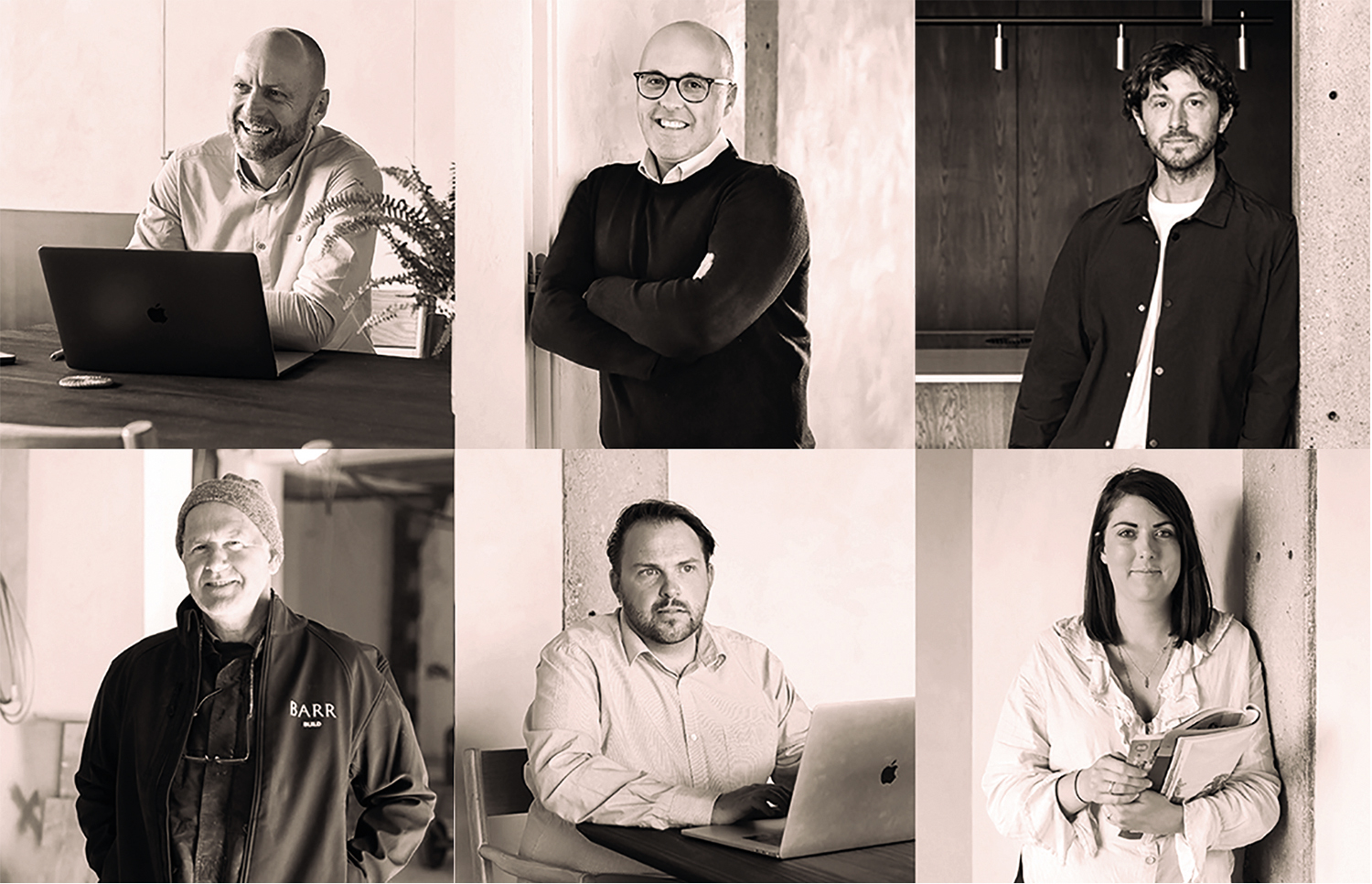
Barr Build, led by director David Noonan MCIOB, who was also the project contract manager, won the job through competitive tender. Hertford King – who is an experienced construction client – had already assembled a team of consultants with Jane Duncan Architects, Jane Duncan Interiors and client QS Greenway Associates.
Other finalists
Kier and York Teaching Hospital Collaborative Team Kier Construction MAB DART Team Mitchell & Butlers New Victoria Development Project Team VINCI Building
Ethos of fairness
Motivated by their client, all the companies involved were invested in achieving the best possible outcome, says Noonan. An ethos of fairness, underpinned by formal communication and project controls, meant that, when unforeseen circumstances occurred, parties worked together and compromised to overcome them.
Even before the project began on site Greenway Associates and the Barr Build team faced budgetary challenges. A pause between contract award and start on site saw material prices inflate due to the impact of the Covid pandemic, so Barr worked to save costs through value engineering and the two companies worked together to establish robust provisional sums.
Among the issues arising during the build was a feature glazed bay window that didn’t fit. Contractor and designer worked together keep the project on track, devising a solution involving additional foundations and an extended roof.
The end result is a stunning development together with a happy client, a happy architect, companies that actively want to work with each other again and a ‘viable’ profit margin for Barr Build.
The January/February 2026 issue of Construction Management magazine is now available to read in digital format.
Powered Access
CM, in partnership with IPAF, has launched a new survey to explore the industry’s views and experiences with powered access machines on construction projects.
This is not a first step towards a paywall. We need readers to register with us to help sustain creation of quality editorial content on Construction Management. Registering also means you can manage your own CPDs, comments, newsletter sign-ups and privacy settings. Thank you.