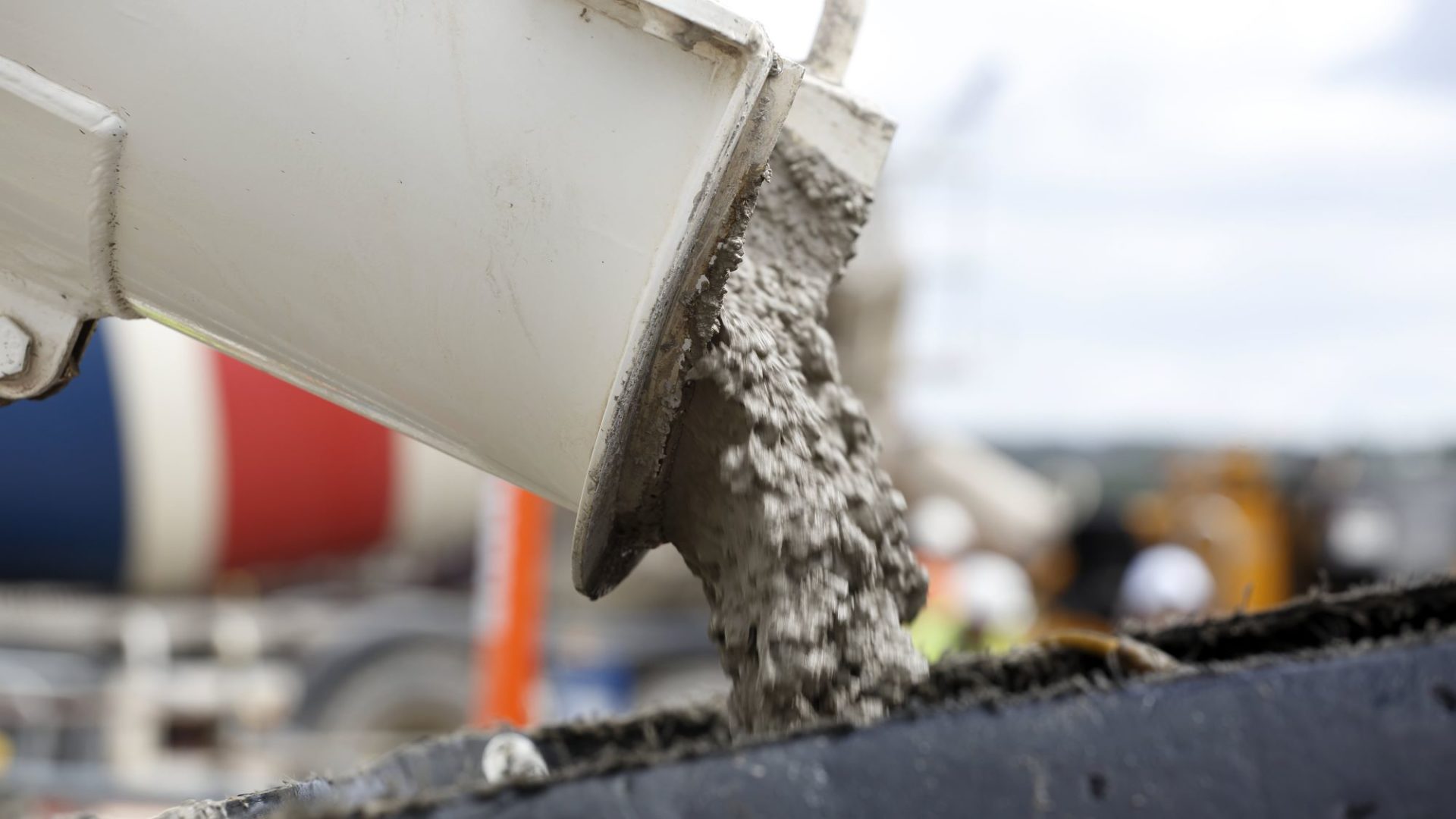
Concrete and cement manufacturing accounts for 7.7m tonnes of carbon dioxide emissions, equating to 1.5% of the UK’s total.
This is not a paywall. Registration allows us to enhance your experience across Construction Management and ensure we deliver you quality editorial content.
Registering also means you can manage your own CPDs, comments, newsletter sign-ups and privacy settings.
The new concrete ‘recipe’ blends finely ground limestone from UK quarries with other materials such as fly ash, a by-product from power generation and ground granulated blast furnace slag (GGBS), a by-product from the steel industry.
The concrete sector’s CO2 emissions are mostly associated with the production of cement. Using supplementary materials such as limestone powder helps to reduce the amount of traditional cement (CEM I) to create a lower-carbon concrete.
With the new standard now available, the CEM I content in concrete can be replaced with up to 20% of limestone powder, a product widely available in the UK, according to UK Concrete. Every 5% of limestone powder added can deliver a 5% reduction in CO2 per tonne of concrete, the organisation added.
“Making concrete is a bit like baking except that with concrete, ingredients are combined to alter properties such as strength, deliver environmental performance and change the aesthetics of the finished material,” said Elaine Toogood, director of architecture and sustainable design at The Concrete Centre.
“In a climate emergency, this new approved standard is important to helping architects and engineers significantly lower embodied manufacturing emissions today and in the future, while delivering structural strength in buildings and infrastructure."
Decline in GGBS and fly ash availability
For many years, GGBS and fly ash have been repurposed as an ingredient for concrete. But less of it is being produced in the net-zero transition, so the use of limestone fines is important in helping to provide a sustainable source of materials to continue to lower the embodied emissions of concrete, UK Concrete said.
The new specification changes are part of a rigorous research and testing process over two years. The results have then been independently assessed for inclusion into the BS 8500 standard by the BSI technical committee for concrete.
UK Concrete said the concrete and cement industry has delivered a 53% reduction in absolute carbon emissions since 1990 and is decarbonising, as a whole, faster than the UK economy.