Construction Management is the highest circulation construction-based publication serving the UK built environment.
Opinion
Back on site – but weak supply threatens construction rebound
Kris Hudson
Covid-19’s impact on global supply chains means lengthening
lead-in times for many construction products, explains Kris Hudson.
As the daily rates of new covid-19 cases in the UK have
dropped, construction has returned to work. When CM went to press, some 97% of
Build UK members’ sites were operational again. However, with the pandemic
disrupting supply chains both domestically and internationally, many of these
sites are now competing for scarce resources.
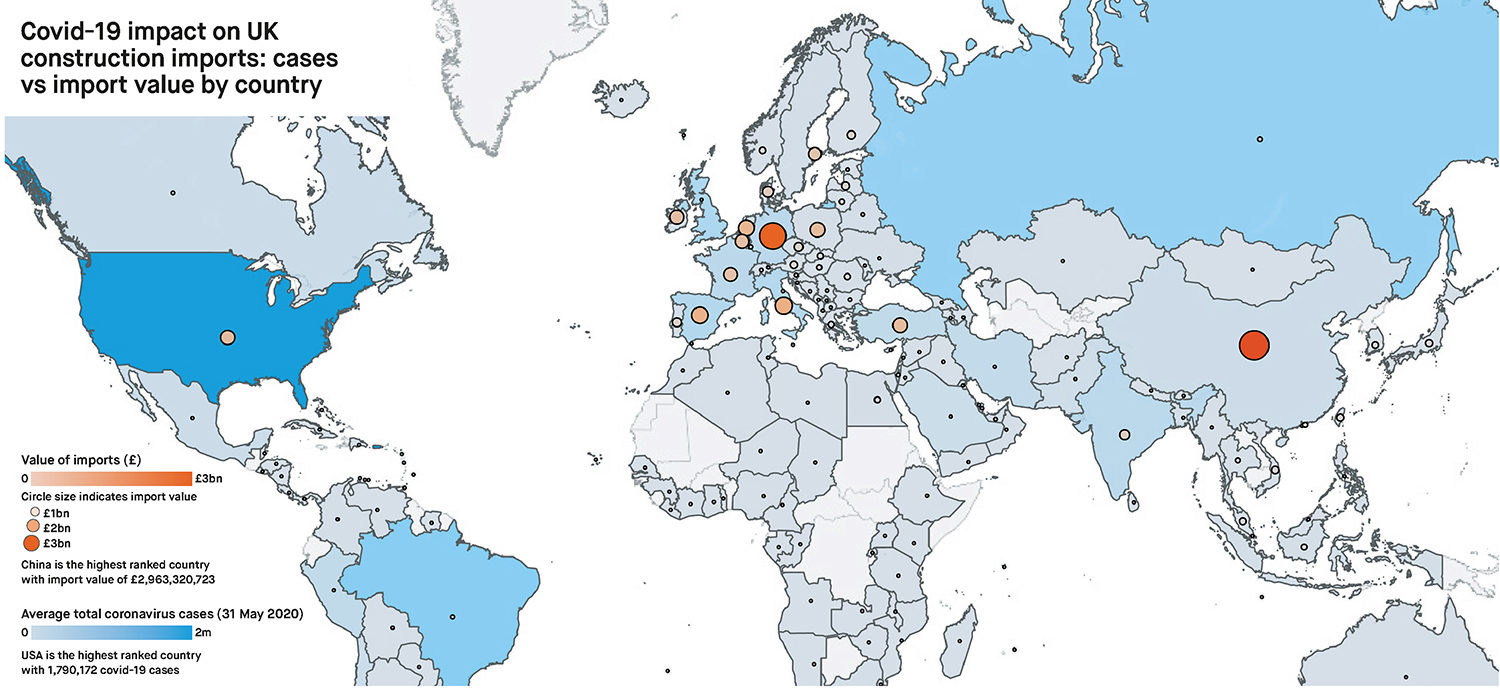
Last year, 46% – or £8.15bn – of all UK imports of
construction materials and components came from just five countries: China,
Germany, Italy, Spain and the Netherlands.
Spain, Italy and Germany are currently still in the top 10 of countries affected by covid-19 around the world – putting a strain on supply chains. The past months of stringent lockdown have resulted in falling component production in these locations, and the knock-on effect for UK contractors has been lengthening lead-in times for materials, programme delays and higher costs.
This is not a paywall. Registration allows us to enhance your experience across Construction Management and ensure we deliver you quality editorial content.
Registering also means you can manage your own CPDs, comments, newsletter sign-ups and privacy settings.
Furniture, fixtures and equipment (FF&E), mechanical,
electrical and plumbing (MEP) plant, specialist lighting and IT equipment have
all been particularly affected, with many global locations seeing eight or nine
week delays to lead-in times.
But domestic production of construction material and
component is also a concern. The
Construction Products Association (CPA) reports that 78% of all construction
products are produced in the UK.
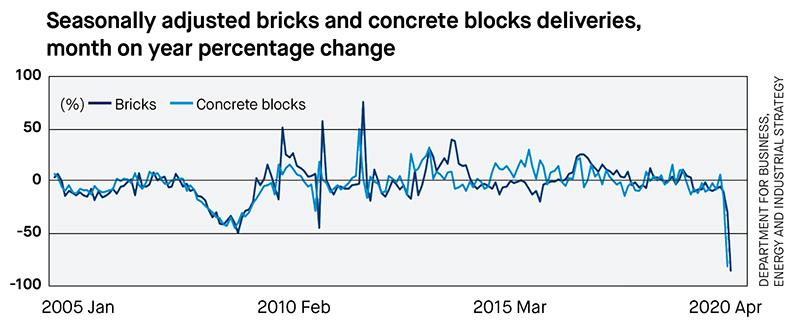
And here the impact of the virus has been particularly stark
on the delivery of bricks and blocks. The Department for Business, Energy and
Industrial Strategy (BEIS) reports there was an 86.4% decrease in brick
deliveries in April 2020 compared to April 2019, with concrete blocks seeing an
81.8% fall over the same period.
The industry may need to brace for further production pressures and longer lead-in times, as suppliers battle with cash flow challenges and insolvencies. The UK’s largest brickmaker, Ibstock, has already reported that it has begun redundancy consultations with 15% of its workforce.
It is clear that contractors, more than ever, need to apply
scrutiny and due diligence to the critical path dependency of the goods,
components and materials they are sourcing and their condition at the
point of transaction.
Planning ahead, analysing and mapping alternatives and
proactive supplier engagement will be crucial in understanding and mitigating
against any delays or further restrictions in the market.
Kris Hudson is an economist and associate director at Turner & Townsend
The January/February 2026 issue of Construction Management magazine is now available to read in digital format.
Powered Access
CM, in partnership with IPAF, has launched a new survey to explore the industry’s views and experiences with powered access machines on construction projects.
This is not a first step towards a paywall. We need readers to register with us to help sustain creation of quality editorial content on Construction Management. Registering also means you can manage your own CPDs, comments, newsletter sign-ups and privacy settings. Thank you.